 Save
Save There's something about the smell of carrots hitting a hot oven that makes me stop and pay attention. A few years back, I was tasked with bringing a side dish to a potluck, and instead of the usual roasted vegetables, I wanted something that tasted intentional. I mixed maple syrup with mustard almost on a whim, and the result was so good that three people asked for the recipe before dessert arrived. Now it's become the side I reach for when I want something that feels both comforting and a little bit special.
I made these for my partner's family dinner once, and his mom came into the kitchen halfway through roasting to ask what smelled so good. When I told her it was just carrots, she didn't believe me until she tasted them. That moment stuck with me—it's proof that simple ingredients, treated with a little attention, can genuinely surprise people.
Ingredients
- Carrots (1 lb, peeled and cut into sticks or rounds): The thinner you cut them, the faster they cook; I prefer slightly thick sticks because they hold up better and get those caramelized edges without drying out.
- Pure maple syrup (2 tbsp): Real maple syrup makes an actual difference here—the fake stuff tastes thin by comparison, and this glaze is too small to hide anything.
- Dijon mustard (1 tbsp): This is your sharp counterpoint to the sweetness; it keeps the whole thing from feeling cloying.
- Olive oil (1 tbsp): Just enough to help everything brown and caramelize without making it greasy.
- Apple cider vinegar (1 tsp): The acid brightness that brings the whole glaze into focus.
- Sea salt and black pepper (1/2 tsp and 1/4 tsp): Season as you go, and always finish with fresh cracked pepper for actual flavor, not just heat.
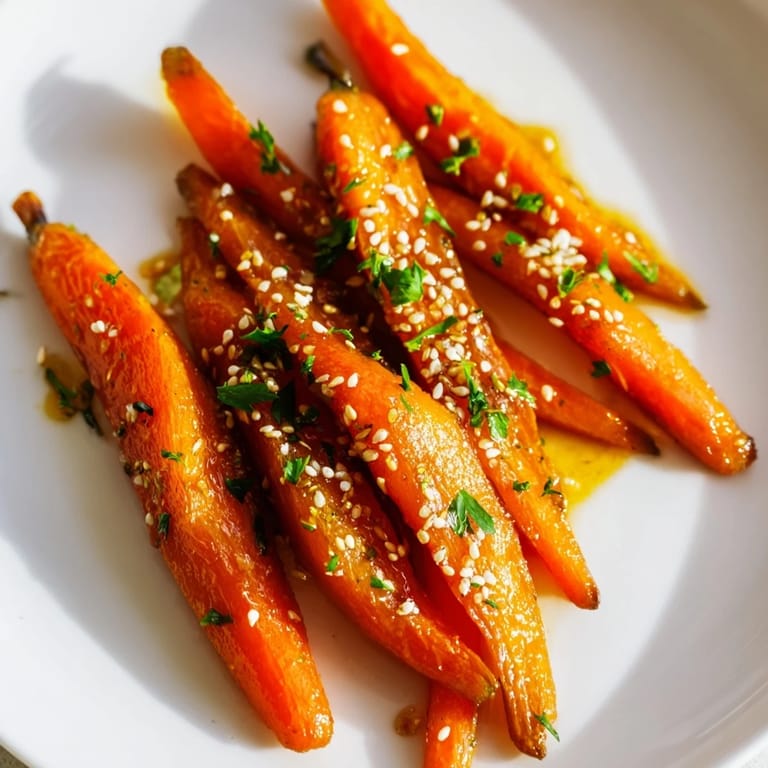
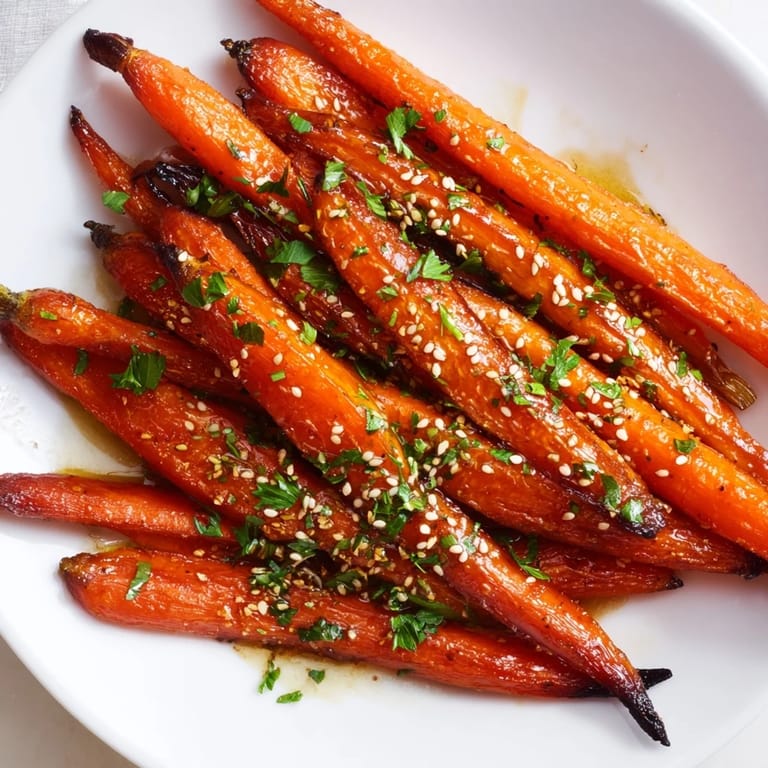
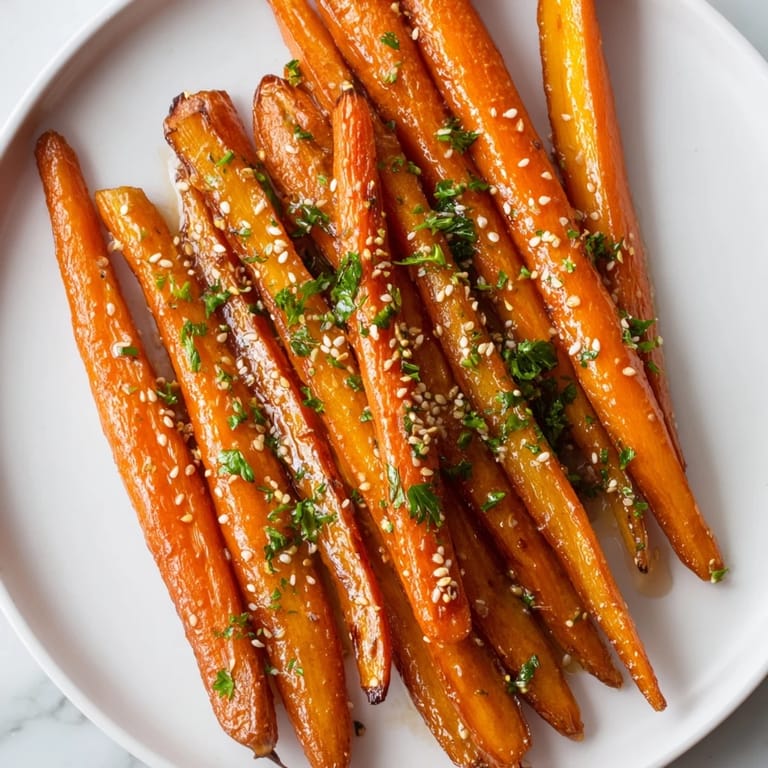
- Fresh parsley and toasted sesame seeds (optional garnish): These add a little visual life and textural surprise at the end, but they're truly optional if you're keeping it simple.
Tired of Takeout? 🥡
Get 10 meals you can make faster than delivery arrives. Seriously.
One email. No spam. Unsubscribe anytime.
Instructions
- Get the oven ready:
- Preheat to 425°F with parchment paper lining your baking sheet. This temperature is hot enough to caramelize the carrots' edges without burning the glaze.
- Make the glaze:
- Whisk the maple syrup, mustard, oil, vinegar, salt, and pepper in a large bowl until it comes together into something that looks almost like a thin vinaigrette. Taste it on a spoon—it should make your mouth water a little.
- Coat the carrots:
- Add your cut carrots and toss them gently but thoroughly so everything gets an even coating. This is easier than it sounds and takes about a minute.
- Spread and roast:
- Lay the carrots in a single layer on the sheet, pour any extra glaze on top, and slide them into the oven. After 15 minutes, pull the sheet out and give everything a gentle stir so they brown evenly.
- Finish and serve:
- After another 10-15 minutes, the carrots should be fork-tender with browned, caramelized edges. Transfer them to a serving dish and add the optional garnishes if you're feeling it.
 Save
Save The first time I served these to guests who were skeptical about vegetables, I watched their faces change on the first bite. That shift from polite to genuinely enjoying something unexpected reminded me why I love cooking—it's not always about complicated techniques, sometimes it's just about caring enough to try something a little bit different.
Why This Glaze Works So Well
The maple syrup brings natural sweetness and caramelizes under heat, creating those dark, browned edges that taste almost nutty. The Dijon mustard adds sharpness and a faint tang that keeps the dish from feeling like a side dish masquerading as dessert. Together with the acid from the apple cider vinegar and the richness of olive oil, you get something that tastes balanced and intentional rather than just sweet or just savory.
Customizing to Your Taste
If you don't have apple cider vinegar on hand, red wine vinegar works in a pinch, though the flavor will shift slightly toward something deeper. For a spicier version, add a pinch of red pepper flakes to the glaze before tossing the carrots. I've also made these with honey instead of maple syrup when that's what I had available, and while the flavor isn't identical, it's still delicious and moves pretty quickly off the plate.
Making It Your Own
This recipe lives somewhere between a side dish and a statement about how much thought you put into your meal. It pairs beautifully with roasted chicken or pork, but it's equally at home on a vegetarian table where it can stand up as a main focus. The beauty of it is how much room there is to make it yours—adjust the spice level, play with garnishes, or serve it at room temperature the next day if you have leftovers.
- Thin-sliced carrots finish faster if you're in a hurry, thick pieces look more impressive on the plate.
- Serve these warm or at room temperature; they're genuinely good either way.
- Make the glaze while the oven preheats so there's nothing left to do but roast and wait.
 Save
Save These carrots have quietly become the thing people remember from meals I've cooked, and that feels like a small victory every time. Simple, honest food cooked with care has a way of sticking with people.
Common Questions
- → What type of carrots work best?
Use firm, fresh carrots peeled and cut into sticks or rounds to ensure even cooking and a tender texture.
- → Can I substitute maple syrup with another sweetener?
Yes, honey is a great alternative that complements the mustard and spices well.
- → How do I achieve caramelized edges on the carrots?
Roasting at a high temperature, around 425°F (220°C), and turning the carrots halfway ensures caramelization and tenderness.
- → Can this dish be made spicier?
Adding a pinch of red pepper flakes to the glaze introduces a subtle spicy kick without overpowering the flavors.
- → What garnishes enhance this dish?
Chopped fresh parsley and toasted sesame seeds add a fresh, nutty finish and visual appeal.