 Save
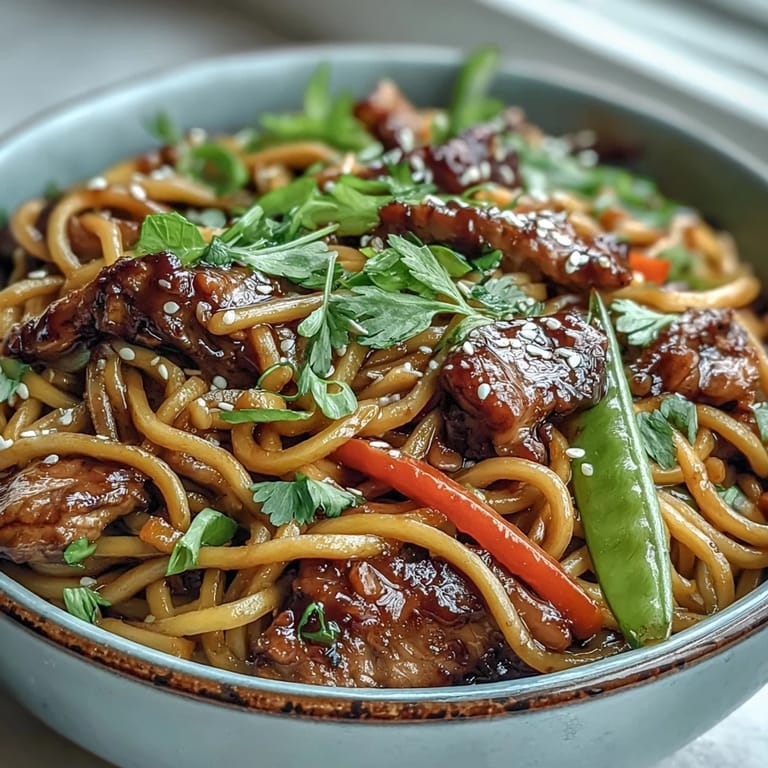
Save My wok was still cold when I realized I had twenty minutes before everyone arrived. That particular Tuesday taught me that great stir-fry isn't about having hours to spare, it's about understanding heat and keeping your ingredients ready. The pork sizzled the moment it hit the surface, and suddenly the kitchen smelled like the noodle shops I used to duck into after work. This dish became my rescue plan, my I forgot to meal prep solution, and eventually, something I actually craved on purpose.
I started making this for my roommate who worked late shifts, and she would walk in just as I was tossing the spring onions into the wok. The smell alone was enough to make her drop her bag and grab a fork. We would eat straight from the pan sometimes, standing at the counter, talking about nothing important. It became our weeknight ritual, the kind of meal that tastes better when shared without ceremony.
Ingredients
- Pork loin or tenderloin: Slicing it thin ensures it cooks fast and stays tender, and partially freezing the meat for fifteen minutes makes slicing easier.
- Soy sauce and cornstarch: This quick marinade keeps the pork juicy and gives it a silky coating that holds onto the sauce beautifully.
- Egg noodles or rice noodles: Egg noodles have more chew, rice noodles taste lighter, and both work perfectly as long as you don't overcook them.
- Red bell pepper, carrot, and sugar snap peas: Julienning them ensures they cook evenly and quickly, and the mix of colors makes the dish look as good as it tastes.
- Spring onions, garlic, and ginger: These three create the aromatic base that makes your kitchen smell like a proper stir-fry house.
- Soy sauce, oyster sauce, hoisin sauce, sesame oil, and brown sugar: This combination balances salty, sweet, and umami in a way that coats every ingredient without overwhelming it.
- Vegetable oil: You need an oil with a high smoke point because stir-frying requires serious heat.
- Sesame seeds and fresh coriander: Optional, but they add a final layer of texture and freshness that makes the dish feel complete.
Tired of Takeout? 🥡
Get 10 meals you can make faster than delivery arrives. Seriously.
One email. No spam. Unsubscribe anytime.
Instructions
- Marinate the pork:
- Toss the thinly sliced pork with soy sauce and cornstarch, then let it sit for ten minutes. This short rest makes the meat tender and helps it brown beautifully.
- Cook the noodles:
- Follow the package instructions, drain them well, and toss with a tiny bit of oil to prevent sticking. Slightly undercook them if you prefer more chew.
- Mix the sauce:
- Whisk together soy sauce, oyster sauce, hoisin, sesame oil, brown sugar, and water in a small bowl. Having this ready means you won't scramble later.
- Sear the pork:
- Heat one tablespoon of oil in your wok over high heat, add the pork, and stir-fry for two to three minutes until browned. Remove it and set aside so it doesn't overcook.
- Stir-fry the vegetables:
- Add the remaining oil, then toss in garlic, ginger, bell pepper, carrot, and snap peas. Keep everything moving for three to four minutes until just tender.
- Combine everything:
- Return the pork to the wok, add the noodles and sauce, and toss for two to three minutes. Make sure every strand gets coated and heated through.
- Finish and serve:
- Toss in the spring onions, give it one last stir, and remove from heat. Serve immediately with sesame seeds and coriander if you like.
 Save
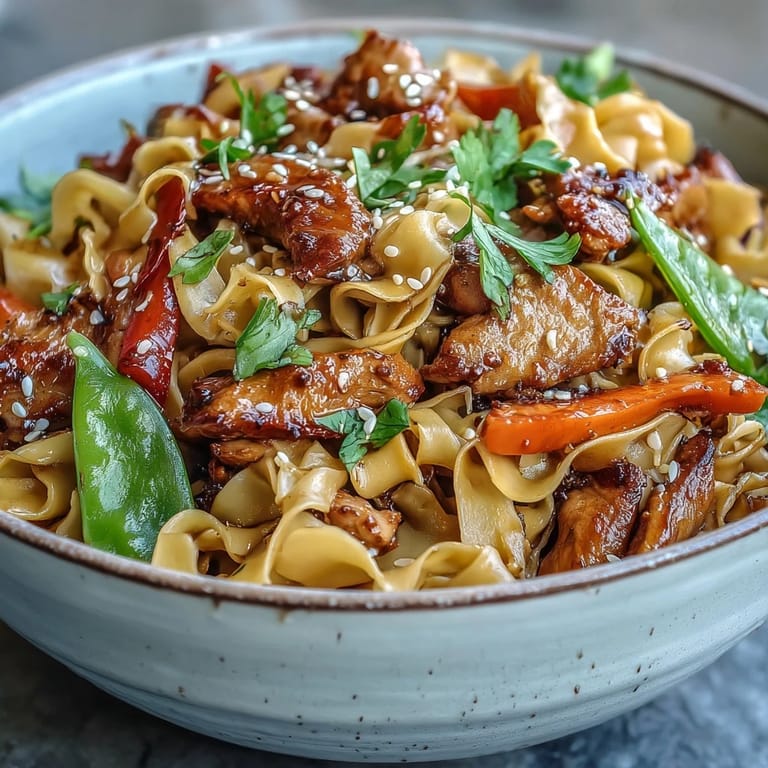
Save One night I added too much hoisin and the whole dish turned sweet, but my friend said it tasted like the noodles from her childhood. Sometimes mistakes become the version people remember. Now I keep a jar of chili oil on the table so everyone can adjust the heat and sweetness to their own taste.
Choosing Your Protein
Pork works beautifully here, but chicken thighs stay juicier than breasts, shrimp cooks even faster, and firm tofu soaks up the sauce like a sponge. I have made this with leftover roast pork from Sunday dinner, and it tasted like an entirely new meal. The key is cutting everything the same size so it cooks evenly.
Vegetable Variations
I have thrown in mushrooms, baby corn, bok choy, and even broccoli when that is what I had. Zucchini works if you add it at the very end so it doesn't turn mushy. Frozen vegetables are fine in a pinch, just make sure to thaw and drain them first or they will water down your sauce.
Serving and Storing
This dish is best eaten right away when the noodles are hot and the vegetables still have snap. Leftovers keep for two days in the fridge, but the noodles will soften and absorb more sauce. I reheat mine in a hot skillet with a splash of water to loosen everything up.
- Serve with a cold Riesling or a light lager to balance the savory richness.
- A small dish of chili oil or sriracha on the side lets everyone adjust the heat.
- Garnish just before serving so the sesame seeds stay crunchy and the herbs stay bright.
 Save
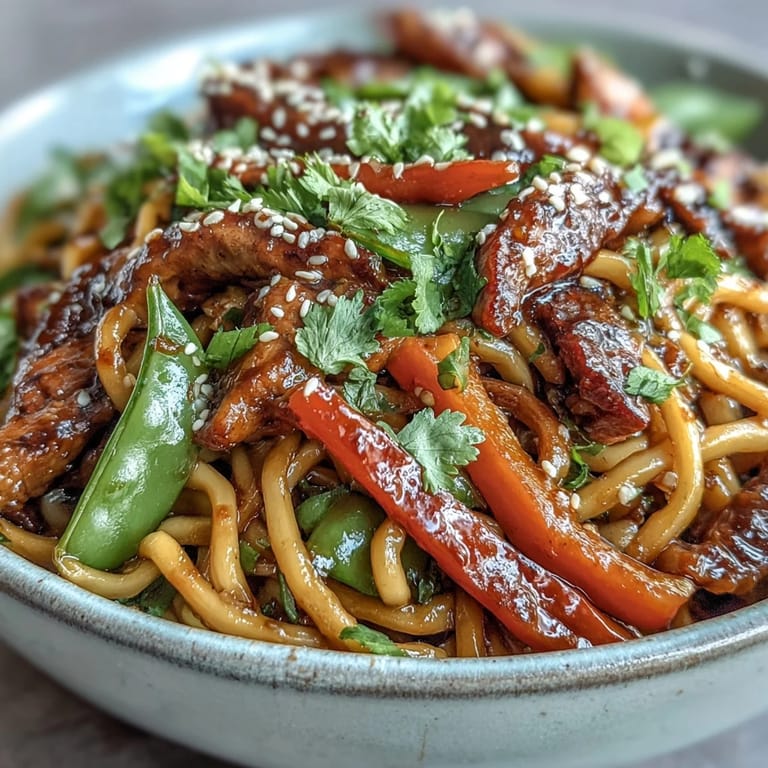
Save This stir-fry taught me that weeknight cooking doesn't have to mean compromise. It just means knowing what matters, and in this case, it is high heat, quick hands, and a sauce that makes you want to lick the spatula.
Common Questions
- → Can I use a different type of meat?
Absolutely! Chicken breast, beef strips, shrimp, or tofu work wonderfully as substitutes for pork in this stir-fry.
- → What noodles work best for stir-fry?
Egg noodles and rice noodles are both excellent choices. Fresh noodles provide the best texture, but dried varieties work well too when cooked according to package directions.
- → How do I prevent the stir-fry from becoming soggy?
Use high heat, cook in batches if needed to avoid overcrowding, and ensure vegetables retain some crispness. Don't add sauce until the final toss.
- → Can I make this dish gluten-free?
Yes, substitute tamari for soy sauce, use rice noodles, and choose a gluten-free oyster sauce alternative. Always verify product labels for hidden gluten sources.
- → What vegetables can I add or substitute?
Bok choy, mushrooms, baby corn, broccoli, or snow peas all make excellent additions or substitutions while maintaining the dish's fresh, crisp character.
- → How should I store leftovers?
Store in an airtight container in the refrigerator for up to 3 days. Reheat in a hot wok or skillet with a splash of water to refresh the noodles.