 Save
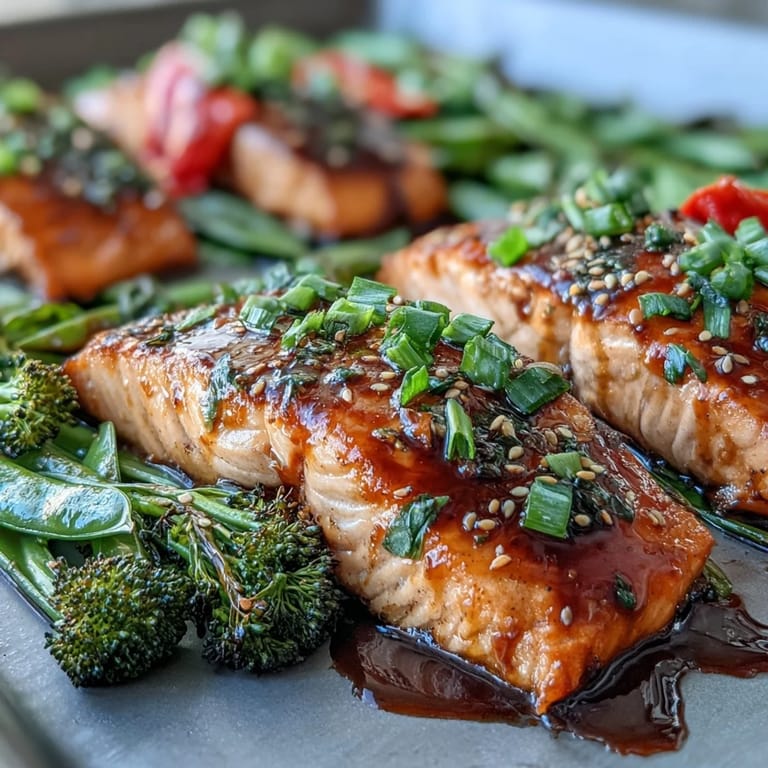
Save The smell of caramelized teriyaki always reminds me of Tuesdays when cooking felt impossible but takeout wasnt in the budget. Id stand in the kitchen watching the sauce bubble and thicken while the salmon roasted beside bright green vegetables. Everything cooked on one pan which meant cleanup took about thirty seconds. The glaze would catch under the broiler just long enough to get those irresistible sticky edges. Dinner was ready before I could talk myself out of making it.
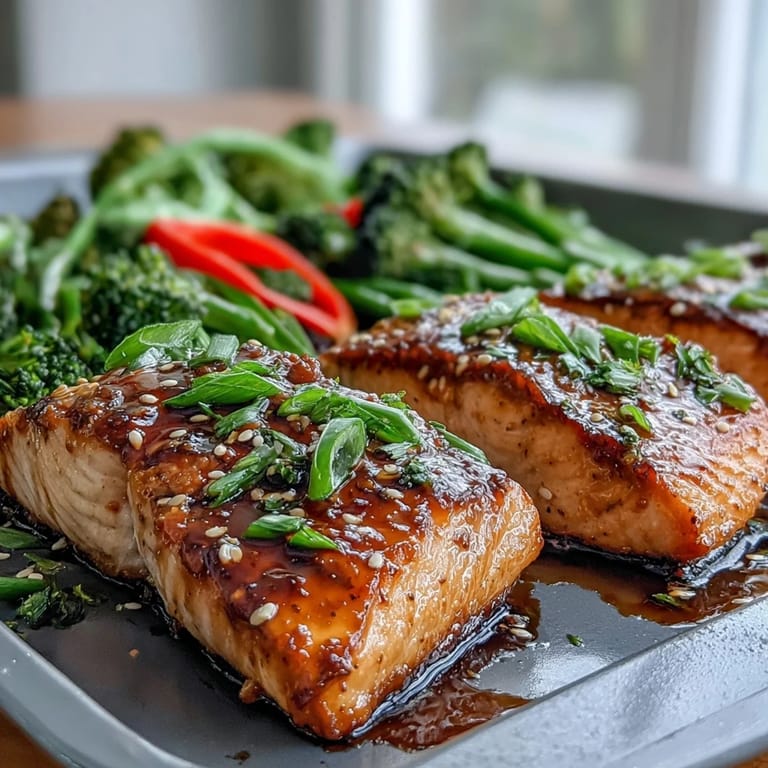
My roommate walked in one evening while I was pulling this from the oven and immediately asked if I had made extra. The vegetables had gotten those gorgeous charred spots and the salmon glistened under its sticky glaze. We ended up eating standing at the counter because neither of us wanted to wait for plates.
Ingredients
- 4 salmon fillets, 5 to 6 oz each, skin on: The skin helps the fish hold together during roasting and gets surprisingly crispy under the broiler.
- 2 cups broccoli florets: Cut them into similar sizes so everything cooks evenly without any burnt bits.
- 2 cups sugar snap peas, trimmed: These add a sweet crunch that balances the savory glaze perfectly.
- 1 red bell pepper, sliced: Optional but worth it for the color and extra sweetness.
- 1/4 cup low sodium soy sauce: Lets you control the salt level while building that classic teriyaki flavor.
- 3 tbsp honey or maple syrup: Honey gives a richer flavor while maple syrup keeps it fully refined sugar free.
- 1 tbsp rice vinegar: Cuts through the sweetness and brightens the whole sauce.
- 1 tbsp sesame oil: A little goes a long way for that nutty aromatic finish.
- 2 cloves garlic, minced: Fresh makes a difference here since the sauce cooks quickly.
- 1 tsp fresh ginger, grated: Adds warmth without overpowering the other flavors.
- 1 tsp cornstarch mixed with 2 tsp water: This simple slurry transforms thin liquid into a glossy glaze.
Tired of Takeout? 🥡
Get 10 meals you can make faster than delivery arrives. Seriously.
One email. No spam. Unsubscribe anytime.
Instructions
- Prepare your pan and oven:
- Heat the oven to 400°F and line a large sheet pan with parchment paper so cleanup becomes an afterthought.
- Build the teriyaki sauce:
- Combine soy sauce, honey, rice vinegar, sesame oil, garlic, and ginger in a small saucepan over medium heat until it simmers gently. Whisk in the cornstarch slurry and keep stirring for about a minute until the sauce coats the back of a spoon.
- Glaze the salmon:
- Place the fillets skin side down on one portion of the sheet pan and brush them generously with sauce, saving some for later.
- Season the vegetables:
- Toss the broccoli, snap peas, and bell pepper with a drizzle of olive oil and a tablespoon of teriyaki sauce, then spread them beside the salmon in a single layer.
- Roast until done:
- Slide the pan into the oven for 15 to 18 minutes until the salmon flakes easily with a fork and the vegetables reach crisp tender perfection.
- Finish under the broiler:
- For extra caramelization, flip on the broiler for one to two minutes and watch carefully so nothing burns.
- Serve with flair:
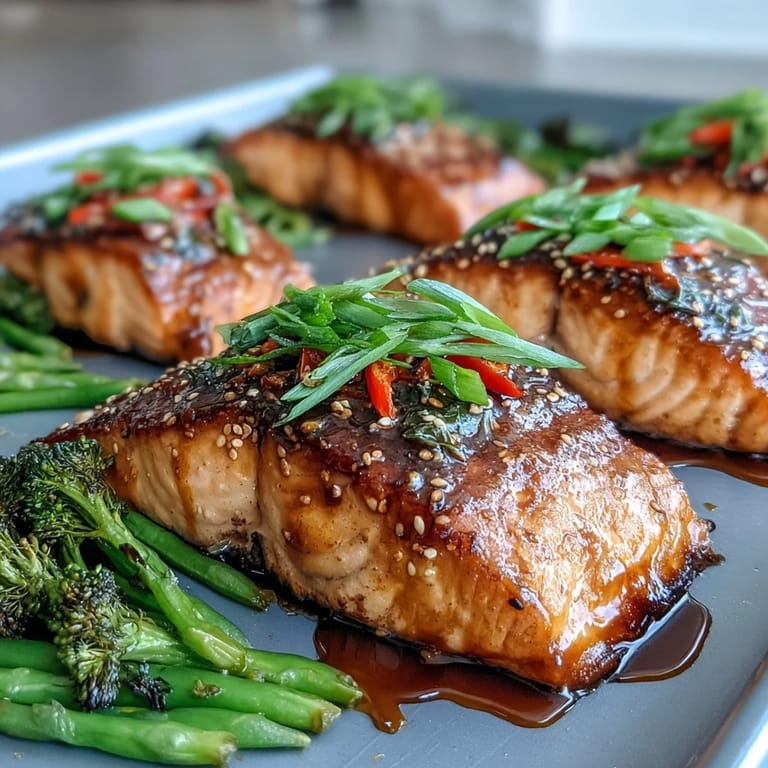
- Drizzle any remaining sauce over everything, scatter sesame seeds and scallions on top, and add a squeeze of lime right before eating.
 Save
Save 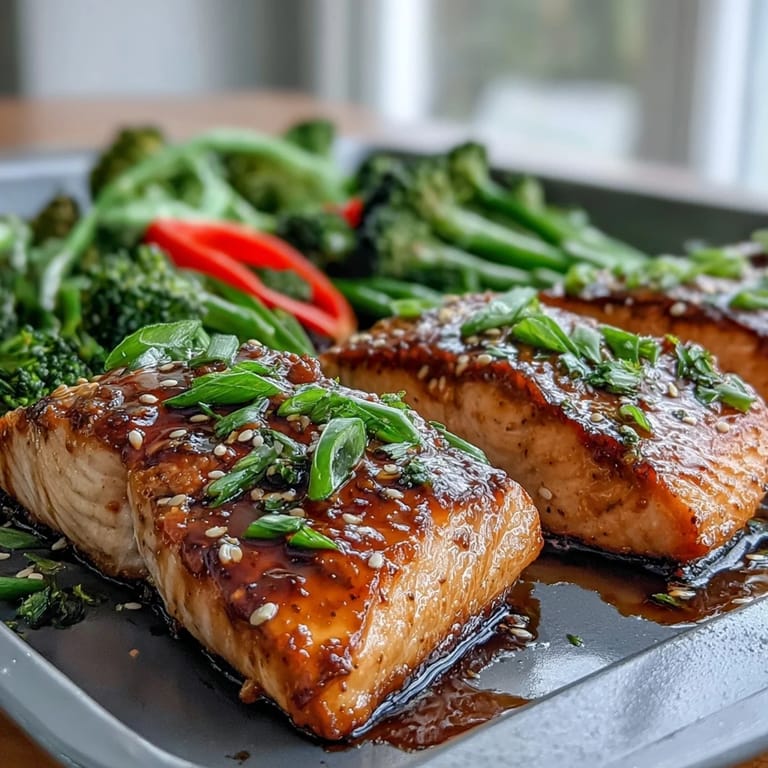 Save
Save This dish became my answer to busy weeknights when I wanted something that felt thoughtfully made without requiring actual thought. The colors alone made the dinner table feel brighter.
What to Serve Alongside
Steamed jasmine rice soaks up the extra sauce beautifully but cauliflower rice works if you are keeping things lighter. A simple cucumber salad with rice vinegar dressing adds refreshing crunch. Miso soup turns this into a meal that feels surprisingly complete.
Making It Your Own
Snap peas can swap out for green beans or asparagus depending on what looked best at the store. The teriyaki base works with chicken thighs too, though they need a few extra minutes in the oven. Sriracha mixed into the sauce adds heat for anyone who likes a little kick.
Storage and Reheating
Leftovers keep well in airtight containers for up to two days though the vegetables lose some of their snap. Reheat gently in the microwave or enjoy cold over greens for a lunch that still tastes intentional.
- Store the salmon and vegetables together so flavors continue to meld.
- Avoid freezing since the texture of both fish and vegetables suffers.
- Make extra sauce to drizzle over rice bowls later in the week.
 Save
Save 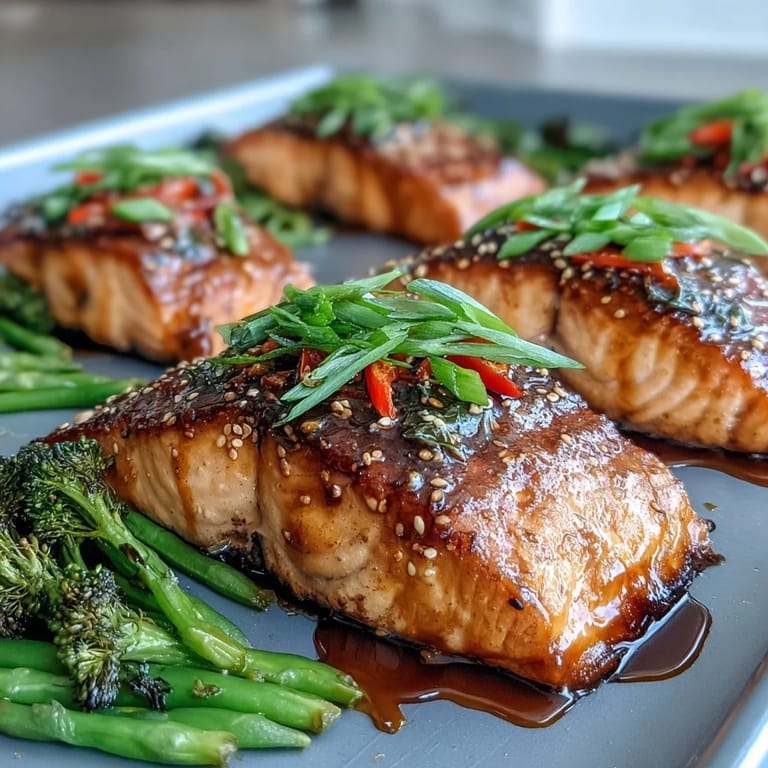 Save
Save Some nights call for dinner that feels special without demanding a single complicated technique. This sheet pan meal delivers exactly that.
Common Questions
- → Can I use frozen salmon fillets?
Yes, thaw the salmon completely and pat dry before roasting. Frozen fish releases excess moisture which can prevent proper caramelization of the teriyaki glaze.
- → What vegetables work best with this preparation?
Broccoli and snap peas are ideal because they roast in similar time to the salmon. You can also add bell peppers, asparagus, green beans, or baby bok choy. Cut denser vegetables smaller for even cooking.
- → How do I know when the salmon is done?
The salmon is ready when it flakes easily with a fork and the internal temperature reaches 145°F. The flesh should turn opaque and slightly pink throughout, with no translucency in the center.
- → Can I make the teriyaki sauce ahead of time?
Absolutely. Prepare the sauce up to 5 days in advance and store in an airtight container in the refrigerator. Reheat gently before brushing onto the salmon and vegetables.
- → Is this suitable for meal prep?
This dish meal preps beautifully. Portion cooled leftovers into containers and refrigerate for up to 2 days. Reheat gently in the microwave or oven, though the salmon is best enjoyed fresh.
- → How can I make this gluten-free?
Replace regular soy sauce with tamari or coconut aminos. Verify that all other ingredients, including the cornstarch, are certified gluten-free. The cooking method remains exactly the same.