 Save
Save My friend Sarah brought a portable hot pot burner to a dinner party one winter evening, and I watched in fascination as she arranged colorful ingredients on platters around a steaming pot at the center of the table. Everyone leaned in with chopsticks, cooking exactly what they wanted, exactly when they wanted it, turning dinner into something between a meal and a game. That night, strangers became friends over the gentle bubbling of aromatic broth and the ritual of choosing what came next. Asian hot pot transformed how I thought about cooking for groups, because suddenly nobody was waiting for food—they were making it together.
I made this for my family on a rainy Thursday when we all needed something warm and a reason to stay close together. My six-year-old nephew discovered that he could fish for vegetables with a slotted spoon, treating it like a treasure hunt, while my grandmother quietly revealed she'd been making something similar her whole life in Taiwan. By the end of the evening, nobody remembered who brought what dish—we just remembered the laughter and the deliberate slowness of a meal that refused to be rushed.
Ingredients
- Chicken or vegetable broth (2.5 liters): This is your foundation, so use something flavorful; homemade broth makes a difference, but a quality store-bought version won't disappoint.
- Garlic and ginger (2 cloves and 5 cm piece): These create the aromatic backbone—slice them thick enough to remove easily after simmering but thin enough to infuse the broth completely.
- Soy sauce, rice vinegar, sesame oil (1 tablespoon each): The holy trinity of balance; soy brings saltiness, vinegar adds brightness, and sesame oil delivers that warm, toasted finish.
- Dried shiitake mushrooms (2): They contribute umami depth that regular mushrooms can't match, and they look beautiful floating in the broth.
- Chili (1 small, optional): Fresh chili adds heat without overpowering, but you can absolutely skip it if your guests prefer gentler flavors.
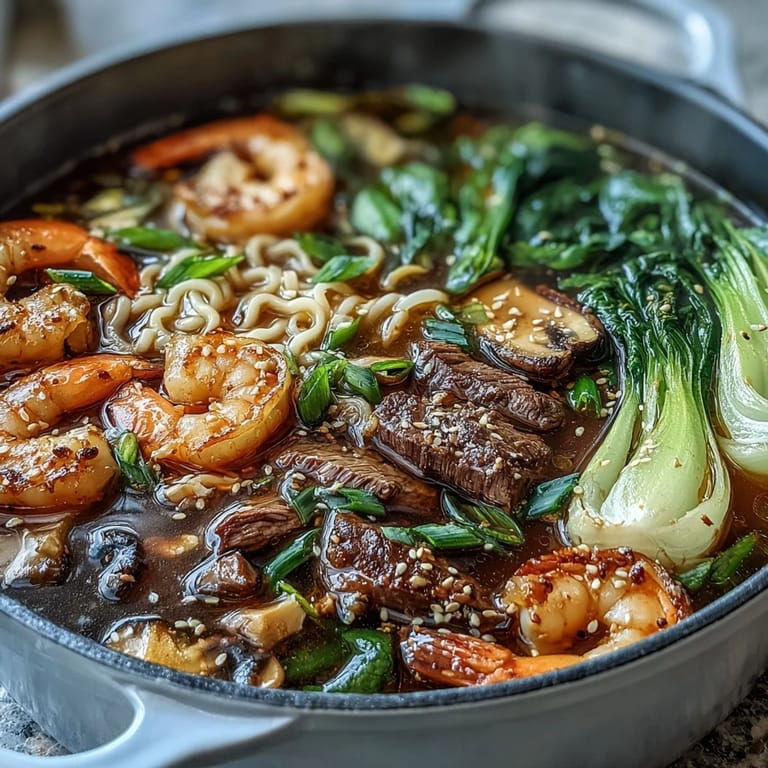
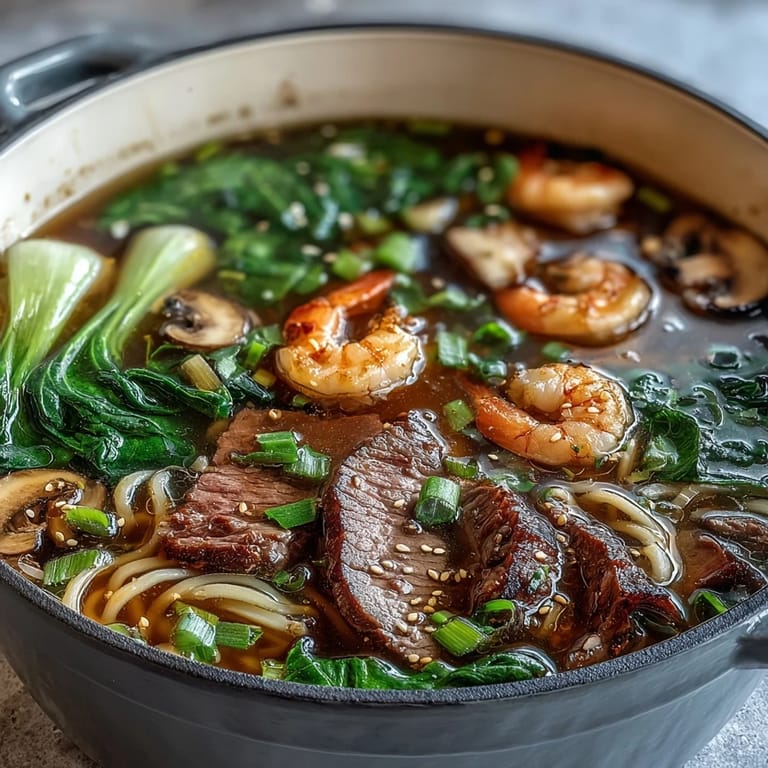
- Thinly sliced proteins (300-200g each of beef, chicken, shrimp, tofu): Slice meat paper-thin so it cooks in seconds; this is where a sharp knife and a steady hand actually matter.
- Mixed vegetables (Napa cabbage, bok choy, mushrooms, carrot, snow peas, corn, scallions): Choose vegetables that cook at different speeds and offer visual contrast; the arrangement matters as much as the flavor.
- Rice or glass noodles (200g): Pre-soak these so they're tender and ready; they'll finish cooking in the broth in just a few minutes.
- Dipping sauces and garnishes (soy, chili oil, hoisin, cilantro, sesame seeds, lime): Let guests customize their own sauce station so everyone gets exactly what their palate craves.
Tired of Takeout? 🥡
Get 10 meals you can make faster than delivery arrives. Seriously.
One email. No spam. Unsubscribe anytime.
Instructions
- Build your broth base with layers of flavor:
- Combine the broth with garlic, ginger, soy sauce, rice vinegar, sesame oil, dried shiitake mushrooms, and fresh chili in a large pot. Bring everything to a boil, then immediately lower the heat to a gentle simmer and let it bubble quietly for at least 30 minutes so the flavors meld and deepen.
- Prepare all your ingredients with intention:
- Slice proteins paper-thin using a sharp knife or ask your butcher to do it; arrange each protein and all vegetables on separate platters so guests can grab what they want. This prep work is 90 percent of the battle, and doing it calmly beforehand means you actually get to enjoy the cooking.
- Ready the noodles ahead of time:
- Soak noodles in warm water according to package directions, then drain and transfer to a serving bowl; they'll only need a quick dip in the simmering broth to finish.
- Set up your table theater:
- Place a portable burner or induction cooktop in the center of the table with a wide, shallow hot pot filled with your strained, simmering broth. Arrange all ingredient platters in a circle where everyone can reach them, making sure the broth stays at a gentle simmer the whole time.
- Let everyone cook their own adventure:
- Invite each diner to use chopsticks or slotted spoons to add what they want to the communal broth; proteins typically need just 1-3 minutes while vegetables and noodles take 2-5 minutes. The beauty here is that conversation flows naturally while people are focused on their cooking, not watching you work.
- Finish and serve with personality:
- As items finish cooking, guests retrieve them with their spoon or chopsticks and dip into their choice of sauces. Pass around fresh cilantro, sesame seeds, and lime wedges so everyone can garnish their bowl exactly how they like it.
 Save
Save There was a moment during that first hot pot dinner when my shy neighbor reached across the table to help my mother fish for a piece of carrot, and they both laughed at the small absurdity of the gesture. That's when I understood that this dish isn't really about the broth or the ingredients—it's about creating a space where people feel comfortable enough to be playful together.
Building Your Sauce Station
The dipping sauces are where hot pot becomes personal expression. Set out small bowls of soy sauce, chili oil, and hoisin sauce alongside fresh cilantro, sesame seeds, and lime wedges, then let guests mix their own combination. I discovered that some people want heat, others want sweetness, and some just want to taste the pure broth—and all of those choices are right. The sauce station transforms dinner from something plated and finished to something that's still being created as people eat.
Timing and Pacing
The magic of hot pot is that it forces you to slow down because you literally cannot rush the cooking process. Vegetables take their own time, proteins need those exact few minutes, and the noodles will tell you when they're ready. I've learned that this natural pacing actually makes people more present at the table—there's built-in pauses for conversation, for watching what others are cooking, for thinking about what comes next.
Making It Your Own
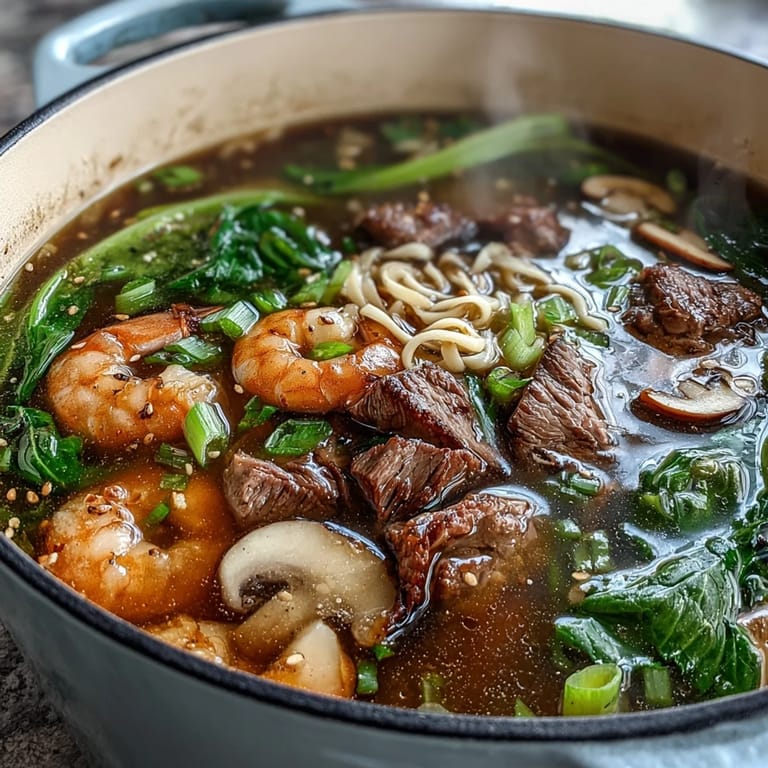
While this recipe gives you a solid foundation, hot pot is meant to bend to what you have and who you're feeding. I've made versions with fish balls and dumplings when I found them at the Asian market, and I've done fully vegetarian broths when my friends from college came to visit. The broth is your canvas, and the ingredients are just the colors you choose to paint with.
- Use gluten-free soy sauce and rice noodles if anyone at your table needs them; the broth won't know the difference.
- Consider making extra broth and freezing it in containers for next time, because once you start hosting hot pot dinners, people will ask for them again.
- If you don't have a portable burner, a slow cooker on high works beautifully and keeps the broth at exactly the right temperature.
 Save
Save Hot pot is the kind of meal that lingers in memory not because of any single flavor, but because of how it made everyone feel. Make it soon, and make it for people you actually want to spend time with.
Common Questions
- → What ingredients are typically used in the broth?
The broth combines chicken or vegetable stock with garlic, fresh ginger, soy sauce, rice vinegar, sesame oil, dried shiitake mushrooms, and optional chili for balanced, aromatic flavors.
- → How long should the broth simmer before serving?
Simmer the broth gently for at least 30 minutes to fully develop the aromatic flavors before straining and serving.
- → What types of proteins can be included?
Thinly sliced beef, chicken, pork, tofu, and peeled shrimp are common choices, allowing for a customizable protein selection.
- → Which vegetables work best in this style of cooking?
Napa cabbage, baby bok choy, various mushrooms, carrots, snow peas, corn slices, and scallions add texture and color when gently cooked in the broth.
- → How should noodles be prepared for the hot pot?
Soak rice or glass noodles in warm water according to package instructions, then drain before serving alongside the broth.
- → What utensils are recommended for this dining experience?
A portable burner or induction cooktop, a wide shallow pot, slotted spoons or strainers, chopsticks, and soup bowls are ideal for ease of cooking and serving.