 Save
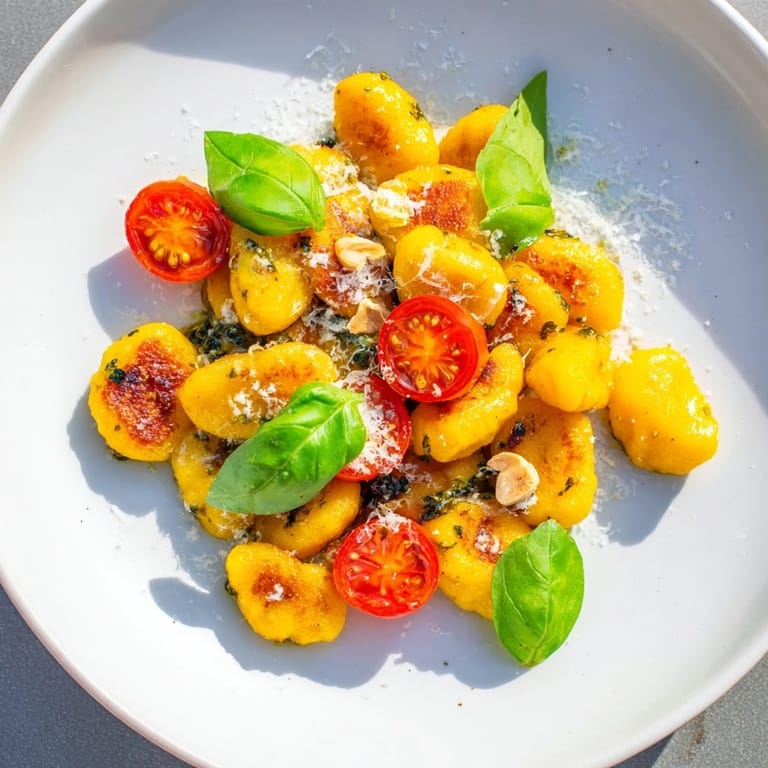
Save There was a Tuesday evening when I had nothing in the pantry except a forgotten bag of gnocchi and a handful of basil on my windowsill. I decided to pan-fry the gnocchi instead of boiling it, and something magical happened—those little pillows turned golden and crispy, almost like tiny potato clouds. That night taught me that gnocchi doesn't have to be soft and pillowy; sometimes the best version of a dish comes from happy accidents. Now, whenever I make this, I'm reminded that the simplest ingredients can become something extraordinary with just a little heat and patience.
I made this for my sister on a random Thursday, and she actually sat down mid-task to finish her plate—something I'd never seen her do. She said the crispy gnocchi reminded her of the time we tried to make fried pasta as kids and failed spectacularly. This time, it worked, and watching her rediscover that childhood craving through a grown-up version of the recipe felt like a small victory. That's when I knew this dish had something special.
Ingredients
- Potato gnocchi (500 g): Use fresh or vacuum-packed, not frozen—frozen gnocchi releases too much moisture and won't crisp properly in the pan.
- Fresh basil leaves (60 g): The fresher the better; this is where your pesto gets its bright, alive flavor, so don't skip quality here.
- Pine nuts (40 g): They add a subtle richness and buttery texture to the pesto; walnuts work too if you prefer a slightly earthier bite.
- Extra-virgin olive oil (60 ml for pesto, 1 tbsp for frying): Use good oil for the pesto since it's the star, but regular olive oil is fine for frying.
- Grated Parmesan (40 g plus more for serving): Freshly grated tastes infinitely better than pre-shredded, and it melts into the warm gnocchi beautifully.
- Garlic clove (1): Just one—it's enough to add depth without overpowering the basil.
- Cherry tomatoes (200 g): Halve them so they soften quickly and release their juice into the pan.
- Salt and freshly ground black pepper: Taste as you go; the pesto should be bright and well-seasoned.
Tired of Takeout? 🥡
Get 10 meals you can make faster than delivery arrives. Seriously.
One email. No spam. Unsubscribe anytime.
Instructions
- Make your pesto:
- Pulse basil, pine nuts, garlic, Parmesan, salt, and pepper in a food processor until finely chopped. Drizzle in olive oil slowly while the motor runs until you get a smooth, loose paste—don't overwork it or the basil turns dark and bitter.
- Get the gnocchi golden:
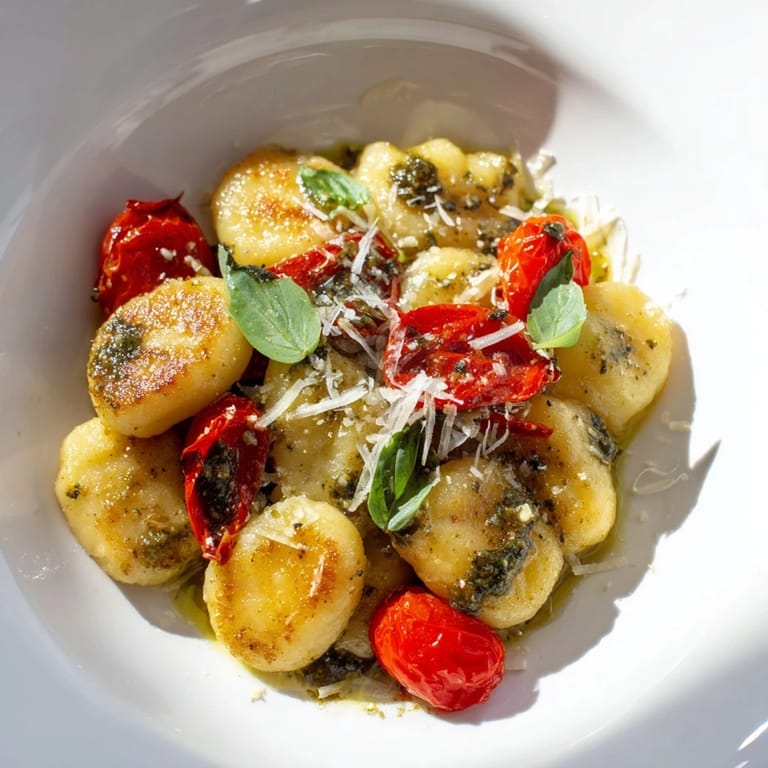
- Heat 1 tbsp olive oil in a large nonstick skillet over medium-high heat, then add gnocchi in a single layer. Let them sit for a minute or two so they develop that crispy exterior, then stir occasionally for 7–8 minutes until all sides are golden and toasty.
- Soften the tomatoes:
- Add your halved cherry tomatoes to the skillet and sauté for 2–3 minutes, letting them warm through and soften slightly—you want them just tender, not collapsed.
- Bring it together:
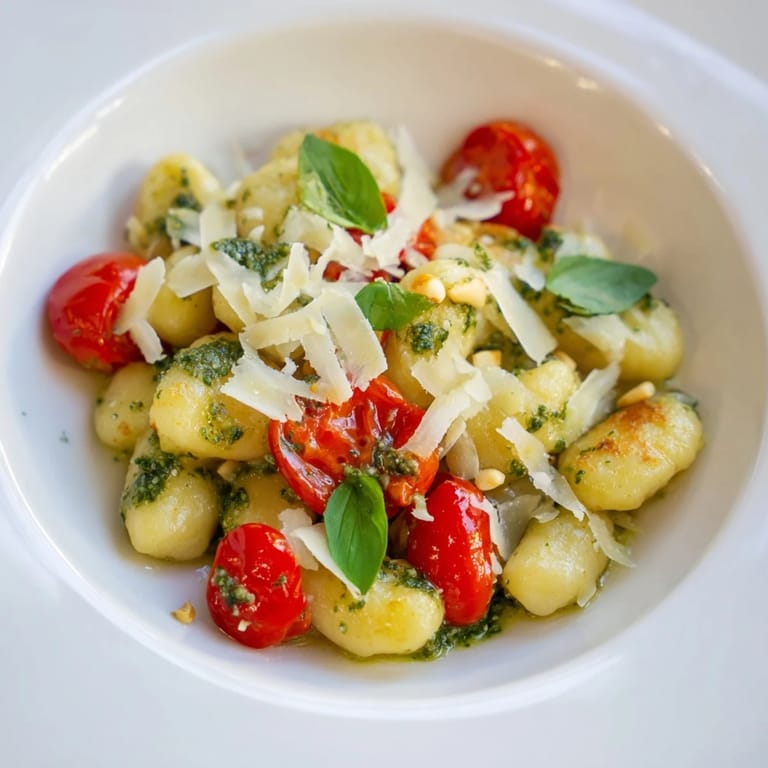
- Turn off the heat, add your pesto, and toss everything gently so the gnocchi and tomatoes get evenly coated. The residual heat will warm the pesto without cooking it down.
- Serve right away:
- Divide among bowls, top with extra Parmesan and fresh basil leaves, and eat immediately while the gnocchi is still warm and crispy.
 Save
Save One Saturday, I brought this dish to a friend's casual dinner party, and someone asked for the recipe before dessert was even served. That moment—when food becomes something people want to recreate—reminded me why I love cooking in the first place. It's not about impressing anyone; it's about sharing something warm and a little bit personal.
Why Crispy Is Better Than Soft
Most gnocchi recipes tell you to boil them, and that's fine if you like pillowy clouds of potato on your plate. But pan-frying changes everything. The exterior gets this delicate, golden crust that shatters when you bite into it, while the inside stays tender—you get two textures instead of one. It's the difference between predictable and memorable, honestly.
The Pesto Shortcut That Actually Works
You don't need a mortar and pestle to make great pesto, though purists will debate that forever. A food processor does the job in under a minute, and the texture is just as good. The secret is pulsing instead of blending—you want some texture left, not a completely smooth paste. And please, never blend the pesto hot or in a warm bowl; the basil will bruise and turn dark.
Keeping Things Simple (And Making It Yours)
This recipe is vegetarian by nature, but it's also incredibly flexible if you want to make it your own. I've added sautéed spinach when I had it, tossed in some roasted pine nuts for extra crunch, and even drizzled truffle oil over the top on nights when I felt fancy. The core—crispy gnocchi, pesto, tomatoes—stays the same, but you can build around it.
- Try adding a handful of arugula or spinach at the end for extra greens and a peppery edge.
- If you want protein, crumbled ricotta or burrata cheese is perfect alongside the Parmesan.
- A squeeze of fresh lemon juice just before serving brightens everything up.
 Save
Save This is the kind of dish that works for a quick weeknight dinner or a casual dinner with friends, and it always feels a little bit special. Once you master the crispy gnocchi technique, you'll find yourself making it again and again.
Common Questions
- → What type of gnocchi works best for this dish?
Fresh or vacuum-packed potato gnocchi can be used; fresh gnocchi tends to yield a pillowy texture, while vacuum-packed offers convenience.
- → Can I substitute pine nuts in the pesto?
Yes, walnuts are a great alternative providing a slightly different but equally tasty pesto flavor.
- → How do you achieve crispy gnocchi?
Pan-frying the gnocchi in olive oil over medium-high heat until all sides are golden ensures a crispy exterior and soft interior.
- → Is it possible to make a vegan version?
Replace Parmesan with vegan cheese or nutritional yeast and confirm the gnocchi is egg-free for a vegan-friendly dish.
- → Can additional vegetables be added?
Sautéed spinach or arugula can be stirred in for extra greens and texture, complementing the flavors nicely.