 Save
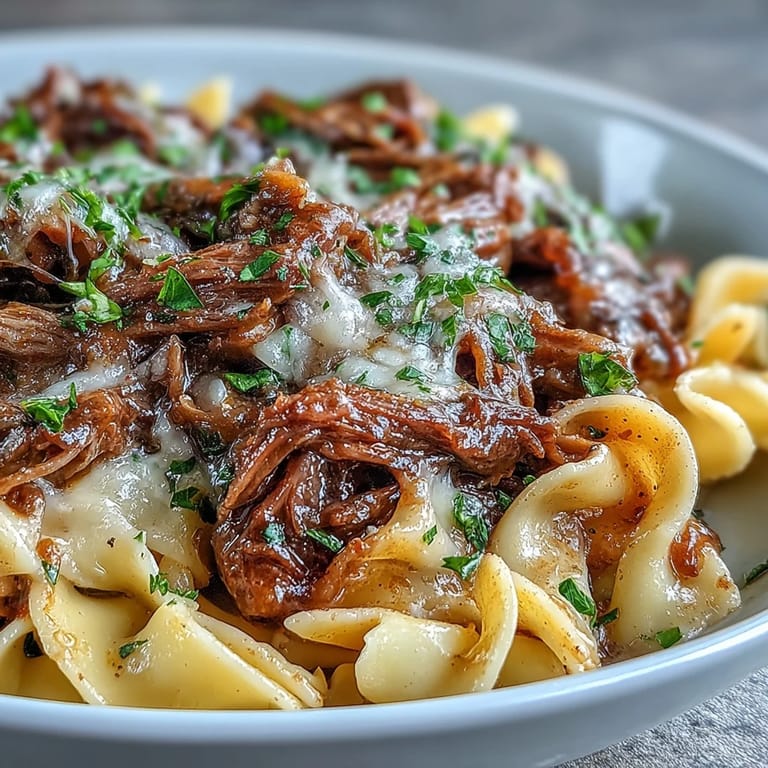
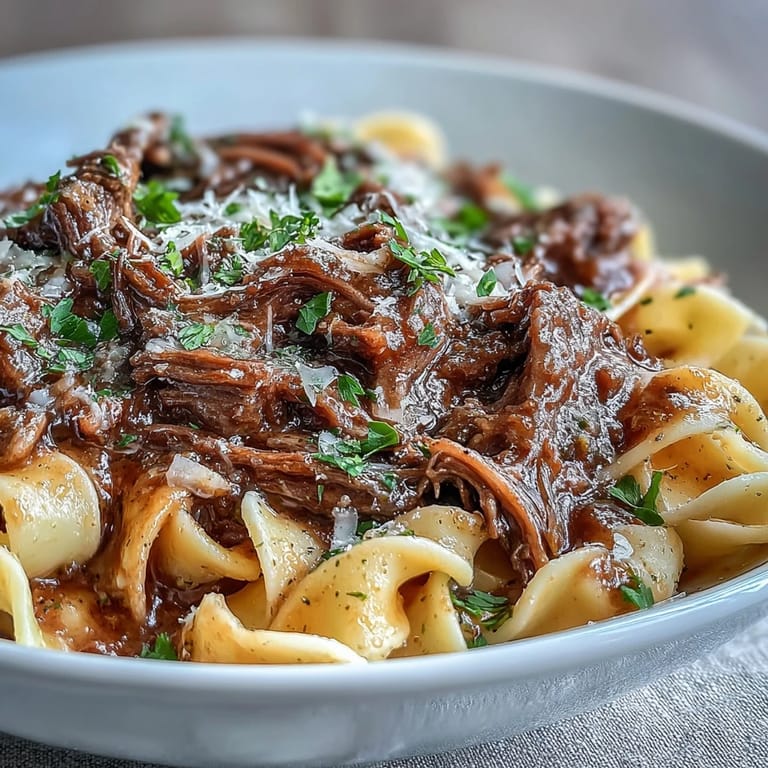
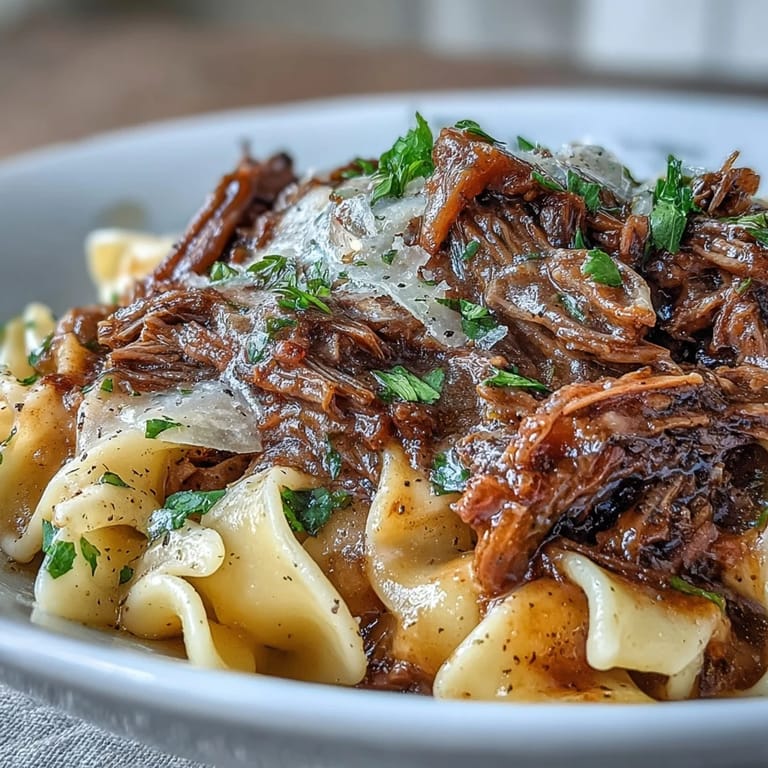
Save There's something about the smell of caramelized onions that fills a house with pure comfort, and this crockpot French onion pot roast pasta does exactly that for eight glorious hours. My neighbor knocked on the door midway through cooking, confused by the aroma drifting across our yards, and I realized I'd stumbled onto something that bridges two worlds—the rustic depth of French onion soup with the hearty satisfaction of a pot roast dinner. The slow cooker does all the heavy lifting while you go about your day, transforming a simple chuck roast into something so tender it falls apart with a whisper. What emerges is silky shredded beef swimming in an umami-rich gravy, all served over buttery egg noodles that soak up every drop. It's become my go-to when I want dinner to feel special without spending all evening in the kitchen.
I made this for my book club on a chilly October evening, and watching everyone's faces when they took that first bite was worth every minute. One friend asked if I'd spent all day cooking, and I got to reveal the secret: eight hours mostly unattended. By the end of dinner, she was asking for the recipe and already planning to make it for her own family gathering. That's when I knew this wasn't just another weeknight dinner—it was the kind of dish that becomes part of someone's rotation, the one they reach for when they want to impress without stress.
Ingredients
- Beef chuck roast (3 lb): This cut has just enough marbling to stay juicy through eight hours of low heat, and it shreds beautifully when tender—avoid lean cuts or you'll end up with something dry and disappointing.
- Yellow onions (2 large, thinly sliced): Thickness matters here; thin slices caramelize evenly and dissolve into the gravy, creating silky sweetness rather than chewy pieces.
- Garlic (4 cloves, minced): Fresh is non-negotiable—jarred garlic will turn bitter in the long cook, so take the extra minute to mince it yourself.
- Olive oil (2 tbsp): Use a neutral type with a high smoke point; fancy extra virgin will burn during the sear and waste its subtle flavors.
- Kosher salt and black pepper: Season the roast generously before searing—this is where the crust forms and flavor locks in.
- Beef broth (1 cup): Quality matters; cheap broth tastes tinny and thin, while good broth becomes the foundation of your sauce.
- Dry white wine (½ cup, optional): Skip it if you prefer, but it adds brightness and complexity that broth alone can't match—a decent Sauvignon Blanc works perfectly.
- Worcestershire sauce (2 tbsp): This is your umami bomb, the ingredient that makes people say the gravy tastes restaurant-quality.
- Tomato paste (1 tbsp): A small amount deepens the flavor without making it taste tomatoey; it rounds out the savory notes beautifully.
- Dried thyme and rosemary (1 tsp and ½ tsp): Dried herbs concentrate in flavor during long cooking, so don't substitute fresh—they'll taste like hay.
- Bay leaf (1): Remove it before serving or risk someone biting into it—trust me, it's worth the reminder.
- Wide egg noodles (12 oz): These catch and hold gravy better than thin noodles; they're worth seeking out for this dish.
- Unsalted butter (3 tbsp): Tossed with hot noodles right before serving, it creates a silky coating that catches every drop of sauce.
- Gruyère or Swiss cheese (½ cup, optional): If you add it, use the good stuff—it melts into creamy richness and elevates the whole dish.
- Fresh parsley (2 tbsp, chopped): A handful scattered on top adds brightness and visual life to an otherwise deep-toned plate.
Tired of Takeout? 🥡
Get 10 meals you can make faster than delivery arrives. Seriously.
One email. No spam. Unsubscribe anytime.
Instructions
- Season and sear the roast:
- Rub the beef generously with salt and pepper on all sides—don't be shy, this crust carries all the flavor. In a hot skillet with olive oil, sear each side for two to three minutes until deeply browned (you're after a golden crust, not just pale brown).
- Caramelize the onions:
- In the same skillet, add those thin onion slices and let them sit undisturbed for a minute or two, then stir occasionally as they soften and turn golden—this takes five to seven minutes and smells like pure heaven. Add minced garlic for the last minute, just until fragrant.
- Build the braising liquid:
- Whisk together beef broth, wine, Worcestershire, tomato paste, and dried herbs in a bowl. This is your sauce foundation, so take a second taste and adjust if something feels off.
- Layer everything in the slow cooker:
- Place the seared roast at the bottom, spread the caramelized onions and garlic over it, then pour the braising liquid over everything. The roast won't be fully submerged, and that's fine—it will braise in its own steam.
- Slow cook until tender:
- Cover and cook on LOW for eight hours, or HIGH for four to five hours if you're in a hurry. You'll know it's done when a fork shreds the beef with zero resistance. Resist the urge to peek too often; each time you lift the lid, you add time to the cook.
- Shred and finish the gravy:
- Remove the roast, shred it gently with two forks (it will fall apart), and return it to the slow cooker to mingle with all those sweet onions and rich gravy. If the liquid feels thin, stir in a slurry of cornstarch and water, then let it simmer for a few minutes to thicken.
- Cook the noodles:
- While the roast rests, bring a large pot of salted water to a rolling boil and cook the egg noodles according to package directions—don't oversalt the pasta water or you'll oversalt the dish. Drain and toss immediately with unsalted butter so every strand gets coated.
- Plate and serve:
- Divide the buttered noodles among bowls or plates, then ladle that beautiful shredded beef and caramelized onion gravy generously over the top. Finish with a handful of fresh parsley and a pinch of grated Gruyère if you're feeling it.
 Save
Save One quiet Sunday, my mom called asking what I was making because she could smell it through the phone (she couldn't, of course, but she said it made her hungry anyway). We talked for an hour while the pot roast cooked, and by the time my dad got home, dinner was ready and the conversation had already warmed everything up. Food that does this—that gives you time to connect while it cooks itself—feels like its own kind of magic.
When Thin Gravy Becomes Thick Gravy
The liquid that emerges after eight hours of cooking is often thinner than you'd expect, which threw me the first time I made this. The secret is not to panic; you have two choices. Stir together one tablespoon of cornstarch with two tablespoons of cold water until smooth, then pour it into the slow cooker while everything is still hot and stir gently for a minute or two—the gravy will thicken visibly as it simmers. If you don't have cornstarch, a slurry of flour and water works too, though cornstarch won't make the sauce taste floury. Either way, thick gravy clings to noodles like it's meant to be there.
Substitutions That Actually Work
Chuck roast is my first choice because it has the right texture, but I've successfully made this with boneless short ribs and brisket when chuck wasn't available. Brisket takes about the same time but shreds even more easily, while short ribs stay a touch meatier and more structured—both are delicious in their own way. For the wine, dry red works just as well as white and adds a deeper note, or skip it entirely and add another half cup of broth if alcohol isn't your thing. The recipe bends without breaking as long as you respect the core idea: low heat for a long time with good aromatics and an umami-rich liquid.
Beyond the Bowl
Leftovers of this dish are somehow better than the original meal, as if the flavors settle and deepen overnight. I've repurposed the shredded beef into sandwiches on toasted bread, tucked it into pot pie filling, and even stirred it into risotto. The gravy is so good that I've served it alongside polenta, mashed potatoes, and even roasted root vegetables just for an excuse to use it again. Keep this in mind when you're making it—you might find yourself planning the next meal before this one is even finished.
- Make it a day ahead: Refrigerate overnight and the flavors will taste even more developed and integrated.
- Freeze the beef and gravy separately from noodles: This way you can reheat and serve over fresh pasta whenever the craving hits.
- Shred finer for sandwiches, coarser for serving over noodles: Texture choice changes how the meat feels in your mouth.
 Save
Save This dish sits at the intersection of effort and reward, asking for minimal work in exchange for maximum comfort and flavor. Serve it, watch people's faces, and know you've given them something that tastes like you spent all day in the kitchen when really you just set it and forgot about it.
Common Questions
- → Can I use a different cut of beef?
Yes, boneless short ribs or brisket work well as alternatives to chuck roast. These cuts also benefit from long, slow cooking and will become tender and flavorful.
- → What can I substitute for the wine?
Simply replace the white wine with additional beef broth. The dish will still be rich and flavorful without the alcohol.
- → How do I make the gravy thicker?
Stir in a slurry of 1 tablespoon cornstarch mixed with 2 tablespoons water during the last 30 minutes of cooking. Simmer until the gravy reaches your desired consistency.
- → Can I cook this on high heat?
Yes, cook on HIGH for 4-5 hours instead of LOW for 8 hours. The beef is done when it shreds easily with a fork.
- → What other pasta works well?
Wide egg noodles are traditional, but you can use fettuccine, pappardelle, or even mashed potatoes as a base for the beef and gravy.
- → Can I freeze leftovers?
The shredded beef and onion gravy freeze beautifully for up to 3 months. Store in airtight containers and thaw overnight in the refrigerator before reheating.