 Save
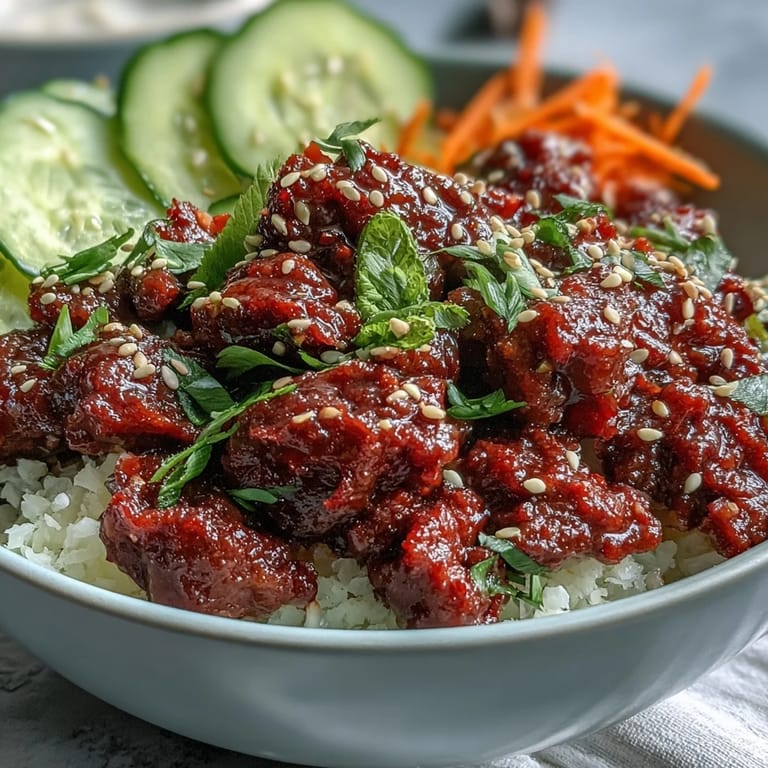
Save My colleague dropped a container of this Korean beef bowl on my desk one Tuesday, still steaming, and asked if I wanted to try what she'd made for meal prep. I took one bite and immediately understood why she'd been raving about it all week—the beef was glossy and clinging to each grain of rice, the sauce hitting that perfect sweet-spicy-savory trifecta that makes you keep eating even when you're full. She laughed and said it takes barely longer than ordering takeout, which felt like permission to finally stop pretending I couldn't cook Korean food at home.
I made this for my sister during a chaotic family gathering, mostly because it felt manageable while everyone was talking over each other in the kitchen. She took a bite and immediately stopped mid-sentence, and suddenly my notoriously picky nephew wanted seconds. By the end of dinner, everyone was quietly scraping their bowls clean, and my mom asked for the recipe—which felt like the highest compliment she could give anything I cooked.
Ingredients
- Lean ground beef: The backbone of this dish, and lean cuts mean the sauce actually clings to the meat instead of swimming in grease—buy it the day you plan to cook for the best texture.
- Gochujang (Korean chili paste): This is where the magic lives, bringing heat, sweetness, and a fermented complexity you can't fake with hot sauce alone.
- Low-sodium soy sauce or tamari: Adds saltiness and that savory depth, but go low-sodium so you control the final seasoning and can taste the other flavors too.
- Brown sugar: Balances the heat and saltiness with a subtle sweetness that rounds out the whole sauce—don't skip it thinking it's unnecessary.
- Sesame oil: Just a tablespoon here adds a nutty richness that transforms the whole dish from good to memorable.
- Garlic and ginger: Minced fresh and added early, they perfume the beef and become almost invisible in the final dish, but everything tastes flat without them.
- Rice vinegar: The secret brightness that cuts through the richness and keeps every bite feeling fresh instead of heavy.
- Rice or cauliflower rice: Choose whatever fits your mood that day—regular rice soaks up the sauce beautifully, while cauliflower rice keeps things lighter without sacrificing satisfaction.
- Fresh toppings: The cool crunch of cucumber, the slight sweetness of carrots, and the sharp bite of green onions aren't just garnish—they're essential contrast that makes you want another spoonful.
- Toasted sesame seeds: That final sprinkle of nuttiness that says you actually care about the details.
Tired of Takeout? 🥡
Get 10 meals you can make faster than delivery arrives. Seriously.
One email. No spam. Unsubscribe anytime.
Instructions
- Heat your skillet and sear the beef:
- Get your large skillet smoking hot, then add the sesame oil and let it shimmer for a moment before the ground beef hits the pan. Break the meat up as it cooks, listening for that satisfying sizzle, and after 4-5 minutes you'll have golden-brown crumbles that smell incredible.
- Build the flavor foundation:
- Once the beef is browned, add your minced garlic and ginger and let them toast for just a minute until the kitchen smells like you're cooking something worthy of a restaurant. This brief moment transforms raw aromatics into something mellow and integrated.
- Create the sauce:
- Stir in the gochujang, soy sauce, brown sugar, rice vinegar, and black pepper, mixing until everything is combined and the sauce starts to cling to each piece of meat. Simmer for 2-3 minutes, watching as the sauce darkens slightly and becomes glossy—this is when you know it's ready.
- Taste and adjust:
- Always taste before serving, because your gochujang might be slightly different from mine, and your preferences matter more than any recipe. Add more soy sauce for saltiness, more vinegar for brightness, or more gochujang if you want the heat to really sing.
- Build your bowl:
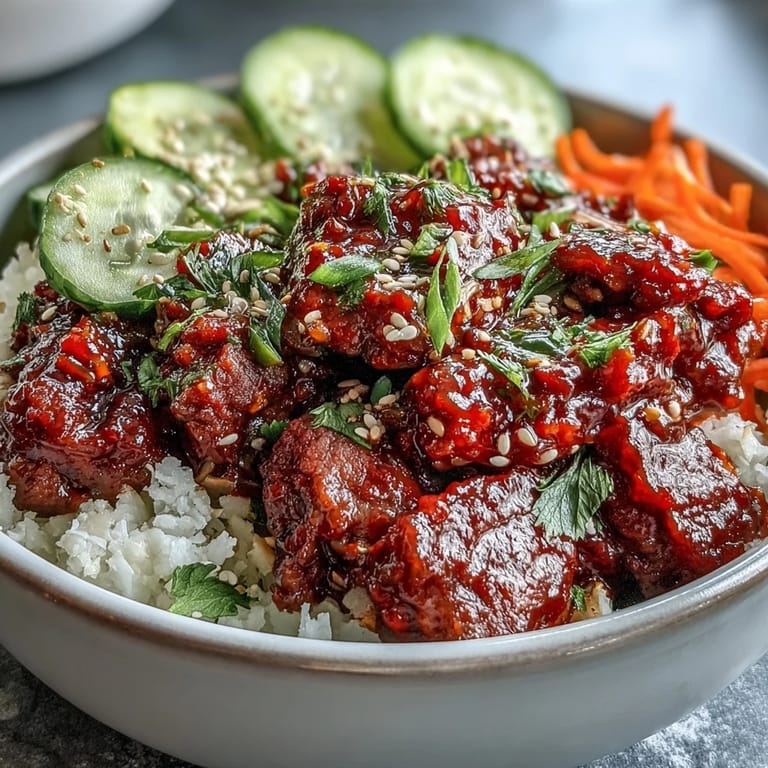
- Divide your warm rice among bowls, then top each portion with the beef and all its glossy sauce. The warmth of the rice matters here—it brings out the flavors of the sauce in a way cold rice never could.
- Garnish like you mean it:
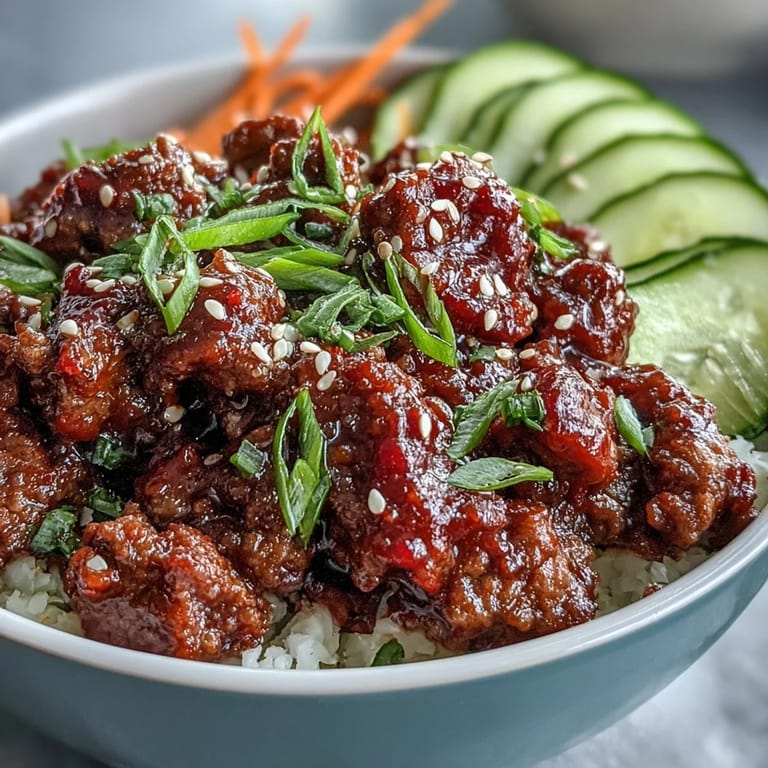
- Layer on the cucumber slices, carrot shreds, green onions, sesame seeds, and any optional toppings you're using, because these aren't afterthoughts—they're the textural contrast that makes the whole bowl sing. Serve immediately while everything is still warm.
 Save
Save This bowl somehow became the thing I make when I need comfort but don't have much time, or when I want to prove to myself that simple food can taste spectacular. There's something about the combination of heat, sweetness, and freshness that feels both indulgent and balanced—like I'm taking care of myself without overthinking it.
The Science of the Sauce
Gochujang is fermented, which means it's packed with umami compounds that deepen and amplify other flavors around it, so when you pair it with soy sauce and brown sugar, you're not just mixing random ingredients—you're creating a flavor pyramid where each component makes the others taste better. The rice vinegar acts as a flavor amplifier too, cutting through richness and making everything pop without adding any heaviness. When these elements simmer together around the beef, they reduce slightly and become this glossy, concentrated sauce that clings to everything it touches.
Adapting This to Your Pantry
I've made this with ground turkey when I was trying to be lighter, and it works beautifully—the sauce is so flavorful that the leaner meat doesn't feel sad or boring. Ground chicken also absorbs the sauce beautifully and gives you the flexibility to add extra seasonings if you want. For low-carb versions, cauliflower rice genuinely satisfies because the sauce is so rich that you don't miss the starch, and honestly, some of my favorite versions have come from whatever vegetables I had in the crisper drawer that needed using.
Meal Prep Magic and Serving Ideas
This bowl is a meal prep dream because the beef actually tastes better the next day after the flavors have had time to mingle and intensify, though I'd keep the fresh toppings separate until you're ready to eat so they stay crisp. You can divide everything into containers and reheat just the beef and rice, adding the fresh garnishes right before eating. It also scales beautifully—I've made this for two people or for a small gathering, and the timing stays roughly the same.
- Keep fresh cucumber and carrots in separate containers so they stay crisp even after a day in the fridge.
- Make a double batch of the beef mixture and freeze half for a future weeknight that needs rescuing.
- Serve with extra gochujang on the side for people who want more heat without you having to rebuild the whole sauce.
 Save
Save This is the kind of recipe that sits somewhere between weeknight survival and genuine satisfaction, the type of dish that makes you feel capable in the kitchen without demanding anything you don't already know how to do. Make it once and it'll become part of your regular rotation.
Common Questions
- → What is gochujang and where can I find it?
Gochujang is a Korean fermented chili paste that adds sweet, savory, and spicy flavors. You'll find it in the Asian aisle of most grocery stores, at Asian markets, or online. Look for it in red tubs or jars.
- → Can I make this dish gluten-free?
Absolutely. Substitute regular soy sauce with tamari and ensure your gochujang brand is certified gluten-free. Many traditional gochujang brands contain wheat, but gluten-free versions are widely available.
- → How spicy is this Korean beef bowl?
The spice level is medium-mild with 2 tablespoons of gochujang. You can easily adjust the heat by adding more paste, a drizzle of sriracha, or fresh sliced chilies. For a milder version, reduce the gochujang to 1 tablespoon.
- → Can I use cauliflower rice instead of regular rice?
Yes, cauliflower rice works beautifully and makes this dish low-carb and keto-friendly. You can use frozen cauliflower rice or make your own by pulsing fresh cauliflower florets in a food processor.
- → How long do leftovers keep in the refrigerator?
Store the cooked beef separately from the rice and fresh toppings. The beef will keep for 3-4 days in an airtight container. Reheat gently in a skillet or microwave, then add fresh garnishes before serving.
- → Can I substitute the ground beef with another protein?
Ground turkey or chicken both work well for a lighter version. Cooking times remain the same, though you may need a splash more oil since lean poultry has less fat than beef.