 Save
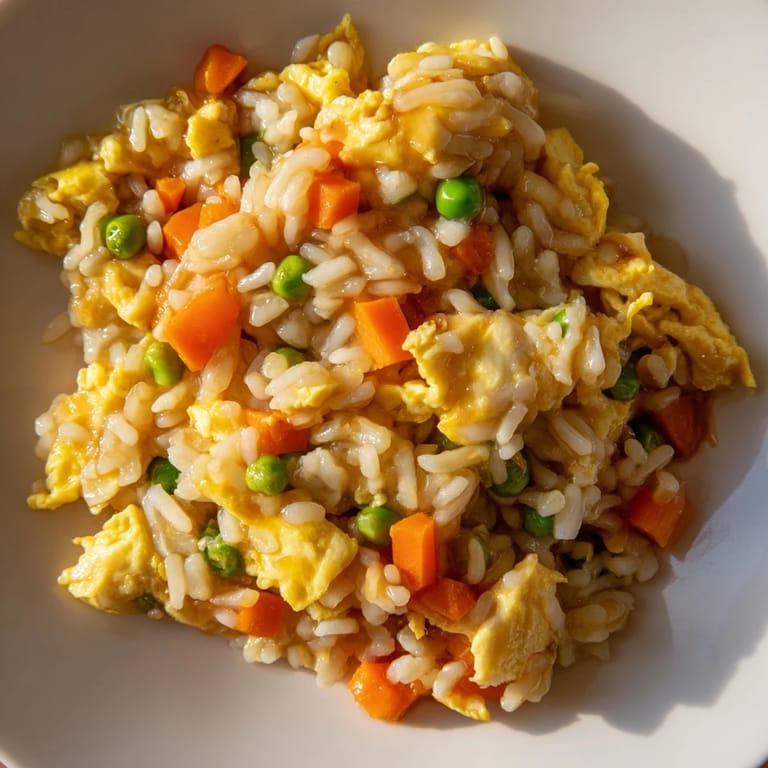
Save There was a Tuesday night when I opened the fridge to find half a container of rice staring back at me, and I realized I had exactly twenty minutes before hunger took over. My roommate was in the living room, and I called out asking if she wanted dinner—not takeout, but something real. That's when egg fried rice became my quiet superpower, the kind of dish that transforms leftovers into something so satisfying that it hardly feels like cooking at all.
I remember standing over that wok, watching the eggs puff up in golden ribbons, and my roommate wandered in drawn by the aroma of soy sauce and sesame oil hitting hot oil. Within five minutes, I was dividing it into two bowls, and she looked genuinely shocked that something so simple could taste like we'd ordered it from somewhere impressive. That's when I understood that the best meals aren't about complexity—they're about knowing exactly when to stop fussing and let the ingredients shine.
Ingredients
- Cooked leftover rice (2 cups, preferably day-old and cold): Cold rice is non-negotiable here because it doesn't clump and fry evenly; fresh warm rice turns mushy and heavy no matter how hard you stir.
- Large eggs (2): They scramble into delicate, fluffy bits if you don't overthink it—pull them from the pan while they still look slightly underdone.
- Diced carrots (1/2 cup): Small, uniform pieces cook faster and distribute their sweetness throughout every bite.
- Frozen peas (1/2 cup, thawed): Thaw them first or they'll drop the temperature of your pan and make everything steam instead of fry.
- Chopped scallions (1/4 cup): Split them into two batches—half goes in during cooking, the other half on top at the end for brightness and crunch.
- Diced bell pepper (1/2 cup, optional): Any color works, but red or yellow adds a subtle sweetness that rounds out the savory notes.
- Soy sauce (2 tablespoons): This is your seasoning workhorse; taste as you go because salt levels vary wildly between brands.
- Sesame oil (1 teaspoon): A little goes a long way—this isn't the oil for cooking, it's the finishing touch that makes everything smell like a proper stir-fry.
- Ground white or black pepper (1/4 teaspoon): White pepper feels more traditional, but either one works depending on what you have on hand.
- Vegetable oil (2 tablespoons): Neutral oil with a high smoke point keeps everything from sticking and burning at the edges.
Tired of Takeout? 🥡
Get 10 meals you can make faster than delivery arrives. Seriously.
One email. No spam. Unsubscribe anytime.
Instructions
- Gather and prep everything:
- Dice your carrots and bell pepper into small, similar-sized pieces so they cook at the same rate. Thaw the peas if they're frozen, chop your scallions, and beat the eggs in a bowl until they're completely uniform and slightly frothy. This is the one moment where patience matters most—having everything ready means the actual cooking moves at a speed that feels almost meditative.
- Wake up the eggs:
- Heat a tablespoon of oil in your largest skillet or wok over medium-high heat until it shimmers, then pour in the beaten eggs all at once. Let them sit for just a moment before scrambling gently with a spatula, pushing them around until they're barely set with still-soft curds, then slide them onto a plate.
- Start the vegetable base:
- Add the remaining oil to the pan, letting it get hot again. Toss in your carrots and bell pepper, stirring constantly for about two minutes—you want them tender but still with a whisper of crunch. The smell that rises up is part of the magic.
- Add the fresh notes:
- Stir in the thawed peas and half of your scallions, cooking for just a minute until everything is heated through and starting to smell irresistible.
- Bring in the rice:
- Add all your cold rice, using the spatula to break up any clumps as you fold it into the vegetables. Keep stirring for two to three minutes, making sure the grains separate and get coated with the heat and oil. The transformation from clumpy and cold to fluffy and warm happens right before your eyes.
- Season and bring it together:
- Drizzle the soy sauce and sesame oil over everything, stirring constantly so every grain gets touched by that savory, nutty flavor. Add a pinch of pepper and taste—adjust the salt only if it needs it.
- Reunite with the eggs:
- Pour the scrambled eggs back into the pan and toss everything together for about a minute, just long enough for the eggs to warm through and distribute themselves throughout.
- Finish and serve:
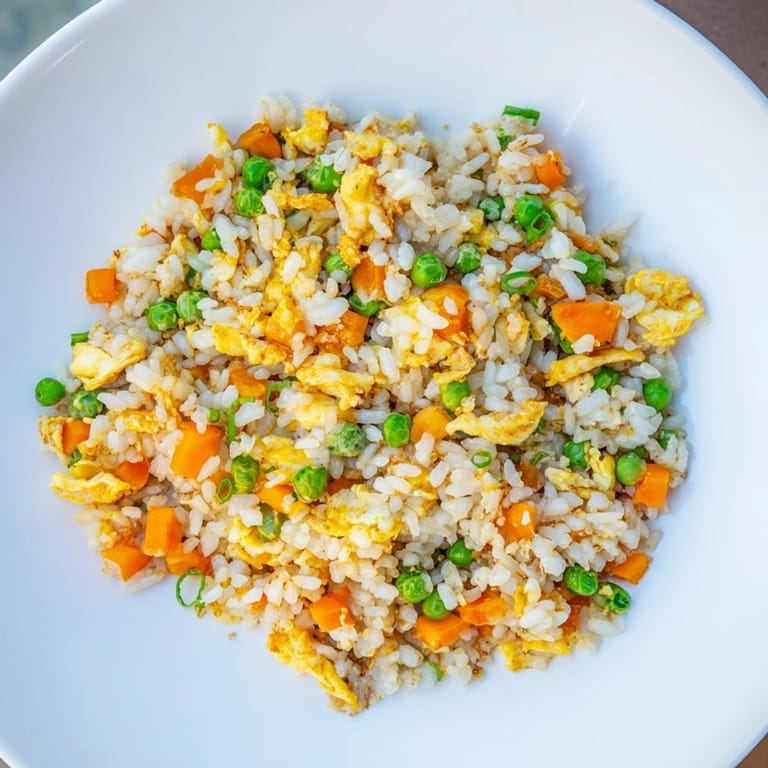
- Remove from heat, scatter the remaining fresh scallions on top for color and crunch, and divide between bowls. Serve while it's still steaming, ideally shared with someone who appreciates the speed and flavor.
 Save
Save What strikes me most about this dish is how it turned leftover rice from takeout the night before into something I actually wanted to make. My guest that Tuesday told me it was better than what she'd ordered originally, and somehow that felt like the highest compliment—not fancy, not complicated, just genuinely delicious and made with intention.
The Secret of Cold Rice
The first time I made fried rice with warm rice, it turned into a sad, sticky clump that no amount of stirring could salvage. Now I keep leftover rice specifically for this reason, storing it in the coldest part of my fridge so the grains stay separate and firm. That single shift changed everything about how this dish turns out, transforming what could be a kitchen disaster into something reliably perfect every single time.
Customizing Your Vegetables
The beauty of fried rice is that it's genuinely flexible with vegetables—I've made it with snap peas when carrots seemed boring, with broccoli when I wanted something more substantial, even with corn when I was in a slightly sweeter mood. The only rule is keeping them small and roughly the same size so they cook evenly and don't dominate any single bite. What matters is that whatever vegetables you choose, they get tossed in hot oil and allowed to develop a touch of color and tenderness before the rice joins them.
Making It More Than Just a Side Dish
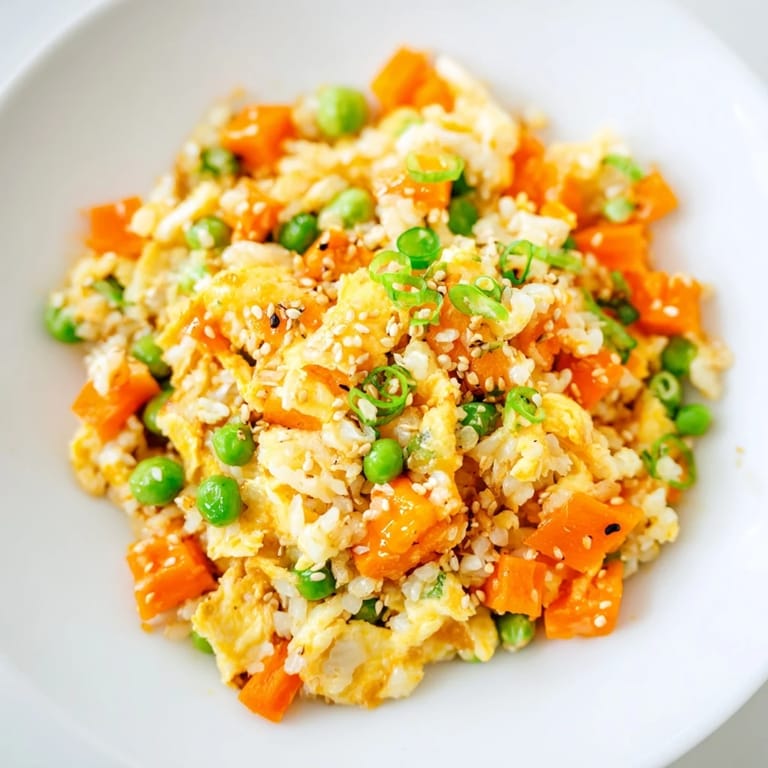
If you want to turn this into a more substantial meal, consider it a canvas for protein—shrimp, cooked chicken, or crumbled tofu all nestle beautifully into the rice and pick up the soy and sesame flavors. Sometimes I'll add a poached egg on top instead of scrambling it in, creating a silky, rich yolk that breaks over everything like a sauce. The dish becomes whatever you need it to be in that moment, which is precisely why it's been my weeknight salvation more times than I can count.
- A pinch of minced garlic or fresh ginger stirred into the oil before the vegetables adds a warm depth that makes the whole thing feel more intentional.
- Drizzle of extra sesame oil or a splash of rice vinegar at the very end brightens everything and adds complexity without needing extra steps.
- If you want the eggs more prominent, cook them in a separate batch and scatter them on top just before serving for a more luxurious presentation.
 Save
Save Egg fried rice taught me that the best home cooking isn't about impressing anyone—it's about taking what you have and making something that satisfies both hunger and the need for a quiet moment in the kitchen. It's the kind of dish that makes you feel capable, like you've genuinely created something worth eating.
Common Questions
- → Can I use freshly cooked rice instead of leftover rice?
Day-old rice works best as it’s drier and prevents the stir-fry from becoming mushy. Fresh rice can be used if cooled and slightly dried before cooking.
- → What vegetables can be added or substituted?
Besides carrots, peas, scallions, and bell pepper, try corn, snap peas, or broccoli for variety and added texture.
- → How can I make this dish vegan?
Replace eggs with firm tofu scrambled or other plant-based proteins, and ensure soy sauce is vegan-friendly.
- → What type of oil is best for stir-frying?
Use neutral oils like vegetable or canola oil for sautéing. Sesame oil is added later for nutty aroma and flavor.
- → Can extra proteins be included?
Yes, cooked chicken, shrimp, or tofu can be added during the vegetable sauté step for a heartier dish.
- → How to avoid the dish becoming too salty?
Use low-sodium soy sauce and adjust salt seasoning at the end according to taste.