 Save
Save My daughter came home from school one afternoon with a dog-eared copy of Green Eggs and Ham, and suddenly every meal became a theatrical production. She wouldn't eat regular scrambled eggs anymore—they had to be green, they had to be special, they had to feel like stepping into a Seussian world. That's when I realized that sometimes the best way to get kids excited about eating isn't through fancy techniques or complicated recipes, but through a little food coloring, some playful presentation, and the magic of turning a beloved story into something they can actually eat. What started as a weeknight solution became our go-to snack plate for parties, playdates, and those moments when she needed a little extra wonder on her plate.
I made this for my nephew's fourth birthday party, and watching twelve four-year-olds discover that eggs could be green and that ham could be rolled into little spirals was pure chaos in the best way. One kid asked if it tasted like the book, another insisted on making his own plate despite the mess, and somehow every single plate came back empty. That's when I knew this wasn't just a cute idea—it was actual kitchen magic.
Ingredients
- Eggs: Four large ones give you enough to fill all the plates generously, and using good quality eggs makes a noticeable difference in both texture and color vibrancy.
- Milk: Just two tablespoons keeps the eggs tender and creamy rather than rubbery, and it helps the green food coloring distribute evenly throughout.
- Green food coloring: Gel or natural versions work best because they color without watering down your eggs like liquid coloring does, and a few drops go surprisingly far.
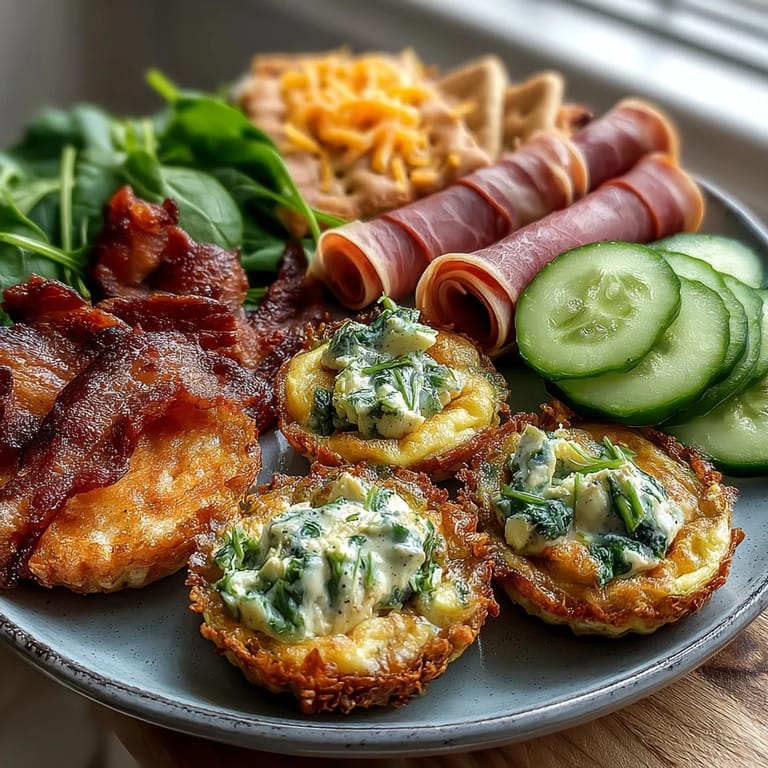
- Ham: Deli ham slices are the real MVP here since they roll beautifully and kids love the interactive element of building their own bites.
- Crackers or mini rice cakes: These serve as your foundation and give kids something satisfying to bite into that isn't just soft egg.
- Baby spinach: Half a cup not only adds genuine green color and nutrition, but it also makes the plate look like something from a storybook illustration.
- Cucumber slices: Cut them into fun shapes with small cookie cutters if you're feeling it, though straight slices work just fine and kids honestly don't care about the shape as much as the novelty.
- Cheddar cheese and mayo or hummus: These are optional but they're the secret to making kids feel like they're building something rather than just eating what you made.
Tired of Takeout? 🥡
Get 10 meals you can make faster than delivery arrives. Seriously.
One email. No spam. Unsubscribe anytime.
Instructions
- Whisk those eggs into something magical:
- Crack your four eggs into a bowl, add the milk, and watch as the green food coloring swirls through like edible watercolor. Whisk until the color is even and the mixture looks like something from Dr. Seuss's imagination rather than a regular scramble.
- Scramble with intention:
- Heat your nonstick skillet over medium heat and pour in that vibrant mixture. Stir gently and let it cook until the eggs are just barely set—this is not the time for browning or crispiness, you want soft and custardy so kids actually want to eat it.
- Give the ham a moment:
- Warm those ham slices for just a minute or two in the same skillet, or skip this step entirely if you're short on time. Either way, they're more fun when rolled or folded, so go ahead and make them look intentional.
- Build the plate like you're telling a story:
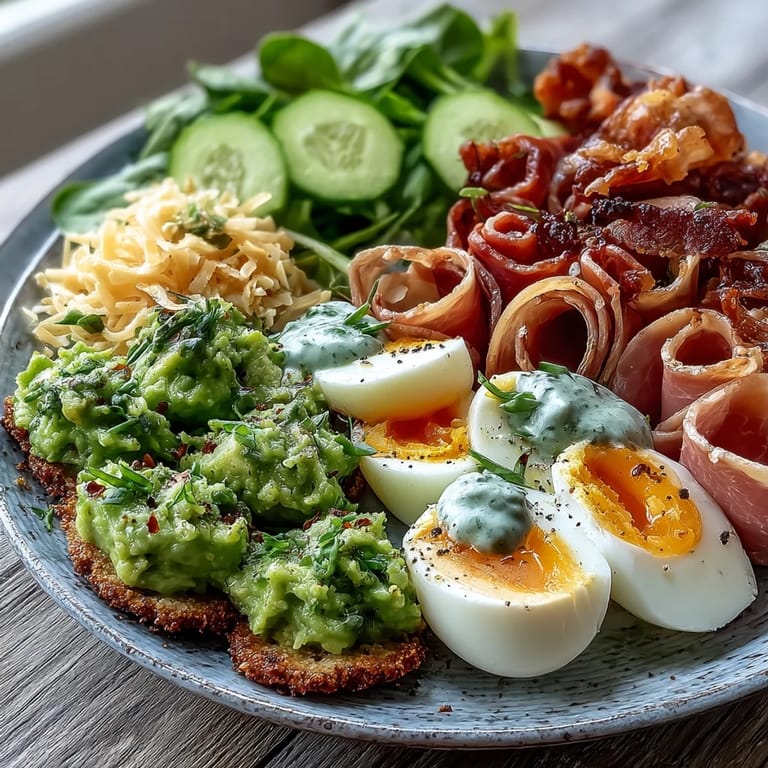
- Arrange your crackers or rice cakes first—these are your foundation and give the plate structure. Top each cracker with a spoonful of those dreamy green eggs, nestling them like little treasures.
- Add the supporting cast:
- Tuck a rolled ham slice next to the eggs, scatter spinach leaves around like you're setting a stage, and arrange cucumber shapes wherever they fit. This is where the plate becomes less food and more an edible scene from a story.
- The finishing flourish:
- A sprinkle of cheddar cheese if you're going that route, a tiny dollop of mayo or hummus for dipping, and then step back and look at what you've created. It should feel special enough that kids recognize something magical happened in your kitchen.
- Serve with theater:
- Bring the plate to the table and let the anticipation build for just a moment before they dive in. The best part isn't really the food—it's watching someone discover that a story they love can actually become something they taste.
 Save
Save My daughter now asks for this plate once a month, and she doesn't even want to read the book anymore—she wants to eat it instead. That shift from watching a story to living it through food is something I didn't expect when I first mixed up those green eggs, and it's become one of my favorite kitchen moments with her.
The Natural Green Option
If you're avoiding food coloring altogether, you can blend a handful of baby spinach with your eggs before cooking them, though you'll need to strain out any bits so you don't have chunks. The color won't be quite as bright or uniform as the dyed version, but it's authentic to the vegetable and adds actual nutrition rather than just visual drama. Some kids honestly prefer it because it tastes slightly less artificial, and you get the quiet satisfaction of knowing you cooked something genuinely good for them.
Making It a Party Thing
This plate works brilliantly for larger groups because you can prep everything ahead of time and then let kids build their own plates, which solves so many problems at once. They feel like they're creating something rather than being served something, they get to customize it to their exact preferences, and you're not standing over a stove trying to make twelve individual plates while everyone gets restless. I've done this at birthday parties, classroom celebrations, and family brunches, and it consistently works because it activates something in kids' brains—the combination of story, novelty, and autonomy is apparently irresistible.
Variations and Substitutions
You can swap the ham for turkey, prosciutto, or skip the meat entirely and nobody will know the difference in terms of the meal working. The crackers can be replaced with toasted bread cut into small shapes, and if someone's sensitive to dairy, you can use milk alternatives and skip the cheese. The real magic isn't in specific ingredients—it's in the idea that you took something your kids love and made it edible. Here are your best backup moves.
- Turkey deli slices work identically to ham and are slightly lighter, so use whatever you already have in your fridge.
- Natural green coloring made from spinach or spirulina exists if food dyes genuinely concern you, though the spinach-blending method is honestly just as easy.
- Let kids pick their own cucumber shapes or skip them entirely if that feels like extra work—the core magic is the green eggs and the rolled ham.
 Save
Save There's something quietly revolutionary about taking a children's book and turning it into an actual meal, watching their faces when they realize the impossible thing on the page is real and right in front of them. This snack plate is proof that sometimes the best recipes aren't about technique or exotic ingredients—they're about noticing what delights someone and building something edible around it.
Common Questions
- → How do I naturally color the eggs green?
Blend fresh spinach leaves with eggs before cooking for a natural green hue without artificial dyes.
- → Can I substitute the ham with a different protein?
Yes, turkey ham or vegetarian deli slices work well as lighter or meat-free alternatives.
- → What sides pair best with this snack plate?
Round crackers or mini rice cakes complement the soft eggs and ham, while fresh cucumber and spinach add crispness.
- → Is this snack suitable for kids with nut allergies?
Yes, all ingredients are nut-free, but always check labels on packaged items to ensure safety.
- → How long does preparation take?
Preparation and cooking together take about 20 minutes, making it a quick and easy option.