 Save
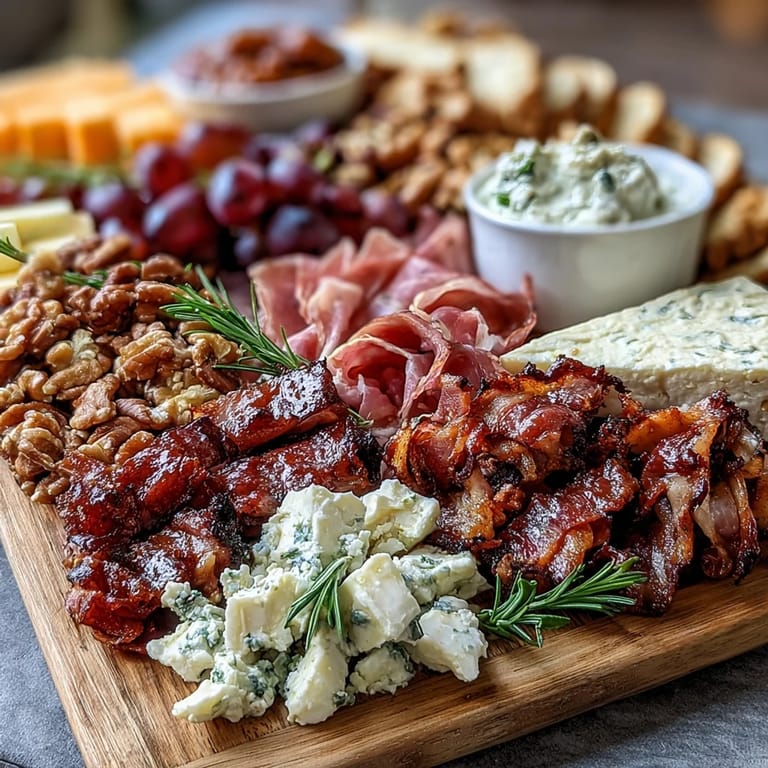
Save My neighbor texted me a photo of her empty kitchen the morning after closing on her new place, and I knew exactly what she needed: not a casserole, but an excuse to gather people around something beautiful. That's when I started thinking about the perfect housewarming gift disguised as appetizers—a charcuterie board so abundant and thoughtful that it feels like a celebration rather than just snacks. There's something about arranging cured meats and cheeses on a board that makes you feel simultaneously impressive and completely in control, even if you've never done it before. The magic isn't in cooking; it's in the art of curation and knowing that almost everyone, somewhere on this board, will find something they adore.
I showed up to that housewarming with a board I'd assembled that morning, and watched my neighbor's face light up when she saw it—not just because of the food, but because someone had thought about variety, about color, about making her new space feel immediately welcoming. Her guests didn't just eat; they discovered. One person tried a combination of aged cheddar with dried apricots and announced it like they'd invented it themselves. Another filled a small plate with grapes and olives and sat on the floor by the window, genuinely content. That board became the heart of the evening, the reason people stayed longer than they planned.
Ingredients
- Prosciutto (120 g): Buy it sliced at the deli counter and let it rest at room temperature for 15 minutes before arranging—it folds more gracefully and tastes less aggressively salty when it's not cold.
- Salami (120 g): Choose a variety with good marbling; it's the workhorse of the board and bridges the gap between those who want something mild and those who like a punch.
- Smoked ham (120 g): This is your crowd-pleaser that makes everyone comfortable; it's familiar enough to feel safe but flavorful enough to matter.
- Chorizo slices (100 g): The bold statement ingredient that adds color and spice; position it where curious eaters will find it.
- Brie (150 g): Slice it thin rather than thick—people are more likely to try it and you'll cover more board real estate.
- Aged cheddar (150 g): Cube it into generous pieces; the sharpness balances the richness of the meats beautifully.
- Gouda (120 g): Its gentle sweetness makes it the diplomat cheese that satisfies people who might otherwise skip the cheese section.
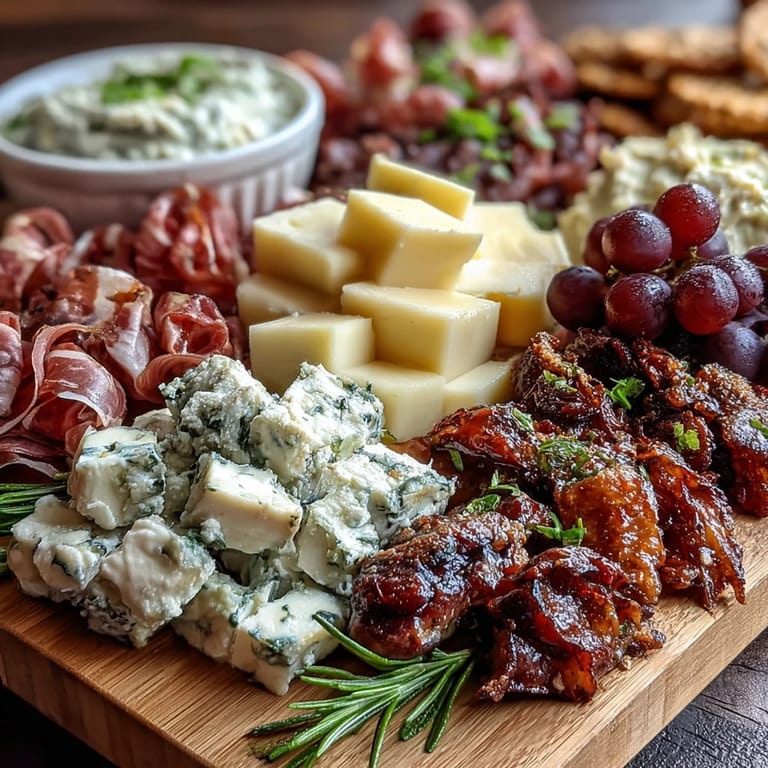
- Blue cheese (100 g): Crumble it into small piles rather than large chunks—people often taste it tentatively, and small portions feel less intimidating.
- Hummus (100 g): Make your own if you have time, but store-bought works perfectly; it's the vegetarian anchor of the board.
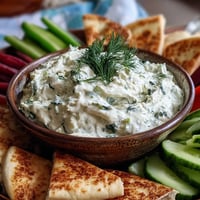
- Tzatziki (100 g): Cool, herbaceous, and the dip that pairs unexpectedly well with cured meats—people discover this combination and thank you later.
- Roasted red pepper dip (100 g): Brings sweetness and color; it's the dip that non-adventurous eaters gravitate toward first.
- Assorted crackers (150 g): Buy at least two types—multigrain feels substantial, water crackers stay crisp longer, and variety keeps people from demolishing one variety too quickly.
- Baguette slices (100 g): Slice them no more than two hours before serving or they'll dry out and taste stale; arrange some fanned and some stacked for visual interest.
- Breadsticks (100 g): These are the convenient vessels for dips that prevent crackers from crumbling into the bowls.
- Red grapes (1 cup): They provide sweetness and bright color; keep them in a small cluster so people understand they're meant to be eaten alone or paired with cheese.
- Green grapes (1 cup): The pale counterpoint to red grapes that makes the fruit section feel intentional and balanced.
- Cherry tomatoes (1 cup): Leave them whole or halved depending on your board's overall aesthetic; whole feels more abundant.
- Cucumber slices (1 cup): Prepare these last and pat them dry—excess moisture makes the board look sad and they'll wilt against the cured meats if they sit too long.
- Red bell pepper (1 sliced): The brightest color on the board; angle the slices slightly for a more dynamic presentation.
- Baby carrots (1 cup): Their natural sweetness makes them a bridge for people torn between savory and sweet.
- Mixed nuts (½ cup): Include almonds, cashews, and walnuts for variety; raw or lightly roasted both work, but roasted feels more intentional.
- Olives (½ cup, pitted): Use both green and black for visual contrast; pitted ones mean people can eat them without hesitation.
- Dried apricots (¼ cup): These are the secret weapon that makes people pause and say, 'Wait, that combination actually works.'
- Dried figs (¼ cup): Darker and more sophisticated than apricots; arrange them where they'll catch the light.
- Fresh herbs for garnish (rosemary, thyme): A small sprig of rosemary tucked between cheeses transforms a functional board into something that looks like it came from a magazine.
Tired of Takeout? 🥡
Get 10 meals you can make faster than delivery arrives. Seriously.
One email. No spam. Unsubscribe anytime.
Instructions
- Set your stage:
- Clear your serving board or platter and let it sit at room temperature while you gather everything—a cold board will sweat and cause things to shift around once you start arranging. If you're using a wooden board, a light rub with a clean cloth removes dust and makes colors pop.
- Anchor with meats:
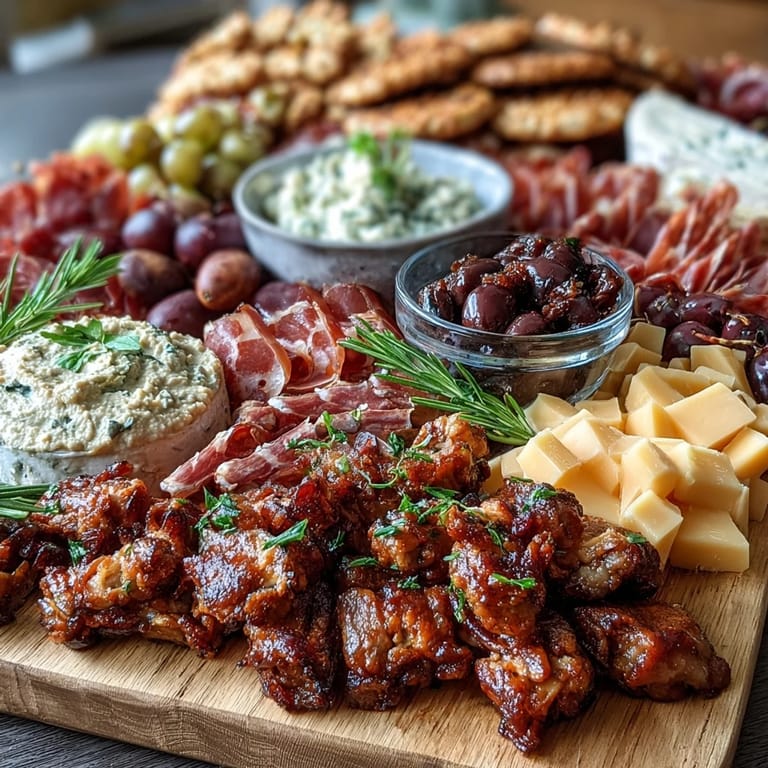
- Arrange cured meats in loose, natural folds rather than precise rows; prosciutto looks ethereal when draped, salami looks bolder in overlapping circles, and ham can fill gaps when torn into rough pieces. Leave plenty of space between types so flavors don't blur together in anyone's mind.
- Position the cheeses:
- Place different cheese types in separate zones rather than dotting them randomly; your guests should understand they're different things. Soft cheeses like brie benefit from being slightly elevated on the board so they don't look like they're melting into everything else.
- Nestle the dips:
- Fill small bowls with each dip and position them where they won't tip—corners and slightly recessed areas of the board work best. Arrange them so no dip is directly next to another dip, forcing people to make conscious choices rather than defaulting to what's closest.
- Fan the vessels:
- Crackers look most appealing when some are fanned in an overlapping pattern and others are loosely stacked; baguette slices can mirror this treatment. Breadsticks should stand upright in a cluster, like flowers in a vase, making them visually distinct from the flatness of crackers.
- Fill the breathing room:
- Now take your fresh vegetables and fruits and use them to fill gaps with intention—grapes in a small bunch, tomatoes clustered by color, cucumber and pepper slices arranged like they're showing off. This step transforms a collection of items into a composition.
- Scatter the finishing touches:
- Distribute nuts, olives, and dried fruits in small clusters throughout, not in one section—this teaches your guests that combinations exist everywhere. A small pile of nuts next to cheese, olives near the prosciutto, and dried apricots somewhere they'll be discovered mid-board.
- Crown it with herbs:
- Tuck fresh rosemary and thyme sprigs into gaps and across the surface—they catch the light, smell incredible, and signal that someone cared about details. Stand back and look at it; if any area feels visually empty, one more herb sprig usually fixes it.
 Save
Save What I remember most vividly isn't the food itself, but the moment when my neighbor's new coworker asked for the recipe—not because she wanted to recreate the board, but because she wanted to host her own gathering now that she'd seen how simple it could be. The board had given her permission to do something generous without burning herself out. That's when I realized this wasn't really about cured meats and cheese at all; it was about creating a reason for people to slow down together in a space that still smelled like fresh paint and new beginnings.
The Art of Strategic Placement
After assembling dozens of boards, I've learned that position matters more than people assume. The items you place first set the tone for everything else—if you start with a bold statement like chorizo, the board feels adventurous from the beginning. If you anchor with familiar cheeses and gentle meats, the whole composition feels inviting and safe. I started thinking about boards like I think about conversations: someone needs to break the ice, then others can relax and be themselves. The progression matters. A guest who arrives uncertain should be able to start with cucumber and gouda, build confidence, and by the end of the evening be trying unexpected combinations with prosciutto and dried fig.
Managing the Flow and Replenishment
Here's what nobody tells you: your board will empty in weird, uneven ways. The crackers vanish first, almost always. The cheese holds longer than the meats. The dips need constant smoothing and topping off once people start dipping. This isn't a failure; it's exactly how it should work. Keep extra crackers and baguette slices nearby, ready to refresh the board as gaps appear. Watch which items disappear fastest and be prepared to replenish those—your board tells a story about what your guests love, and respecting that story means keeping it abundant rather than sparse.
Pairing, Preferences, and Permission
I learned something important the hard way: people want permission to be adventurous or cautious on their own terms. A charcuterie board gives that to them naturally. Someone can fill a small plate with only nuts and dried fruit if that's what they want, and nobody questions it. Someone else can load up on cured meats and skip everything else entirely. The beauty is that the board doesn't judge—it accommodates. This is also why including clearly vegetarian and non-dairy elements matters; it's not about being politically correct, it's about making sure everyone at your gathering feels thought of.
- If someone asks about allergens, know what's in your dips and where your meats were processed—these conversations matter.
- Keep wet napkins nearby because nothing ends a board moment faster than people feeling sticky and uncomfortable.
- Remember that the board isn't just food; it's the opening chapter of your gathering, and how people feel during it affects the whole evening.
 Save
Save A charcuterie board is forgiveness in appetizer form—it works when you're short on time, feeds any crowd, and somehow makes you look like you've been practicing French cuisine for years. More importantly, it gives people permission to linger, to try new things, and to feel celebrated.
Common Questions
- → What meats work best on a charcuterie board?
Cured meats like prosciutto, salami, smoked ham, and chorizo provide a balance of flavors, textures, and colors.
- → How can I make the board more colorful?
Include fresh produce such as grapes, cherry tomatoes, cucumbers, and bell peppers for vibrant colors and freshness.
- → What dips complement cured meats and cheeses?
Hummus, tzatziki, and roasted red pepper dip add creamy, tangy accents that pair well with both meats and cheeses.
- → Can this board accommodate dietary restrictions?
Yes, substitute meats or cheeses as needed and include gluten-free crackers for guests with sensitivities.
- → How to enhance presentation and flavor?
Garnish with fresh herbs like rosemary and thyme to add aroma and a polished finish to the board.