 Save
Save I discovered jambalaya on a humid August evening when a friend dragged me to a tiny Creole restaurant tucked between a laundromat and a closed bookstore. One spoonful and I was transported—the smoky sausage, tender shrimp, and those perfectly cooked rice grains each holding flavor. I spent weeks trying to recreate it in my own kitchen, and when I finally nailed it in a single skillet, I realized this wasn't just food; it was a little piece of magic I could make whenever I wanted.
The first time I made this for guests, my kitchen filled with this incredible smoky aroma that made everyone crowd around asking what on earth I was cooking. Watching four people demolish their bowls in near silence, then immediately asking for seconds, told me I'd finally earned my place in the jambalaya hall of fame.
Ingredients
- Andouille sausage: This smoky, slightly spiced sausage is the backbone of the dish—it's what gives jambalaya its signature depth, so don't skip it or substitute with something mild.
- Large shrimp: Peeling and deveining takes five minutes and makes an enormous difference in texture and taste compared to frozen cocktail shrimp.
- Yellow onion, red and green bell peppers, celery: This holy trinity (well, quartet) builds the aromatic base; soften them fully before adding rice so they release their sweetness.
- Garlic: Fresh minced garlic, not powder, adds a brightness that cuts through the richness of the sausage.
- Long-grain white rice: This absorbs liquid evenly and won't turn mushy like shorter grains; measuring by weight ensures consistency.
- Chicken broth and canned tomatoes: Low-sodium broth lets you control the salt, and canned tomatoes (with their juice) add body and acidity that balance the smoke.
- Smoked paprika, thyme, oregano, cayenne: These spices work in concert to create that distinctive Creole warmth; don't skip the smoked paprika especially.
- Olive oil: Two tablespoons total feels lean, but it's enough when you're building flavor through browning and spicing.
- Fresh parsley: A small handful scattered at the end wakes up the dish with freshness and color.
Tired of Takeout? 🥡
Get 10 meals you can make faster than delivery arrives. Seriously.
One email. No spam. Unsubscribe anytime.
Instructions
- Brown the sausage:
- Heat one tablespoon of olive oil in your skillet over medium-high heat until it shimmers, then add the sausage slices. Let them sit for a minute so they develop a golden crust; this browning is where the smoky flavor really concentrates. Once they're dark and caramelized on both sides (about 3–4 minutes total), scoop them onto a plate and set them aside.
- Build the base:
- Add the remaining oil to the same skillet with all those fond bits still clinging to the bottom. Toss in your onion, peppers, and celery, stirring often so they soften and turn translucent without browning (4–5 minutes). You'll smell when they're ready—sweetness replaces rawness. Add the minced garlic and cook just until fragrant, about a minute more.
- Toast the rice:
- Stir in the rice and all your spices—smoked paprika, thyme, oregano, cayenne, black pepper, and salt. Let it cook for one full minute, stirring constantly so every grain gets coated in oil and spice. You're toasting the rice slightly, which helps it stay separate when it cooks.
- Combine everything:
- Return the sausage to the skillet, then pour in the canned tomatoes (juice and all) and chicken broth. Stir well to distribute the rice evenly and bring everything to a gentle simmer. You should see small bubbles breaking the surface all over.
- Simmer covered:
- Reduce heat to low, cover your skillet with a lid or even aluminum foil, and leave it alone for 20 minutes. Resist the urge to stir; the rice needs quiet time to absorb the liquid and cook through. After 20 minutes, the rice should be tender and most of the liquid should be absorbed, though a tiny bit of moisture is fine.
- Cook the shrimp:
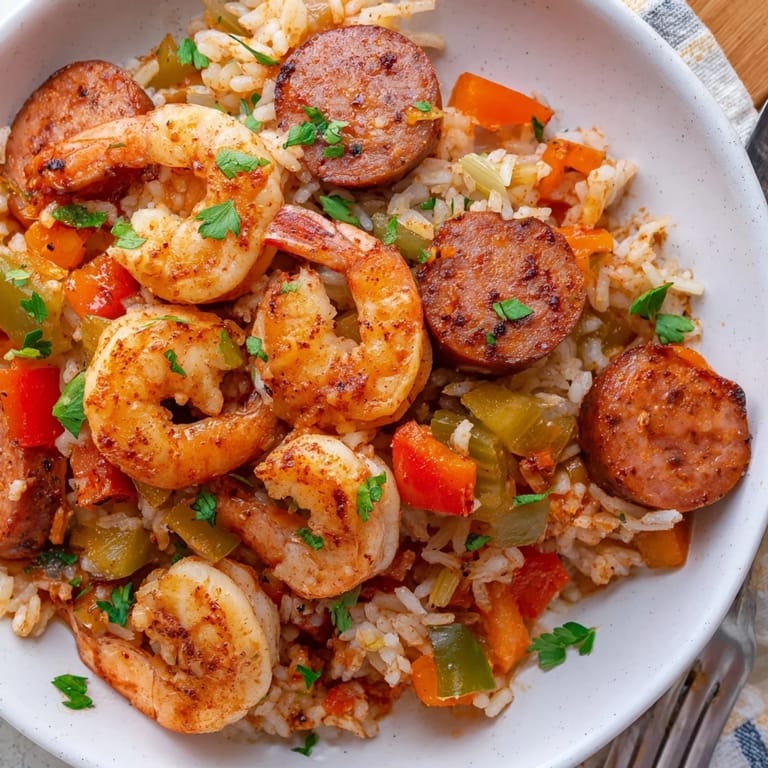
- Arrange the shrimp in a single layer on top of the rice, cover again, and cook for 5–7 minutes until the shrimp turn pink and firm. They cook quickly from the steam, so watch the clock—overcooked shrimp turns rubbery.
- Finish and serve:
- Fluff the rice gently with a fork, scatter fresh parsley on top for color and brightness, and serve immediately while everything is hot.
 Save
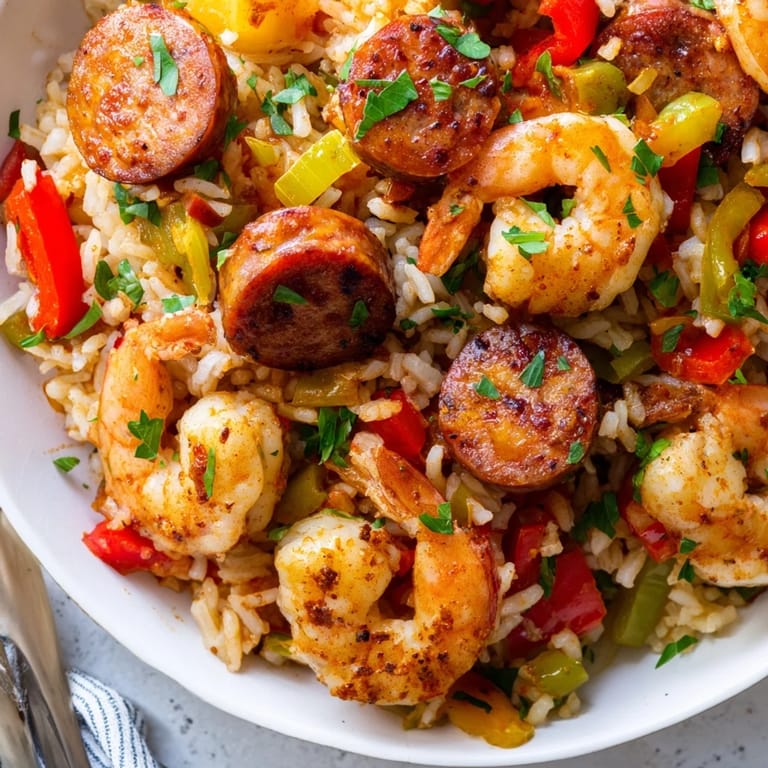
Save There's something about the moment you uncover that skillet and see the pink shrimp peeking through the golden rice that makes you feel like a real cook. That's when I realized jambalaya wasn't just supper—it was the dish that finally made me trust my instincts in the kitchen.
Variations and Swaps
Jambalaya is forgiving enough to handle substitutions without losing its soul. Chicken works beautifully if shrimp isn't your thing—just use boneless, skinless thighs cut into bite-sized pieces and add them back to the skillet with the sausage so they have time to cook through. Some cooks add diced okra in the last few minutes of cooking, which thickens the sauce slightly and adds a subtle vegetal sweetness. If you can't find andouille, smoked kielbasa or even bacon works in a pinch, though the flavor shifts a bit. Creole seasoning straight from the jar replaces all those individual spices perfectly and actually tastes better on some days—cooking isn't about rigid rules.
Pairing and Serving
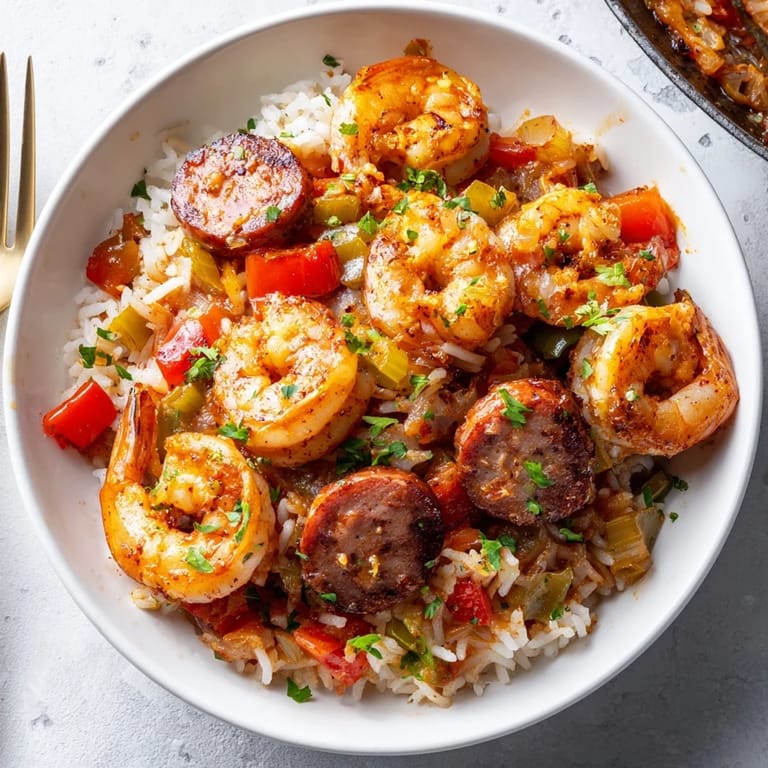
Jambalaya shines brightest when it's surrounded by the right accompaniments. A crusty baguette or thick slices of cornbread soak up the sauce beautifully, and a cold glass of crisp white wine like Sauvignon Blanc cuts through the smokiness and heat without overpowering the delicate shrimp. Some people serve hot sauce on the side—a bottle of Tabasco or your favorite Louisiana style sauce lets people calibrate the heat to their taste. I've also poured this into shallow bowls and finished with a drizzle of hot sesame oil for a bridge between Creole and Asian flavors, and it surprised everyone in the best way.
Storage and Make-Ahead Tips
Jambalaya keeps beautifully in the refrigerator for three days, and the flavors actually deepen slightly as everything sits together overnight. Reheat it gently on the stovetop with a splash of water or broth to loosen the rice, stirring occasionally so it warms evenly without sticking. You can prep all your vegetables and measure your spices the night before, which cuts active cooking time in half on a busy weeknight. Just store everything in separate containers so nothing gets soggy, and keep the shrimp in the coldest part of your fridge until the last minute.
- Don't freeze jambalaya if shrimp is the main protein—it becomes rubbery when thawed, though sausage and rice versions freeze well.
- Leftover portions become something entirely new when you warm them in a tortilla with a fried egg on top for breakfast.
- This dish actually tastes better the next day, so making extra is never a mistake.
 Save
Save Jambalaya is one of those dishes that rewards you for showing up and paying attention, but doesn't demand perfection. Make it once, and you'll understand why people keep coming back to this one skillet forever.
Common Questions
- → Can I use other proteins besides shrimp and sausage?
Yes, you can substitute chicken or use both shrimp and chicken, adjusting cooking times accordingly to ensure all proteins are cooked through.
- → How can I make this dish spicier?
Add extra cayenne pepper during seasoning or serve alongside hot sauce to enhance the heat level to your preference.
- → What type of rice works best for this skillet?
Long-grain white rice is ideal as it cooks evenly and stays fluffy, absorbing the flavorful broth and spices perfectly.
- → Is it possible to prepare this dish gluten-free?
Yes, ensure the sausage and broth used are gluten-free by checking labels carefully to avoid hidden gluten ingredients.
- → Can I make this dish ahead of time?
It’s best served fresh, but leftovers can be stored refrigerated and gently reheated without losing much flavor or texture.