 Save
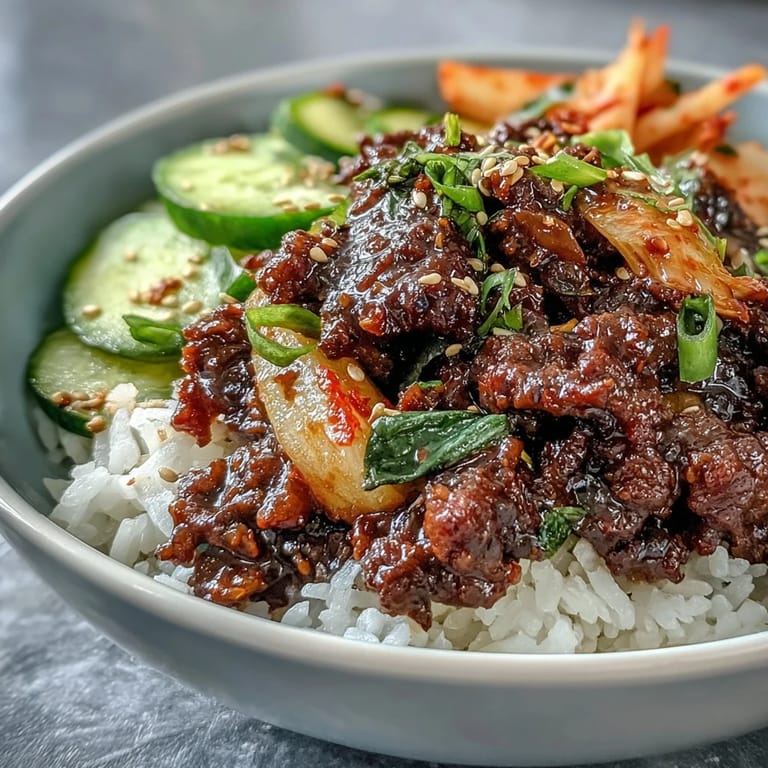
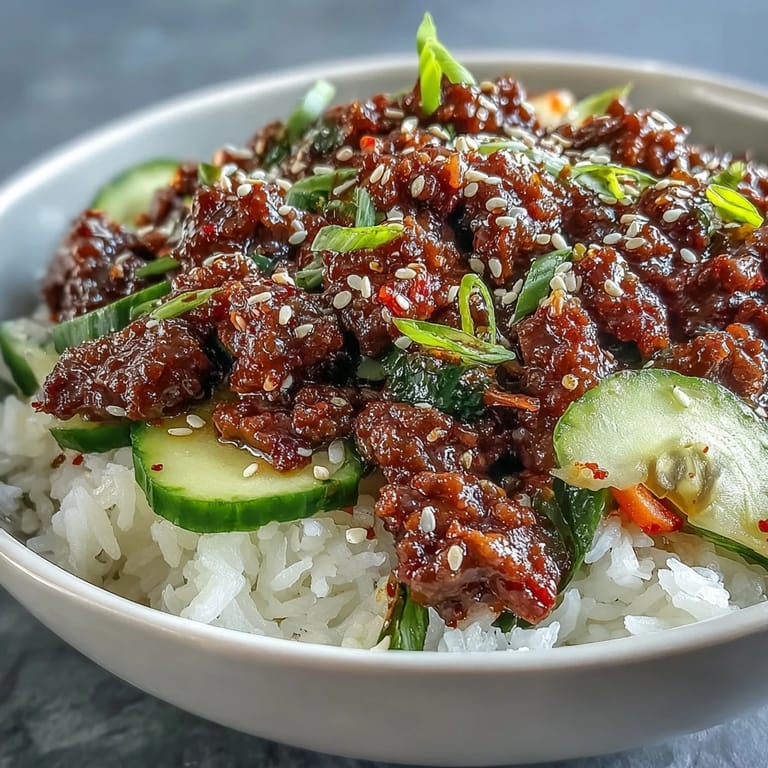
Save Experience the bold and vibrant flavors of Seoul with this easy-to-make Korean Beef Bowl. This dish features savory ground beef glazed in a spicy gochujang sauce, balanced by the refreshing crunch of quick-pickled vegetables and tangy kimchi. It is a hearty, dairy-free meal that brings restaurant-quality tastes to your dinner table in just 35 minutes.
Save The beauty of this bowl lies in the contrast of temperatures and textures. The warm, seasoned beef melds perfectly with the cool, crisp cucumber and radish slices, while the kimchi adds a fermented punch that rounds out every bite.
Ingredients
Tired of Takeout? 🥡
Get 10 meals you can make faster than delivery arrives. Seriously.
One email. No spam. Unsubscribe anytime.
- For the Beef: 1 lb (450 g) lean ground beef, 2 tbsp vegetable oil, 3 cloves garlic (minced), 1 tbsp fresh ginger (grated), 3 tbsp gochujang (Korean chili paste), 2 tbsp soy sauce, 1 tbsp brown sugar, 1 tbsp rice vinegar, 1 tsp toasted sesame oil, 2 green onions (thinly sliced)
- For the Pickled Vegetables: 1/2 cup (60 g) carrot (julienned), 1/2 cup (60 g) daikon radish (julienned), 1/2 cup (120 ml) rice vinegar, 1 tbsp sugar, 1/2 tsp salt
- For Serving: 4 cups cooked white rice (or brown rice), 1 cup cucumber (thinly sliced), 1/2 cup radish (thinly sliced), 1 cup kimchi (chopped), 1 tbsp toasted sesame seeds
Instructions
- 1. Prepare the Pickled Vegetables
- In a small bowl, combine the rice vinegar, sugar, and salt. Stir until dissolved. Add the carrot and daikon radish. Mix well and set aside to pickle while you prepare the rest of the dish.
- 2. Cook the Beef
- Heat vegetable oil in a large skillet over medium-high heat. Add garlic and ginger, sauté for 1 minute until fragrant. Add ground beef and cook, breaking it up with a spoon, until browned and cooked through (about 5–6 minutes). Drain excess fat if needed.
- 3. Season the Beef
- Stir in the gochujang, soy sauce, brown sugar, rice vinegar, and sesame oil. Cook for another 2–3 minutes, allowing the sauce to thicken and coat the beef. Remove from heat and stir in half the green onions.
- 4. Assemble the Bowls
- Divide the cooked rice among 4 bowls. Top each with a generous portion of the beef mixture. Arrange pickled vegetables, cucumber, radish, and kimchi around the beef. Garnish with remaining green onions and toasted sesame seeds.
- 5. Serve
- Serve immediately.
Zusatztipps für die Zubereitung
To ensure the best results, use a large skillet to allow the beef to brown properly without overcrowding. For efficient preparation, use tools such as a rice cooker for the base and a sharp knife for the julienned vegetables. Remember to drain any excess fat after browning the beef to keep the sauce vibrant and flavorful.
Varianten und Anpassungen
This recipe is highly versatile. You can substitute the ground beef with ground chicken or turkey if desired. For a gluten-free version, swap the soy sauce for tamari and ensure your gochujang is certified gluten-free. For those who prefer different grains, brown rice makes an excellent alternative to white rice.
Serviervorschläge
Serve these bowls immediately for the best texture. If you enjoy extra heat, add a drizzle of sriracha or an additional dollop of gochujang on top. This meal pairs beautifully with a light, crisp lager or a chilled cup of green tea to complement the spicy and savory flavors.
 Save
Save With its striking colors and bold profile, the Korean Beef Bowl is a satisfying and wholesome choice for any meal. Enjoy this simple yet sophisticated dish that perfectly captures the essence of modern Korean-inspired cuisine.
Common Questions
- → What is gochujang?
Gochujang is a Korean chili paste made from fermented soybeans, glutinous rice, and red chili powder. It adds a rich, spicy, and slightly sweet flavor to dishes. You can find it in Asian grocery stores or the international aisle of most supermarkets.
- → Can I make this bowl less spicy?
Absolutely. Reduce the amount of gochujang to 1-2 tablespoons for a milder version. You can also add a tablespoon of honey or brown sugar to balance the heat. The pickled vegetables help cool down the spice naturally.
- → How long do pickled vegetables keep?
The quick-pickled carrots and daikon will stay fresh in the refrigerator for up to one week when stored in an airtight container. They actually develop more flavor as they sit, making them great for meal prep.
- → Can I use different proteins?
Ground chicken, turkey, or even crumbled tofu work well as alternatives to beef. Adjust cooking time slightly—poultry may need an extra minute or two to cook through completely. The seasoning quantities remain the same.
- → What can I serve with Korean beef bowls?
These bowls are complete meals on their own, but you can serve them with steamed bok choy, roasted broccoli, or a simple side salad dressed with sesame vinaigrette. A light lager or chilled green tea makes an excellent beverage pairing.