 Save
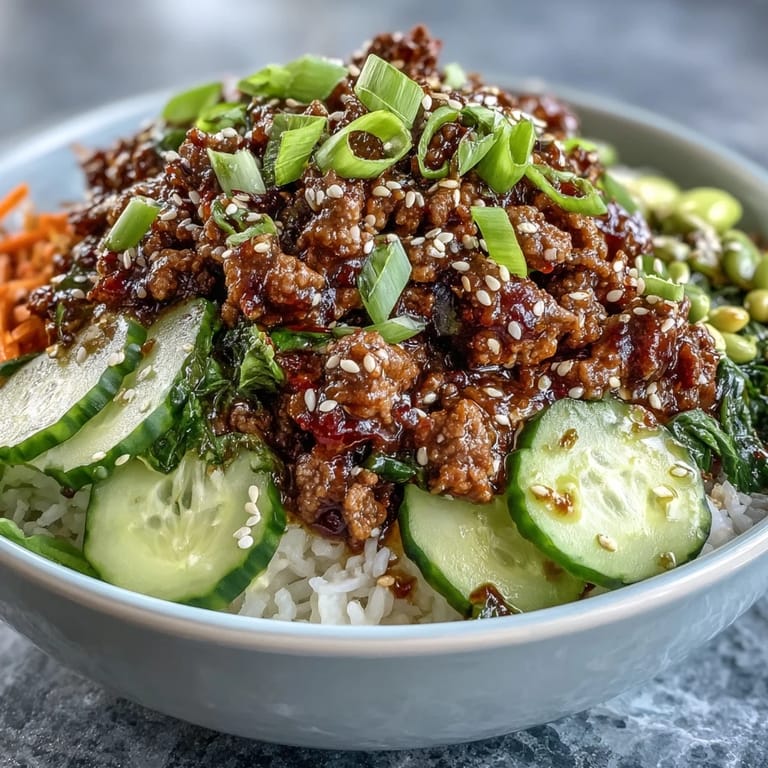
Save My coworker brought a Korean beef bowl to lunch one Tuesday, and the whole office smelled like toasted sesame and gochujang for hours afterward. I remember thinking how something so quick to make looked impossibly restaurant-quality, with its neat rows of colorful vegetables and that glossy, spiced beef. That afternoon I decided to recreate it, and what started as a simple weeknight dinner became my go-to formula for feeding people with minimal fuss but maximum flavor.
I made this for my sister during a lazy Sunday when she was stressed about work, and watching her expression shift from tired to genuinely delighted as she took the first bite reminded me why I love cooking. She went back for seconds and asked for the recipe immediately, which meant I'd stumbled onto something with real staying power.
Ingredients
- Lean ground beef (1 lb): The foundation of the bowl; choose meat that's not too fatty so the sauce clings beautifully without greasiness.
- Gochujang (2 tbsp): This Korean chili paste is where the soul of the dish lives, bringing heat, umami, and a subtle sweetness that store-bought marinades can't match.
- Soy sauce (2 tbsp): Use full-sodium soy sauce for proper depth, or swap for tamari if you need gluten-free.
- Brown sugar (1 tbsp): It balances the heat and saltiness, creating a glaze that coats each piece of beef.
- Garlic and ginger (2 cloves and 1 tbsp minced): Fresh aromatics make all the difference; dried versions won't give you that bright, pungent starting note.
- Toasted sesame oil (1 tbsp): The nutty aroma signals to your brain that something special is happening in the pan.
- Green onions (2 whole): Split between the beef and the finish so you get freshness in every bite.
- Short-grain rice (4 cups cooked): Its sticky nature holds the sauce better than long-grain; white or brown both work depending on your preference.
- Edamame (1 cup shelled): They add protein, pop, and a bright green visual that makes the bowl Instagram-worthy.
- Cucumber (1 cup sliced): The cool crunch cuts through the richness of the beef and sesame oil.
- Carrot (1 cup julienned): Sweet undertones complement the spice, and the thin cut means they soften just slightly against the warm rice.
- Kimchi (1 cup chopped): The fermented funk ties everything together; use store-bought to keep prep simple.
- Toasted sesame seeds (2 tbsp): These are the final flourish that makes people pause and appreciate what they're eating.
Tired of Takeout? 🥡
Get 10 meals you can make faster than delivery arrives. Seriously.
One email. No spam. Unsubscribe anytime.
Instructions
- Heat your oil and bloom the aromatics:
- Pour sesame oil into a large skillet over medium heat and let garlic and ginger sizzle for about 1 minute, until the kitchen fills with that unmistakable warm fragrance. You'll know it's right when your nose tells you the aromatics are dancing, not burning.
- Brown and crumble the beef:
- Add ground beef and use a wooden spatula to break it into small, even pieces as it cooks, about 5 to 6 minutes until no pink remains. The smaller you crumble it, the more surface area the sauce will coat, which means better flavor in every bite.
- Build the sauce:
- Stir in gochujang, soy sauce, and brown sugar, then let everything bubble gently for 2 to 3 minutes until the sauce thickens and clings to the beef like a glossy coat. You'll see the color deepen and the texture become more concentrated.
- Finish and rest:
- Remove from heat and fold in half the green onions, letting the residual warmth wilt them slightly. This pause prevents overcooking and lets the flavors settle.
- Assemble your bowls:
- Divide rice among 4 bowls, then layer the beef, edamame, cucumber, carrot, and kimchi on top in whatever arrangement feels right. There's no wrong way, though creating a little height variation makes each bowl more interesting to eat.
- Garnish and serve:
- Scatter the remaining green onions and toasted sesame seeds over each bowl and bring them to the table while the beef is still warm. The contrast of temperatures and textures is part of the magic.
 Save
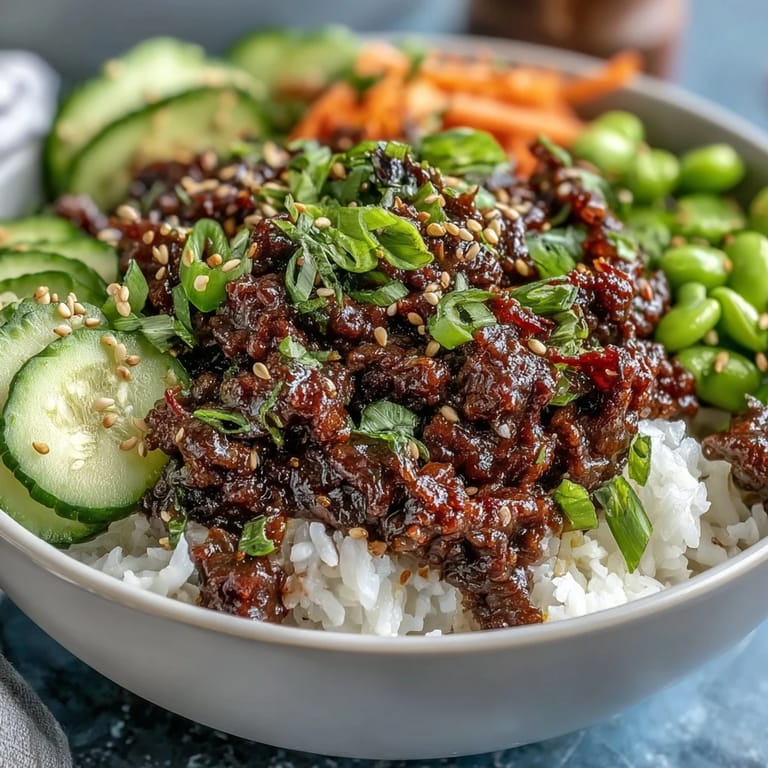
Save There's a moment in cooking when you move from following instructions to actually understanding what's happening in the pan, and this recipe taught me that moment happens when the gochujang sauce reduces and suddenly smells less sharp and more rounded. That's when you know everything's going to work.
The Joy of Customization
What makes this bowl so forgiving is that every component is optional or swappable depending on what's in your fridge or what you're craving. Ground turkey works beautifully if you want something lighter, and plant-based crumbles satisfy anyone avoiding meat without anyone feeling like they're missing out.
Adjusting Heat to Your Preference
Gochujang varies in spice level depending on the brand, and your tolerance matters. If you're sensitive to heat, start with 1 tablespoon and taste as you go; if you love fire, bump it to 3 tablespoons without guilt. I've learned that there's no shame in seasoning to your own threshold.
Elevation Ideas and Extras
The base recipe is complete and satisfying, but there are moments when adding a fried egg on top transforms the entire experience, the yolk becoming an extra sauce that enriches everything below. A handful of shredded cabbage or thinly sliced radish adds crunch if your vegetables are already soft, and a drizzle of extra sesame oil at the end never hurts.
- A perfectly fried egg with runny yolk doubles down on richness and makes the bowl feel like dessert in the best way.
- Shredded cabbage or sliced radish brings last-minute crunch that keeps each bite interesting.
- A light drizzle of sesame oil after assembly adds aroma and deepens the nuttiness without heaviness.
 Save
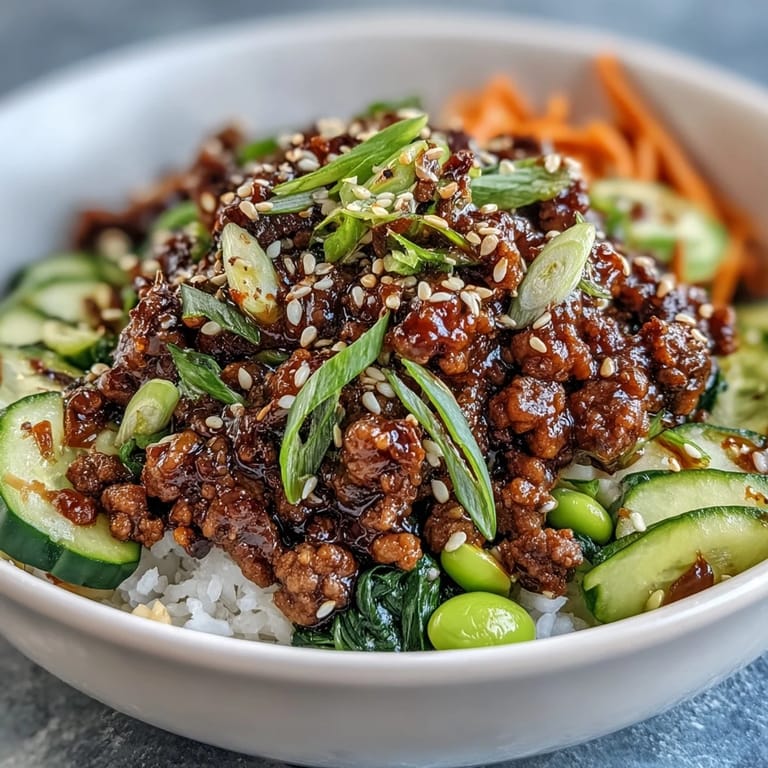
Save This bowl has become my answer to the question "What should we eat?" because it's fast enough for a weeknight and good enough for guests. Once you've made it once, it becomes automatic, which is when cooking stops being a task and starts being a language you speak.
Common Questions
- → Can I make this bowl ahead of time?
The gochujang beef can be prepared up to 3 days in advance and stored in the refrigerator. Reheat gently before serving. For best results, assemble bowls fresh with warm rice and room-temperature vegetables.
- → Is gochujang very spicy?
Gochujang offers mild to medium heat depending on the brand. The flavor is primarily savory and slightly sweet. If sensitive to spice, start with 1 tablespoon and adjust to taste.
- → What other proteins work well?
Ground turkey or chicken absorb the gochujang flavors beautifully while offering a leaner option. Plant-based crumbles also work well for a vegetarian version. Adjust cooking time as needed for your chosen protein.
- → Can I use different vegetables?
Absolutely. Shredded cabbage, sliced radishes, bean sprouts, or sautéed spinach all complement the Korean flavors. Use what's available or what your family enjoys.
- → Is this suitable for meal prep?
Yes, this bowls perfectly for meal prep. Store cooked beef, rice, and vegetables in separate containers for up to 4 days. Reheat the beef and rice, then assemble with fresh toppings when ready to eat.
- → What can I serve alongside this?
Miso soup, pickled vegetables, or a simple cucumber salad make excellent sides. For extra richness, top each bowl with a fried or sunny-side-up egg.