 Save
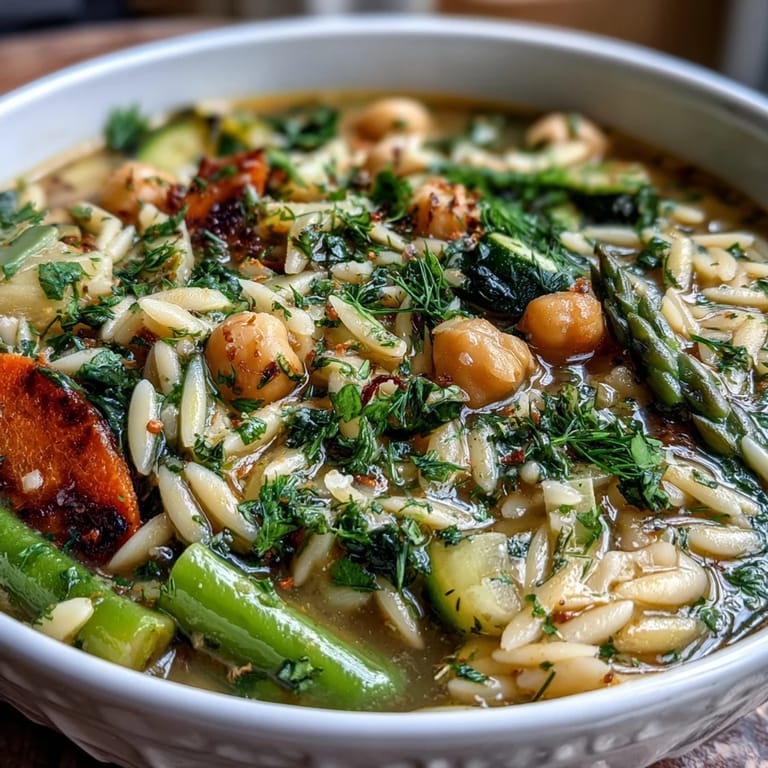
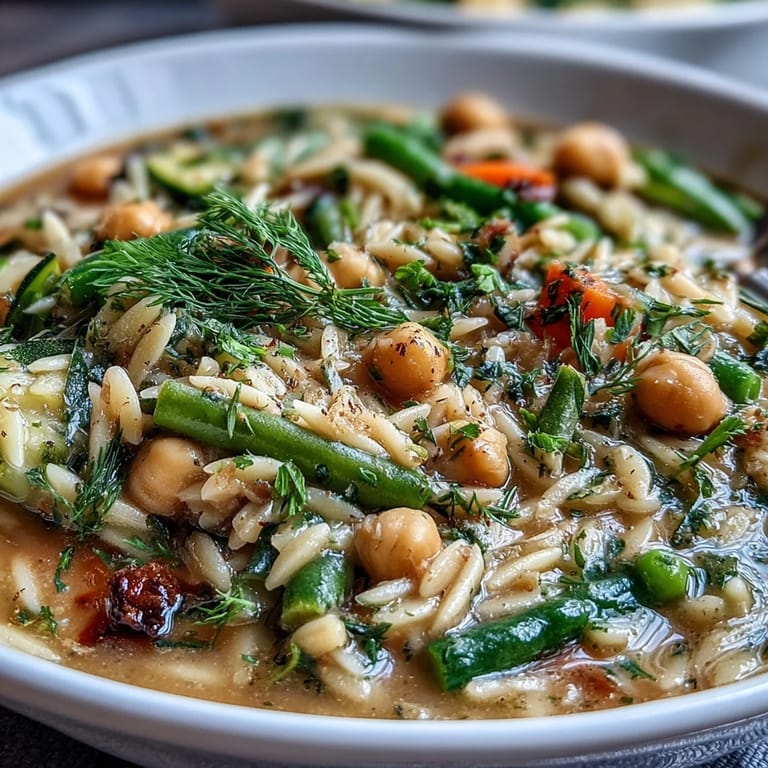
Save There's something about cooking on a Tuesday evening when the farmers market is still fresh in your mind that makes you want to turn everything green into dinner. I grabbed a bunch of asparagus and snap peas on impulse, came home, and realized I had a can of chickpeas sitting in the pantry like it was waiting for this exact moment. That's when this one-pot lemon herb orzo came together, and honestly, it felt less like following a recipe and more like the kitchen just knew what to do.
I made this for my partner on a night when we were both tired, and watching the kitchen fill with that lemony, garlicky steam felt like the first good thing that had happened all week. By the time we sat down with bowls of this vibrant mix, something had shifted, and suddenly the day felt worth it. Food does that sometimes, doesn't it?
Ingredients
- Orzo pasta (1 cup): This tiny, rice-shaped pasta cooks right in the broth, soaking up all the flavor instead of sitting plain in salted water.
- Chickpeas (1 can, drained): They're your protein anchor here, and rinsing them really does make a difference in texture and taste.
- Asparagus (1 cup, cut into 1-inch pieces): Trim the woody ends first; you'll feel the natural breaking point when you bend them gently.
- Sugar snap peas (1 cup, halved): These stay crisp-tender, which is exactly what you want, so don't skip halving them for even cooking.
- Zucchini (1 cup, diced): Keep the pieces roughly the same size so everything finishes cooking at once.
- Baby spinach (1 cup, packed): Add it at the very end so it wilts from residual heat and stays bright green.
- Yellow onion (1 small, finely chopped): This is your flavor foundation, so don't rush it; let it soften until it's almost sweet.
- Garlic (2 cloves, minced): Mince it fine so it distributes throughout the dish without overpowering any single bite.
- Vegetable broth (3 cups): Use low-sodium so you can control the salt level and taste as you go.
- Olive oil (2 tbsp): Good olive oil matters here since you taste it directly in every spoonful.
- Lemon juice and zest (from 1 large lemon): This is what makes the whole dish sing, so use fresh lemon and don't skip the zest for that subtle brightness.
- Fresh parsley (1/4 cup, chopped): Chop it just before serving to keep it vibrant and fresh-tasting.
- Fresh dill (2 tbsp, or 2 tsp dried): If you can find fresh dill, it adds a delicate, almost sweet herbaceous note that dried can't quite match.
- Dried oregano (1 tsp): A small amount goes far, so sprinkle it in gently and taste before adding more.
- Salt (1/2 tsp) and black pepper (1/4 tsp): Season in layers throughout cooking rather than all at the end.
- Red pepper flakes (a pinch, optional): Only if you like a little heat threading through the brightness.
Tired of Takeout? 🥡
Get 10 meals you can make faster than delivery arrives. Seriously.
One email. No spam. Unsubscribe anytime.
Instructions
- Warm your base:
- Heat the olive oil in a large, deep skillet or Dutch oven over medium heat until it shimmers slightly. Add the chopped onion and let it soften for 3 to 4 minutes, stirring occasionally, until it turns translucent and starts to smell sweet.
- Build the vegetable layer:
- Stir in the garlic and let it become fragrant, which takes about 30 seconds and fills the whole kitchen with that unmistakable garden-fresh aroma. Add the zucchini, asparagus, and sugar snap peas, cooking for 2 to 3 minutes while stirring gently so everything begins to soften slightly but stays mostly firm.
- Toast the orzo:
- Add the dry orzo directly to the pan and stir constantly for about 1 minute; you'll notice it starts to smell toasty and nutty, which is exactly the moment to move forward. This extra step adds a subtle depth that makes the finished dish taste more intentional.
- Bring it all together:
- Pour in the vegetable broth, then add the drained chickpeas, oregano, salt, pepper, and red pepper flakes if you're using them. Stir everything together and watch as the broth comes up to a gentle boil, which should take 2 to 3 minutes.
- Simmer and absorb:
- Lower the heat to a simmer, cover the pan, and let it cook for 8 to 10 minutes, stirring occasionally so nothing sticks to the bottom. The orzo will gradually absorb the broth and become tender while the vegetables soften just enough to eat easily.
- Finish with freshness:
- Add the spinach, lemon juice, and lemon zest, stirring until the spinach wilts and everything turns a gorgeous shade of green. This should take just 1 to 2 minutes, and you'll watch the whole dish brighten in color and flavor.
- Season and garnish:
- Remove from heat, add the fresh parsley and dill, and give it one final gentle toss. Taste a spoonful and adjust the salt or lemon if it needs it, then serve warm with extra herbs and lemon wedges on the side.
 Save
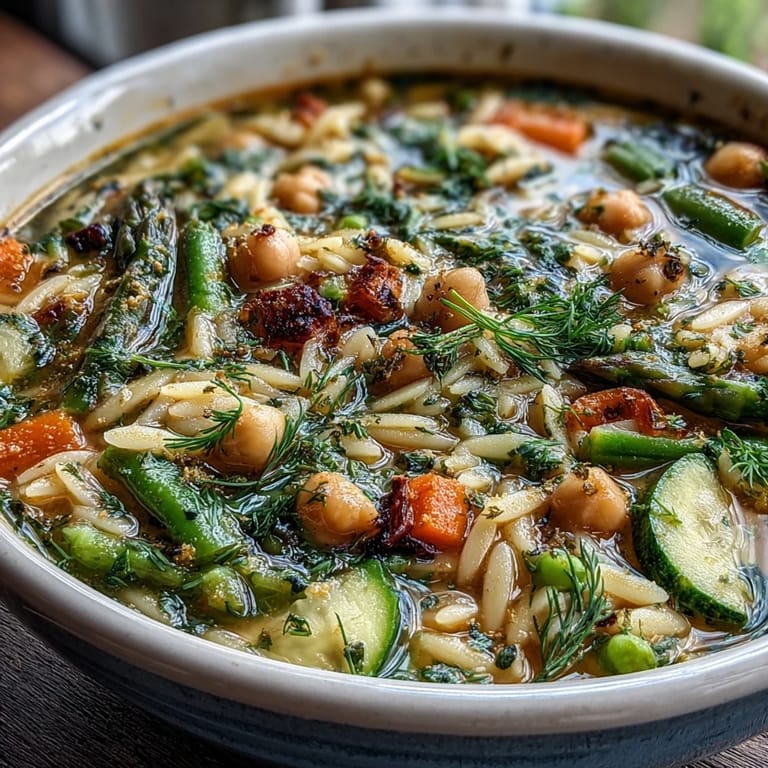
Save The first time someone asked for seconds of this, I realized it wasn't just because they were hungry. It was because food that tastes this alive, this intentional, reminds you that taking 30 minutes for dinner is actually time well spent.
Why This Works as a One-Pot Meal
Cooking everything together means the orzo absorbs all the vegetable flavors and the broth deepens as it reduces, creating a more complex taste than if you'd boiled the pasta separately in plain water. The chickpeas soften slightly while still holding their shape, and the vegetables cook just enough to be tender without falling apart. There's a rhythm to it, a natural progression that feels almost effortless once you understand the timing.
Making It Your Own
I've made this dish with whatever spring vegetables looked good that week, and it's never disappointed. Some days I add shelled edamame for extra protein, other times I swap the asparagus for green beans or broccoli florets. The lemon and herbs are the constants that hold everything together, so keep those, but feel free to play with the vegetables based on what's in season or what you have on hand.
Serving and Storage Tips
This tastes best served warm, but I've learned that it keeps beautifully in the refrigerator for up to 3 days, and you can gently reheat it in a skillet with a splash of extra broth to bring back its initial lightness. If you prefer a creamier version, stir in a spoonful of Greek yogurt or vegan yogurt just before serving, which adds richness without weighing down the brightness. For the best leftovers, store the fresh herbs separately and toss them in after reheating so they don't turn dark and bitter.
- Serve alongside a crisp Sauvignon Blanc or sparkling water with fresh lemon for a complete meal.
- Pair it with crusty bread if you want something to soak up the last of the lemony broth at the bottom of the bowl.
- Double the batch and freeze half in an airtight container for an easy dinner on nights when cooking feels impossible.
 Save
Save This recipe has become one of those meals I return to again and again, the kind that proves you don't need hours in the kitchen to create something nourishing and genuinely delicious. It's comfort food for people who are busy, bright food for people who need a little more color in their life.
Common Questions
- → Can I use other vegetables instead of spring veggies?
Yes, substitute with green beans, broccoli, peas, or any seasonal vegetables that you prefer to keep the fresh, vibrant character of the dish.
- → How can I make this dish gluten-free?
Use gluten-free orzo or another small gluten-free pasta to maintain texture and flavor while avoiding gluten.
- → What herbs work best in this dish?
Fresh parsley, dill, and oregano create a bright and aromatic herb blend that complements the lemon and vegetables perfectly.
- → How do I achieve a creamy texture without dairy?
Stir in a spoonful of vegan yogurt or Greek yogurt just before serving for a smooth and creamy finish.
- → Is this dish suitable for a quick weeknight meal?
Absolutely. With a total cooking time of about 30 minutes, it’s a fast and easy meal option packed with flavor and nutrition.