 Save
Save There's something about the smell of lemon zest that transported me straight to my aunt's kitchen on a sticky July afternoon—she was prepping this exact salad for a neighborhood potluck, and I watched her hands move with quiet confidence, squeezing that bright yellow fruit into a bowl like she was extracting pure sunshine. I've made it dozens of times since, and it never fails to feel like summer, even when the weather outside says otherwise. That day she taught me that the best salads aren't complicated—they just need fresh ingredients and something acidic to tie them together. Now it's my go-to when I want to impress without fussing.
I made this for a work picnic last summer and watched someone who normally skips salad go back for thirds, and honestly, that moment sold me on the staying power of a really good vinaigrette. Everyone wanted the recipe, and half of them admitted they'd never bothered whisking a dressing from scratch before. It felt good sharing something so simple that changed how they thought about salad.
Ingredients
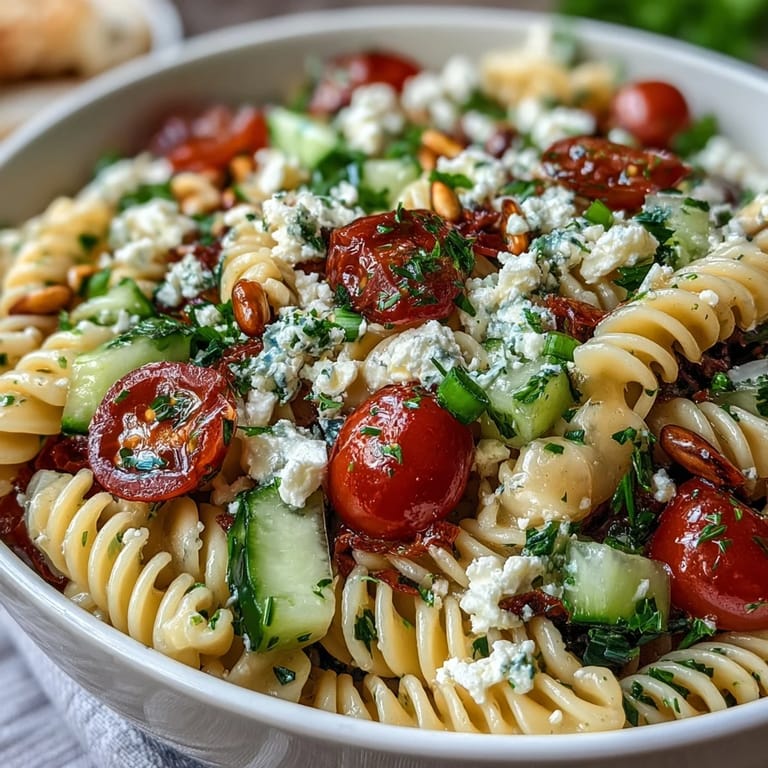
- Short pasta (250 g fusilli, penne, or farfalle): The shapes matter here because they trap the vinaigrette in all those little pockets—use something with texture, not smooth noodles that let everything slide right off.
- Medium cucumber, diced: Cut it the same size as your tomato halves so every bite feels balanced, and don't peel it unless it's been sitting in a store for weeks.
- Cherry tomatoes (250 g), halved: Use the ripest, most fragrant ones you can find because they're doing half the flavor work in this salad.
- Spring onions, thinly sliced: These add a gentle bite that keeps the salad from tasting one-note and sweet.
- Fresh parsley, chopped: Don't skip this or swap it for dried—the brightness it adds is non-negotiable.
- Large lemon, zested and juiced: This is the backbone of everything, so use a lemon that feels heavy in your hand and fragrant when you press it.
- Extra virgin olive oil (3 tbsp): This isn't the place to use cheap oil—it's raw and unmasked, so let it be good.
- Dijon mustard (1 tsp): The secret ingredient that makes the vinaigrette emulsify and cling to the pasta instead of pooling at the bottom.
- Garlic clove, finely minced: One small one is plenty unless you're a garlic person like me, in which case go rogue.
- Honey, sea salt, and black pepper: Honey rounds out the acidity if your lemon is particularly sharp, and fresh pepper makes a genuine difference.
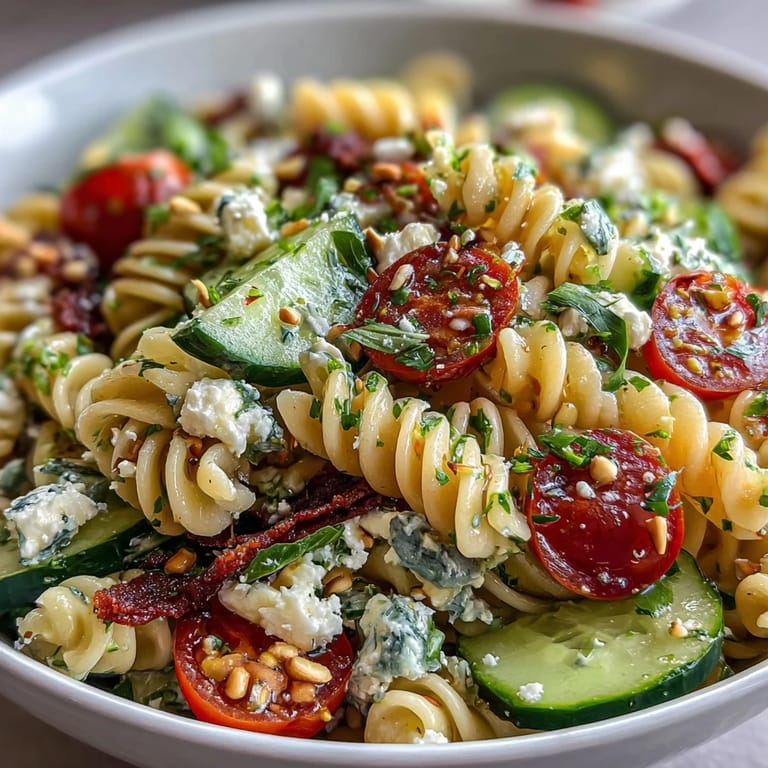
- Feta cheese (50 g), crumbled: Optional but worth it if you eat dairy—it adds a salty, creamy contrast that feels almost luxurious in a salad this light.
- Toasted pine nuts (2 tbsp): Toast them yourself in a dry pan if you can because the smell and the taste are incomparable to what you buy pre-toasted.
Tired of Takeout? 🥡
Get 10 meals you can make faster than delivery arrives. Seriously.
One email. No spam. Unsubscribe anytime.
Instructions
- Boil the pasta until just al dente:
- Fill a large pot with salted water—it should taste like seawater—and bring it to a rolling boil before adding your pasta. Cook according to the package but taste it a minute early because overcooked pasta will turn your salad mushy and sad. Drain it in a colander and rinse under cool water until it's completely cold, which stops the cooking and keeps it from turning to mush.
- Whisk the vinaigrette until it looks emulsified:
- In your large mixing bowl, start with the lemon juice and zest, then add the mustard, garlic, and honey if you're using it. Drizzle in the olive oil while whisking—you're not making mayonnaise, but you want it to come together into something glossy and unified, not separated. Add salt and pepper at the end so you can taste as you go.
- Coat the pasta while it's still cool:
- This is the moment that matters—while the pasta is cold from the rinse, add it to the vinaigrette and toss it thoroughly so every strand gets coated. The pasta will absorb the dressing as it sits, which is exactly what you want, and tossing it warm would make it clump.
- Gently add the vegetables without crushing anything:
- Add your cucumbers, tomatoes, spring onions, and parsley, and toss gently—you're not making a smoothie. Taste it now and adjust the seasoning because once everything's mixed, it's harder to fix.
- Fold in the optional feta and nuts at the very end:
- If you're adding these, do it just before serving or they'll get soggy and bitter respectively. The crumbles of feta and the crunch of nuts are meant to be distinct little surprises, not dissolved into the salad.
- Chill for at least 15 minutes before serving:
- This gives everything time to marry together and for the pasta to fully absorb the dressing. You can make this hours ahead—it actually improves as it sits—and serve it cold or bring it to room temperature just before people eat.
 Save
Save There was a moment at that picnic when someone asked me why this tasted so much better than other pasta salads they'd had, and I realized it was because there wasn't any mayo weighing it down—just bright, simple flavors that let you taste each ingredient. That conversation made me love this salad even more than I already did.
What Makes This Salad Different
Most pasta salads get heavy and cloying because they rely on mayo or cream-based dressings, and they sit in the fridge getting greasier by the hour. This one stays fresh and light because it's built on a vinaigrette that actually gets better as it sits, and the lemon juice keeps everything tasting alive instead of muffled. I've learned that the best summer salads are the ones where you can taste the individual ingredients even after they've spent time together, and this one checks that box perfectly.
How to Make It Your Own
The beauty of this salad is that it's flexible without losing its identity—you can swap vegetables based on what's in season or what you have on hand, and it'll still taste vibrant. I've added everything from red bell pepper to fresh dill to shredded zucchini depending on my mood, and the lemon vinaigrette makes it all work together. The key is keeping that strong, acid-forward dressing at the center so everything else tastes like it belongs.
Storage and Serving Suggestions
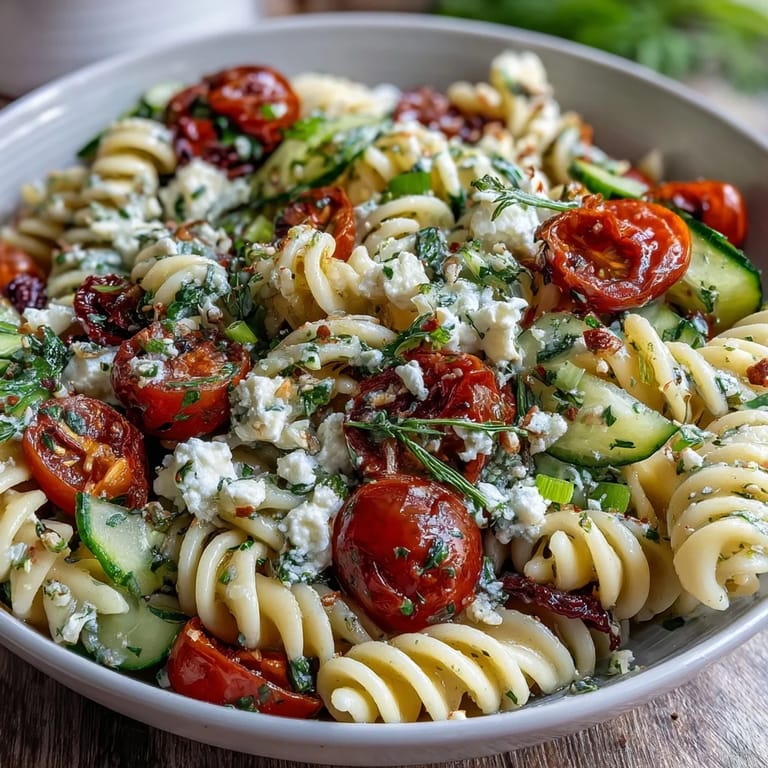
This salad is genuinely better made a few hours ahead because the pasta absorbs the dressing and everything melds together into something more sophisticated than the sum of its parts. Keep it in an airtight container in the fridge for up to two days, though I've never had leftovers last that long. It travels beautifully to picnics and potlucks, and it's equally at home as a light lunch on your own or a side dish at a dinner party.
- If you're making it more than a few hours ahead, hold off on adding the feta and nuts until just before serving so they stay crisp and distinct.
- You can serve it straight from the fridge or let it come to room temperature for about ten minutes—both ways are delicious, just different moods.
- Leftovers actually work great tossed with some shredded rotisserie chicken if you want to turn it into something more substantial for the next day.
 Save
Save This is the kind of salad that reminds you that simple food, made with intention, is actually more satisfying than anything complicated. Make it once and it'll become your summer staple.
Common Questions
- → What type of pasta works best for this salad?
Short pasta shapes like fusilli, penne, or farfalle hold the dressing well and provide good texture.
- → Can I prepare the lemon vinaigrette in advance?
Yes, whisking the lemon juice, zest, olive oil, mustard, garlic, honey, salt, and pepper ahead of time helps flavors meld nicely.
- → Are there suitable substitutions for feta cheese?
Goat cheese can be used for a creamier texture, or it can be omitted for a vegan option.
- → How should I store leftovers?
Keep the salad in an airtight container in the refrigerator and consume within 2 days for best freshness.
- → What additional ingredients can boost protein content?
Adding cooked chickpeas or grilled chicken enhances protein while complementing the flavors.