 Save
Save I discovered chermoula during a lazy afternoon at a Moroccan friend's kitchen in Brooklyn, watching her hands move with the confidence of someone who'd made this a thousand times. She didn't measure anything, just grabbed fistfuls of cilantro and parsley, squeezed a lemon, and somehow knew exactly when to stop. That marinade transformed a plain piece of cod into something that tasted like sunshine and spice, and I've been chasing that magic ever since.
The first time I made it for my family, my mom took one bite of the marinated sea bass and asked what fancy restaurant I'd been to. I loved admitting I'd made it myself, loved seeing that surprised look, loved knowing that something so simple could impress people who'd eaten my cooking a thousand times before.
Ingredients
- Fresh cilantro: Use the leaves and tender stems, packed by handfuls—this is the backbone of chermoula and it's what gives it that unmistakable green color.
- Fresh flat-leaf parsley: Balances the cilantro with a milder flavor and keeps everything from tasting too intense.
- Garlic cloves: Mince them fine so they distribute evenly through the paste, or they'll bite too harshly in one spot.
- Shallot: Optional but worth including—it adds a subtle sweetness that makes the whole thing feel more complete.
- Lemon zest and juice: Use a microplane for zest so you get those tiny flavor bombs without bitter pith.
- Ground cumin: Toasting it in a dry pan first will deepen its warmth, but raw works fine if you're in a hurry.
- Sweet paprika: This is what gives it that gentle color—avoid smoked paprika unless you want a completely different vibe.
- Ground coriander: Adds a floral note that makes people wonder what that mysterious something is.
- Cayenne pepper: Start with a pinch and taste as you go—you can always add more heat but you can't take it back.
- Black pepper: Freshly ground makes all the difference here.
- Extra-virgin olive oil: This is where quality matters—use something you'd actually want to taste on its own.
- Sea salt: Coarse salt dissolves better into the herbs and gives you more control over final seasoning.
Tired of Takeout? 🥡
Get 10 meals you can make faster than delivery arrives. Seriously.
One email. No spam. Unsubscribe anytime.
Instructions
- Gather and chop your herbs:
- Roughly tear the cilantro and parsley from their stems, then chop everything fine on a cutting board. The knife should feel sharp—dull knives bruise herbs and darken them.
- Build your aromatics:
- Mince the garlic until it's tiny, almost paste-like, and do the same with the shallot if using. The smaller these pieces, the more evenly they distribute through the marinade.
- Add brightness:
- Zest your lemon first, then cut it in half and juice it. A microplane zester gives you those perfect tiny fragments that feel fancy but cost almost nothing.
- Toast and layer the spices:
- Put all the spices into a small bowl first—seeing them together helps you know they're all there. No need to toast them unless you want an extra depth of flavor.
- Combine everything in a medium bowl:
- Start with the herbs and garlic, then add the lemon zest and juice. The acid will start to brighten everything immediately.
- Bring in the spices and oil:
- Sprinkle the spices over the top, pour in the olive oil, and add your salt. At this point it'll look a little chaotic.
- Mix until it becomes a paste:
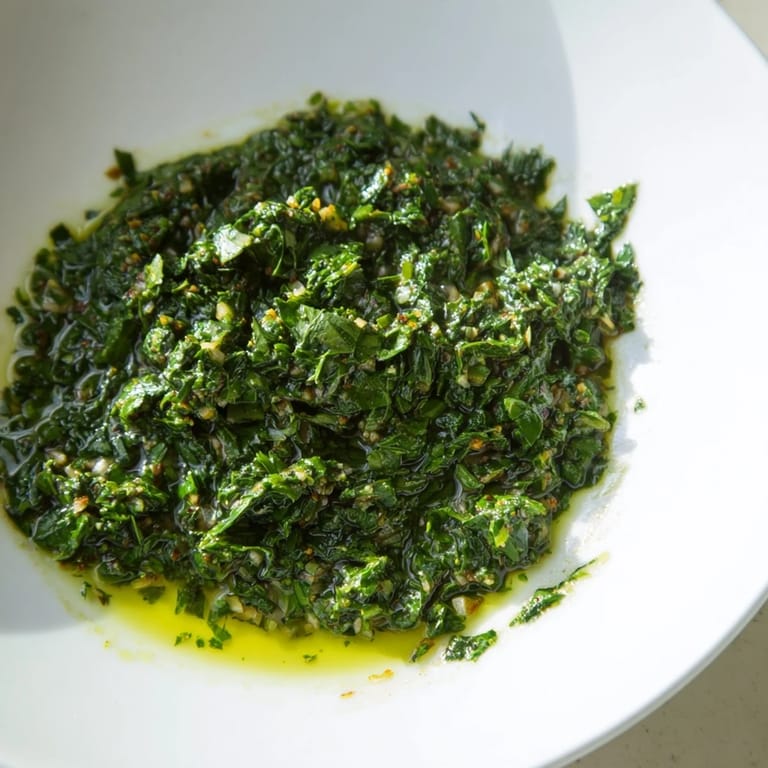
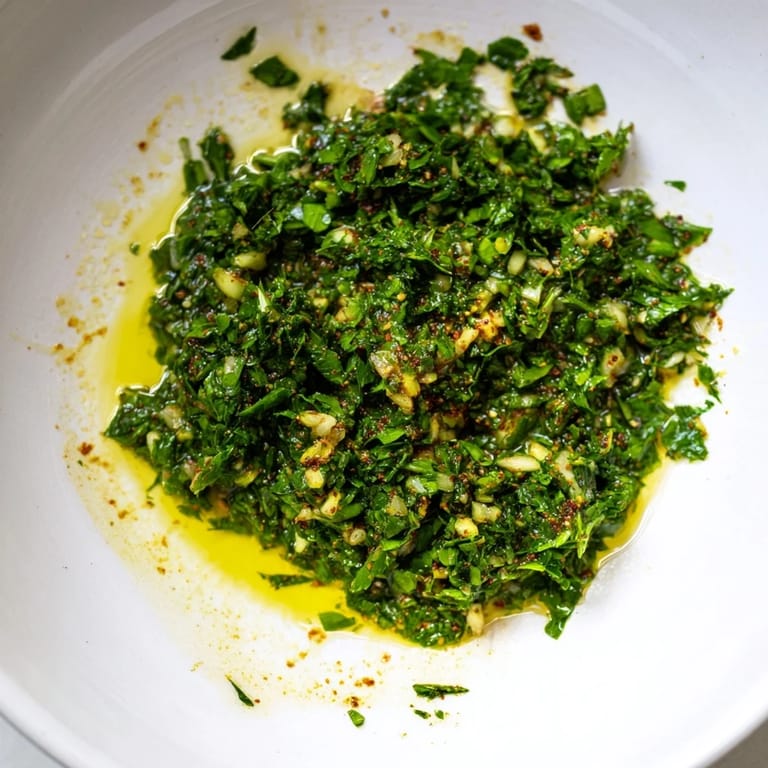
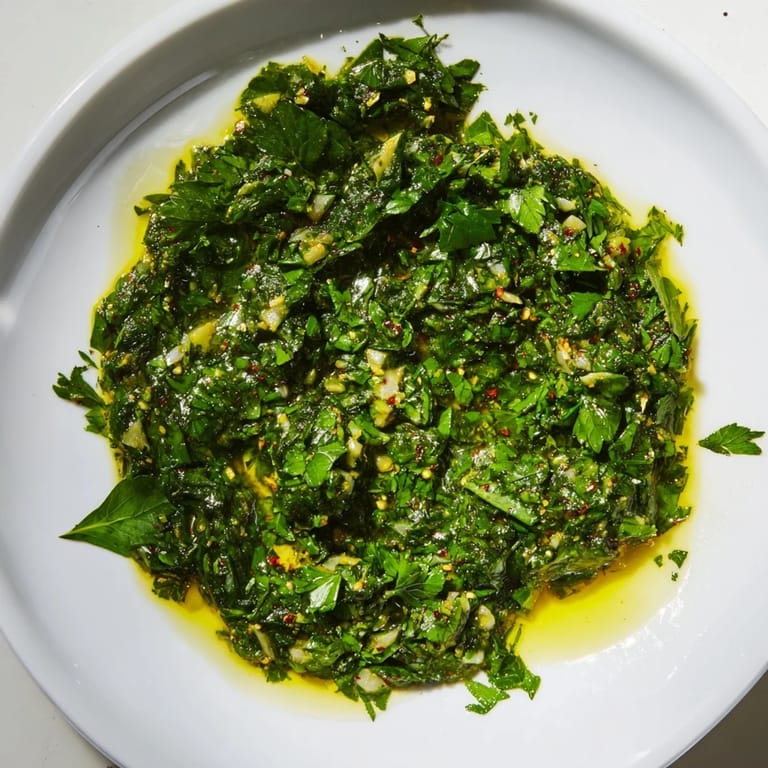
- Stir with a spoon or small whisk until everything comes together into a thick, fragrant paste. It should look like chunky green paint, not a thin sauce.
- Taste and adjust:
- This is crucial—taste a tiny bit on your finger and see if it needs more salt, more lemon, more heat. Trust your palate, not the recipe.
 Save
Save I remember the moment I realized this marinade wasn't just a condiment—it was a whole mood, a flavor story that made people slow down and pay attention. Now whenever I make it, my kitchen smells like North Africa, like possibility, like something that matters beyond just dinner.
Using Your Chermoula
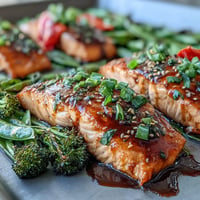
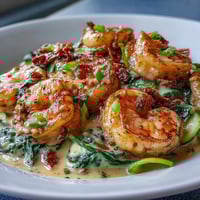
This marinade is incredibly forgiving about timing. You can brush it on fish fillets and cook them immediately, or cover them and refrigerate for up to two hours and let the flavors deepen. I've also marinated shrimp for just 20 minutes while the oven preheated and gotten beautiful results. The key is generosity—don't be shy with the paste. Coat your fish so you can see the green herbs clinging to it.
Beyond Fish
While chermoula was born for seafood, it's equally stunning on roasted chicken breasts, spread under the skin for maximum flavor penetration. Vegetables love it too—I've used it on thick slices of zucchini, eggplant, and bell peppers that go into a hot pan or under the broiler. The herbaceous warmth works anywhere you want a flavor that feels special without being complicated.
Pairing and Serving
I like to serve marinated fish with something that lets the chermoula shine—fluffy couscous, roasted potatoes, or even just a simple green salad. A crisp white wine like Sauvignon Blanc or a dry Riesling bridges the gap between the spices and the acidity in the marinade. If you want to stretch it further, you can thin a small batch with a little more olive oil and drizzle it over the finished dish as a finishing sauce.
- Make extra and store it in the fridge for up to three days in an airtight container.
- A food processor gives you a silkier texture if that's your preference, though the rustic chop is more authentic.
- Double the batch and freeze portions in ice cube trays for last-minute weeknight cooking.
 Save
Save Chermoula is the kind of recipe that reminds you why you cook in the first place—10 minutes of chopping, a handful of ingredients, and suddenly you've created something that tastes like you've been trained in Moroccan cuisine. That's the real magic right there.
Common Questions
- → What ingredients give this blend its distinctive flavor?
Fresh cilantro, parsley, citrus zest and juice, combined with cumin, paprika, coriander, cayenne, and garlic create the signature vibrant and aromatic profile.
- → How long should the blend infuse before cooking?
For optimal flavor, coat the protein and refrigerate for 30 minutes to 2 hours before cooking.
- → Can this blend be used with other proteins besides fish?
Yes, it pairs wonderfully with chicken, vegetables, and shrimp, adding a North African twist.
- → How can I adjust the spiciness level?
Reduce or omit the cayenne pepper to create a milder flavor, or increase it for more heat.
- → What is the best way to prepare the marinade for a smoother texture?
Using a food processor to blend all ingredients results in a finer, more consistent paste.