 Save
Save I discovered this dish while standing in a spice market in Istanbul, surrounded by vendors calling out their wares, when it hit me: why choose between worlds when you could invite them all to the same table? That afternoon, I bought three small bags of spices and came home determined to build something that felt like traveling without leaving my kitchen. This recipe is the result—three distinct flavor clusters that live beautifully together, each one a passport to a different place.
My roommate texted me asking what I was making, and when I explained the concept, she showed up thirty minutes later with wine and curiosity. We stood around the stove watching three different worlds bubble up simultaneously, and when we plated it, she actually gasped. That's when I knew this wasn't just efficient cooking—it was theater.
Ingredients
- Extra-virgin olive oil: Use the good stuff for the Mediterranean cluster where it's the foundation of flavor, but regular oil works fine for the other sections.
- Eggplant: Dice it small so it softens quickly and absorbs the oregano-scented oil.
- Red bell pepper: Adds sweetness and color to balance the earthiness of the eggplant.
- Cherry tomatoes: Halve them so they release their juice into the pan as they cook.
- Toasted sesame oil: This is non-negotiable for the Asian cluster—the toasting makes all the difference.
- Shiitake mushrooms: If you can't find them, cremini works, but shiitakes have a deeper umami that plays well with the soy and ginger.
- Snap peas: Keep the heat high so they stay crisp and don't turn mushy.
- Soy sauce or tamari: Tamari is your friend if anyone at the table needs gluten-free.
- Chickpeas: They're the protein anchor here, so don't skip them even if you're adding meat.
- Bulgur or quinoa: Quinoa is chewier and more forgiving if you're timing things loosely.
- Ground cumin, coriander, and cinnamon: These three together create that warm Middle Eastern embrace—buy them whole and grind them if you want to taste the difference.
- Fresh parsley: Stir it in at the last moment so it stays bright green and doesn't wilt into sadness.
- Feta cheese: Optional but it gives you something creamy to balance all the spice.
- Toasted sesame seeds: Toast them yourself if you have time; it takes two minutes and transforms them.
- Fresh mint or cilantro: Pick one or use both—they're your final flavor nudge.
Tired of Takeout? 🥡
Get 10 meals you can make faster than delivery arrives. Seriously.
One email. No spam. Unsubscribe anytime.
Instructions
- Get everything ready first:
- Dice, chop, mince, and measure every single ingredient before you turn on the heat. You're about to juggle three pans at once, and there's no time to hunt for the garlic.
- Build the Mediterranean cluster:
- Heat your best olive oil and let it get shimmering, then add the eggplant to the hot pan and listen for it to sizzle. After three minutes, when the edges start to caramelize, add the pepper, zucchini, tomatoes, and garlic all at once, then season with oregano, salt, and pepper and keep stirring until everything is tender and the whole kitchen smells like a Greek island, about 8 to 10 minutes.
- Wake up the Asian cluster:
- In a separate skillet, get the sesame oil hot and glossy, then tumble in the mushrooms and listen for them to hit the pan. After two minutes, add the snap peas and carrot and keep the heat high so everything stays crisp and doesn't steam itself into submission, then drizzle in the soy sauce, ginger, and rice vinegar and cook for two to three more minutes until you can smell the ginger rising.
- Warm the Middle Eastern cluster:
- In your third skillet, soften the red onion gently in olive oil until it's translucent and sweet, then add the chickpeas, bulgur or quinoa, cumin, coriander, and cinnamon and let everything warm through for about five minutes, stirring often so the spices toast and release their fragrance. When it's done, pull it off the heat and toss in the parsley and lemon juice and taste and adjust the salt and pepper until it makes you happy.
- Bring it all together:
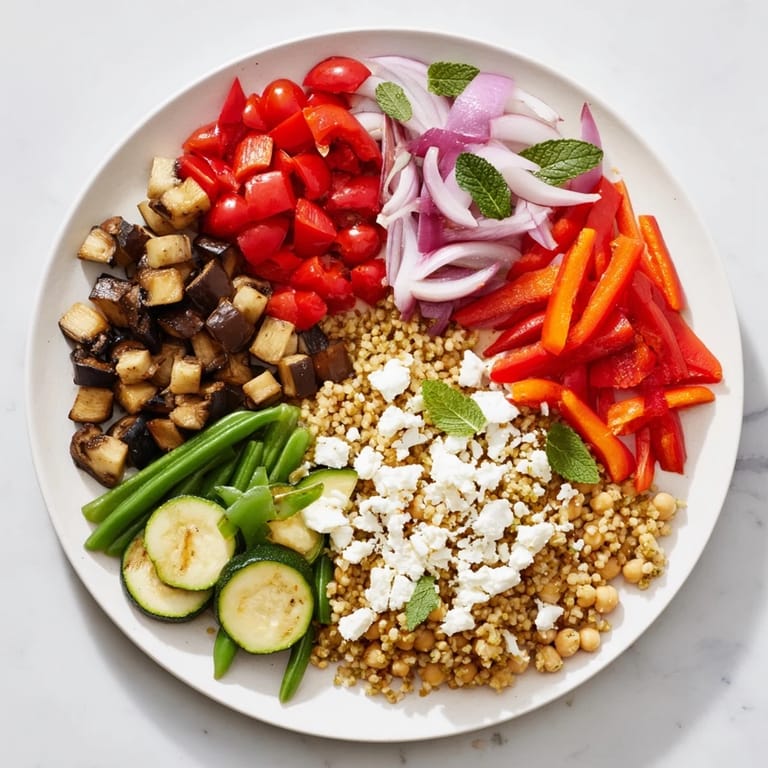
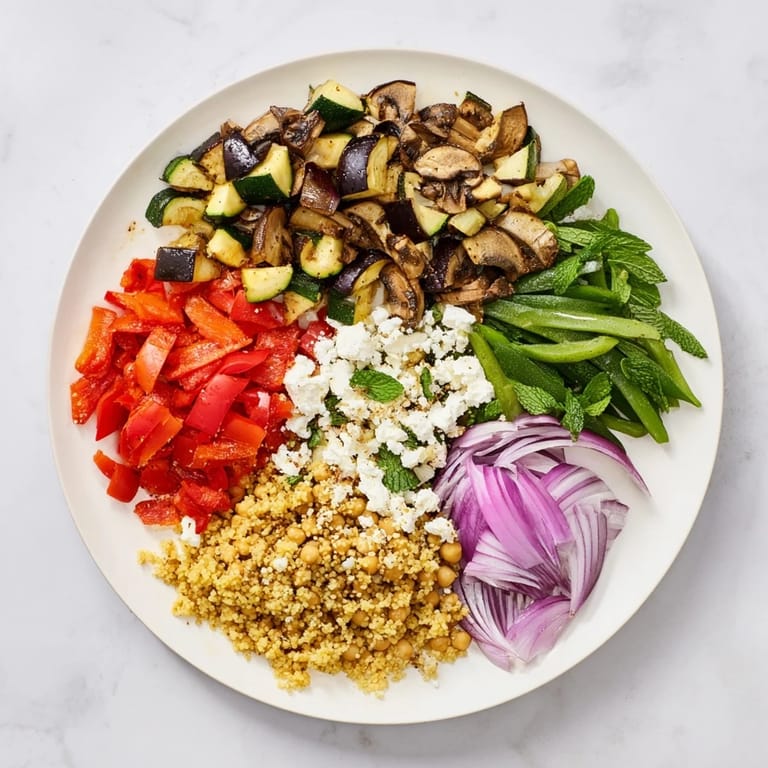
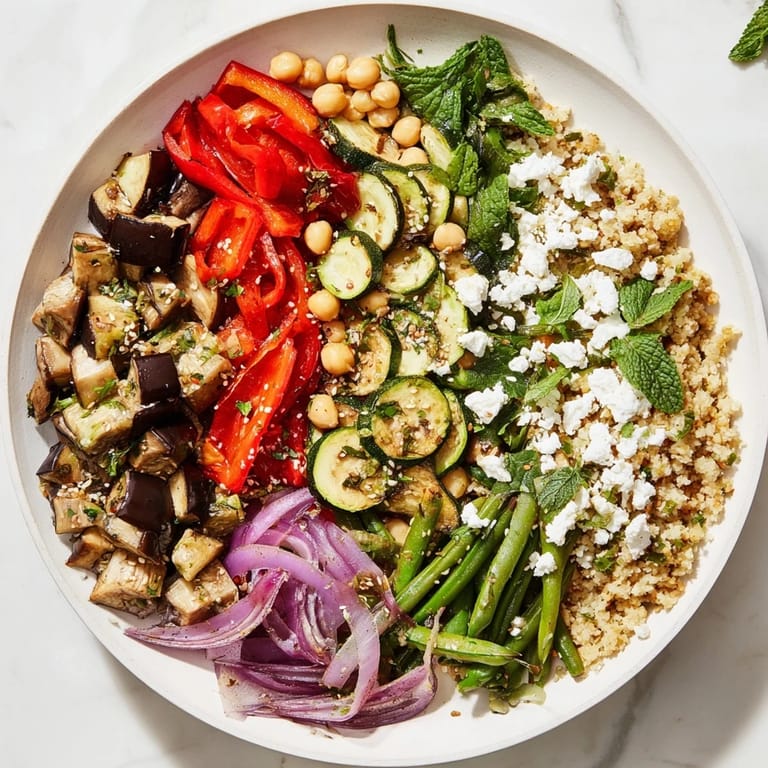
- Arrange the three clusters on a platter or individual plates as if they're three countries that somehow became friends. Scatter the feta, sesame seeds, and fresh herbs across everything and serve warm, encouraging everyone to mix and match and create their own flavor journey on their plate.
 Save
Save The best part isn't when everyone tastes it—it's those few seconds of silence while they're deciding what to try first, that moment when they realize the three flavors aren't fighting but dancing together. That's when you know you've pulled off something real.
Scaling This for a Crowd
I made this for twelve people once and discovered that three skillets aren't enough, so I enlisted my partner to manage two while I handled one, and it actually felt less chaotic than cooking alone. If you're doubling it, use a timer for each cluster so you don't accidentally fall into the trap of thinking you can eyeball doneness when you're juggling that many vegetables. The beauty of this recipe is that each cluster can be made several hours ahead and gently reheated, so you can actually build it in stages without anyone knowing the difference.
Building Your Own Clusters
Once you understand the architecture of this dish, you can improvise endlessly—swap the eggplant for artichoke hearts, replace the shiitakes with bok choy, or use white beans instead of chickpeas. The real skill is balancing bright acid with aromatic spices within each cluster so they're distinct but harmonious when they're eaten together. Think of each cluster as having a personality: Mediterranean is sunny and earthy, Asian is sharp and savory, Middle Eastern is warm and comforting, and when they meet on the plate, they create something bigger than their individual parts.
Making It Work with What You Have
The first time I made this, I didn't have sesame oil, so I used half olive oil and half walnut oil and it was delicious in a completely different way. The next time I made it, I had leftover roasted vegetables and threw them straight into the clusters at the warming stage and no one even noticed. This dish is forgiving if you understand its bones—the Mediterranean cluster needs earth and herbs, the Asian cluster needs umami and brightness, and the Middle Eastern cluster needs warmth and texture. Work within those rules and you'll land somewhere delicious every single time.
- Prep all vegetables the morning of and store them separately in containers so you're ready to move fast when dinner time comes.
- If one cluster finishes before the others, pull it off heat and cover it loosely so it stays warm but doesn't keep cooking.
- Taste and season each cluster individually before serving so each one is its own perfect bite before they become a trio.
 Save
Save This dish taught me that sometimes the most interesting food comes not from perfecting one tradition, but from respecting three and letting them coexist on the same plate. Serve it to people who like to explore, and watch what happens.
Common Questions
- → How are the different flavor clusters prepared?
Each cluster is cooked separately in its own skillet, allowing the Mediterranean vegetables, Asian vegetables, and Middle Eastern grains and legumes to develop distinct flavors before being served together.
- → Can this dish be made gluten-free?
Yes, replacing bulgur with quinoa and soy sauce with tamari ensures a gluten-free version without compromising flavor.
- → What garnishes complement the dish?
Toasted sesame seeds, fresh mint or cilantro leaves, and optional crumbled feta cheese add texture and brightness.
- → What protein options can be added?
Grilled chicken, tofu, or lamb can be incorporated into any cluster for added protein and heartiness.
- → What are good serving suggestions?
Serving the clusters warm alongside flatbread or steamed rice enhances the meal and allows for easy mixing of flavors.
- → Is this dish suitable for vegetarians?
Yes, it's naturally vegetarian and can be made vegan by omitting the feta cheese garnish.