 Save
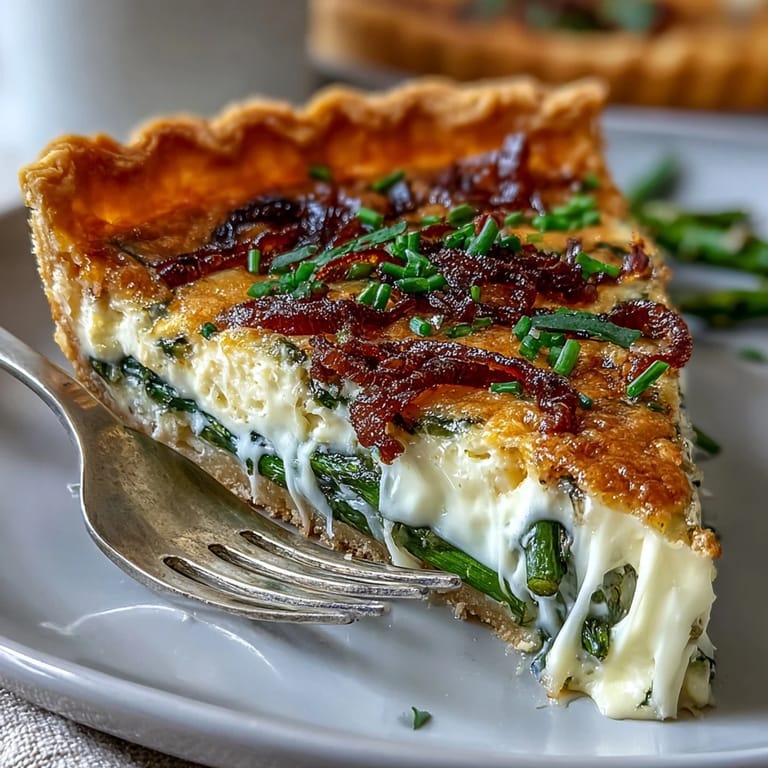
Save The morning I tried making this Spring Asparagus Quiche, the kitchen was awash with that gentle, promise-of-spring light I look forward to every year. As I snapped the ends off a bunch of asparagus and caught the sweetly grassy scent, I remembered all the Saturday brunches that had somehow ended up crowned by quiche, even if other plans were made. The Gruyère turning creamy against warm pastry made a sound so inviting it drew my son from upstairs just to ask what was baking. I misread the timer that first time and the crust got a little too golden—oddly, it turned out to be my new favorite thing. Sometimes, elegance in the kitchen just sneaks up on you, even in your oldest pajamas.
One weekday afternoon, I made this quiche for my neighbors—we ate it warm on the porch with mismatched plates balanced on our knees. The sound of laughter, the flakiness of the crust between bites, and an impromptu pot of tea turned a simple lunch into an unhurried celebration of spring.
Ingredients
- All-purpose flour: Sifted flour gives the crust its delicate texture; I learned that chilling it before mixing makes all the difference.
- Unsalted butter: Use it straight from the fridge and work quickly—those little cold cubes create the flakiest layers.
- Salt: Just a pinch elevates all the flavors in the dough and balances the butter.
- Ice water: Only use enough to bring the dough together; too much, and you risk a tough crust.
- Olive oil: This gives the shallots a subtle richness as they caramelize in the pan.
- Shallots: Slice them thin and cook them slowly—their mellow sweetness shapes the entire filling.
- Fresh asparagus: Choose the freshest you can; a quick blanch keeps the color vibrant and the spears tender, not stringy.
- Gruyère cheese: Grate it yourself for the smoothest melt and a nuttier flavor that pairs beautifully with asparagus.
- Eggs: Four eggs give the filling its classic custardy structure—crack them into a separate bowl to avoid shells.
- Heavy cream: Rich cream gives the quiche its velvety texture; don&apost try to substitute with lighter dairy.
- Whole milk: This balances the richness of the cream for a filling that isn&apost too dense.
- Fine sea salt: Even seasoning in the custard prevents bland bites.
- Freshly ground black pepper: Add just before baking for a little kick that doesn&apost overpower the other flavors.
- Ground nutmeg: Just a pinch—learned the hard way that more than that can hijack the whole dish.
Tired of Takeout? 🥡
Get 10 meals you can make faster than delivery arrives. Seriously.
One email. No spam. Unsubscribe anytime.
Instructions
- Make the pastry:
- Tumble the flour and salt into a large bowl, then quickly rub the cubes of cold butter in with your fingertips until you spy little pea-sized bits. Drizzle ice water in, a spoonful at a time, until the dough just barely comes together; shape, wrap, and chill it for half an hour.
- Preheat and prep the pan:
- Set the oven to 375°F and roll the chilled dough out gently on a floured countertop. Grease a tart or pie pan, slip the dough inside, press it to the edges, trim, and fork-prick the bottom for steam vents.
- Blind bake the crust:
- Line the shell with parchment and fill with pie weights or beans. Bake for 15 minutes, then carefully lift the parchment and weights out and bake 5 more minutes, just until lightly golden and dry.
- Caramelize the shallots:
- Warm the olive oil in a skillet over medium, then scatter in the shallots and stir often until their scent is sweet and they turn gold, about 8 to 10 minutes.
- Blanch the asparagus:
- Bring a pot of salted water to a lively boil. Let the asparagus pieces cook for 2 minutes, then quickly drain and rinse them under cold running water; pat them dry on a towel.
- Whisk the custard:
- Crack eggs into a mixing bowl and whisk until glossy, then add cream, milk, a pinch of nutmeg, salt, and pepper, stirring until the mixture is smooth and pale.
- Assemble the filling:
- Layer the golden shallots evenly over the cooled, baked crust. Scatter asparagus pieces and grated Gruyère on top, then slowly pour the custard over to fill every nook.
- Bake:
- Slide the quiche into the oven and bake for 35 to 40 minutes, until the center is just set and the top is tinged with gold. Let it rest for at least 10 minutes before you even think of slicing; the aroma will tempt you, but patience wins here.
 Save
Save 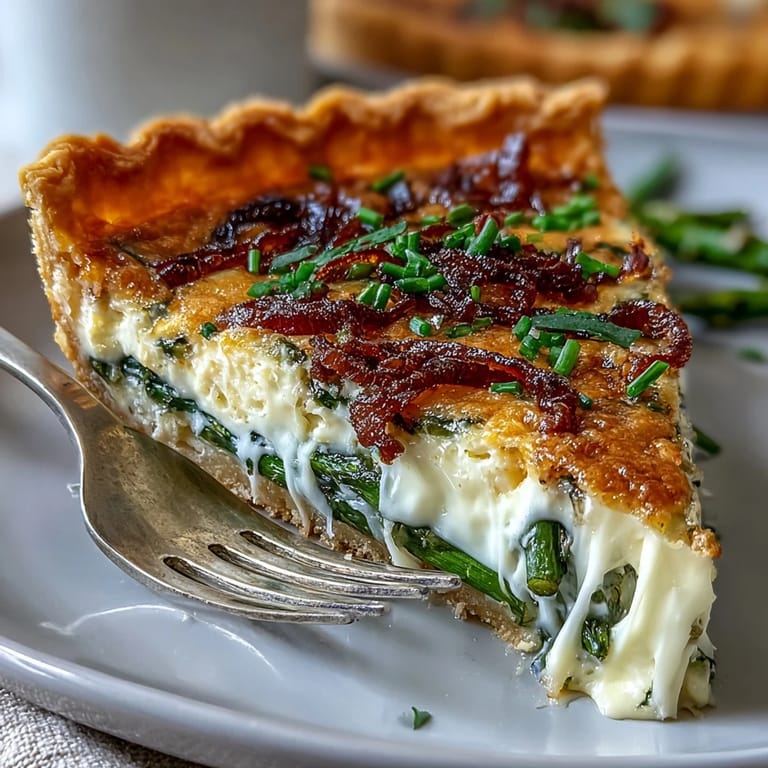 Save
Save One dreary Wednesday, I made this quiche in a rush before friends arrived; we ate it straight from the pan while rain tapped at the windows. That afternoon, the kitchen filled with warmth and good company, and no one remembered the grey outside.
How to Serve Quiche Without Fuss
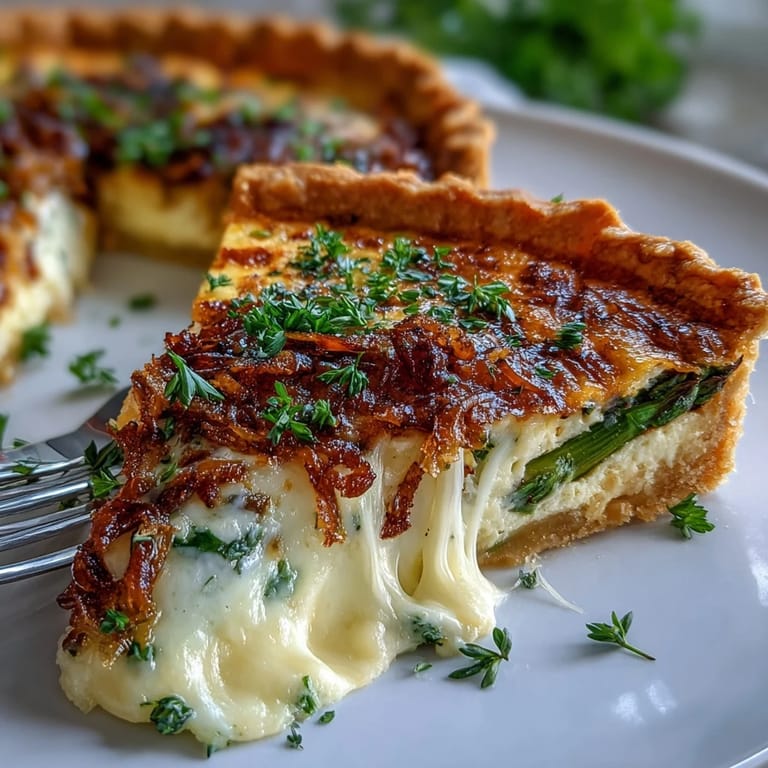
I've learned that this quiche needs almost nothing to shine—sometimes I skip the salad and just serve slices with a dollop of tangy crème fraîche. It travels well for picnics and leftovers taste just as good chilled the next morning. Sharing wedges on napkins outside can make breakfast feel like a little party, no matter the day of the week.
Customizing to Your Taste
Every cook who visits my kitchen finds a small way to make this quiche their own. Try tossing in a handful of fresh chopped herbs, or experiment with another cheese if Gruyère isn't on hand. Just keep that base mix of eggs and dairy to hold everything together, and you can swap in whatever tasty fillings you discover at the market.
Little Things That Make a Big Difference
Paying a little attention to the details is what turns a good quiche into a memorable one. Use cold butter and don't overwork the dough, crack your eggs into a separate bowl to avoid surprises, and let the finished quiche set before cutting so each slice holds beautifully.
- Rest the quiche before slicing so the custard finishes setting.
- Keep the filling balanced by not overstuffing with vegetables or cheese.
- Store in the fridge, loosely covered, if serving later—slices gently rewarmed taste just as good.
 Save
Save 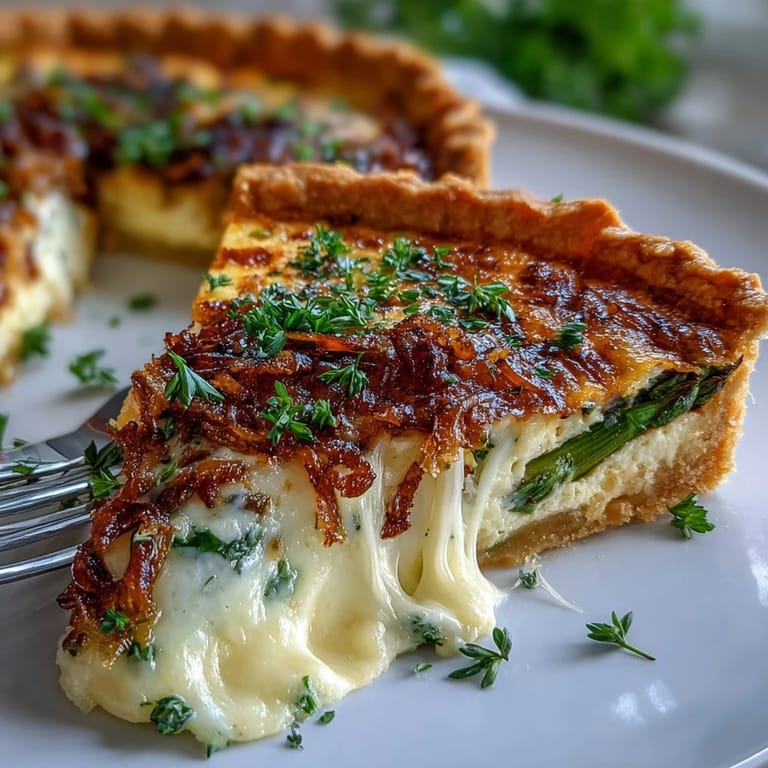 Save
Save However you serve it, Spring Asparagus Quiche brings a touch of French café style to any table. May each slice bring you the simple joy I've found with every bake.
Common Questions
- → How do I prevent a soggy crust?
Blind-bake the crust: dock the base, line with parchment and weights, bake until set and lightly golden. Chill the dough before rolling and avoid overworking it. A brief second bake after removing the weights helps keep the bottom crisp when the custard is added.
- → Can I use frozen asparagus?
Use fresh if possible. If using frozen, thaw and pat very dry to avoid excess moisture. Quickly sauté or roast the asparagus to concentrate flavor and remove water before adding to the tart.
- → What are good cheese substitutes for Gruyère?
Emmental, Swiss, or a sharp white cheddar are excellent swaps. They melt well and complement the shallots and asparagus; adjust quantity to taste for salt and tang.
- → How can I tell when the custard is set?
The center should be just set with a slight gentle jiggle; it will continue to firm as it cools. A knife inserted near the center should come out mostly clean with a little moist custard clinging.
- → Can I make this ahead of time?
Yes. The tart can be baked and cooled, then refrigerated for up to 2 days. Rewarm in a low oven to revive the crust. You can also prepare the crust and filling components in advance and assemble just before baking for best texture.
- → Any tips for rolling and handling the crust?
Keep the butter cold and handle the dough minimally. Chill the disc before rolling, flour the surface lightly, and transfer to the pan using the rolling pin to avoid stretching. Trim edges and refrigerate the formed shell briefly before blind baking.