 Save
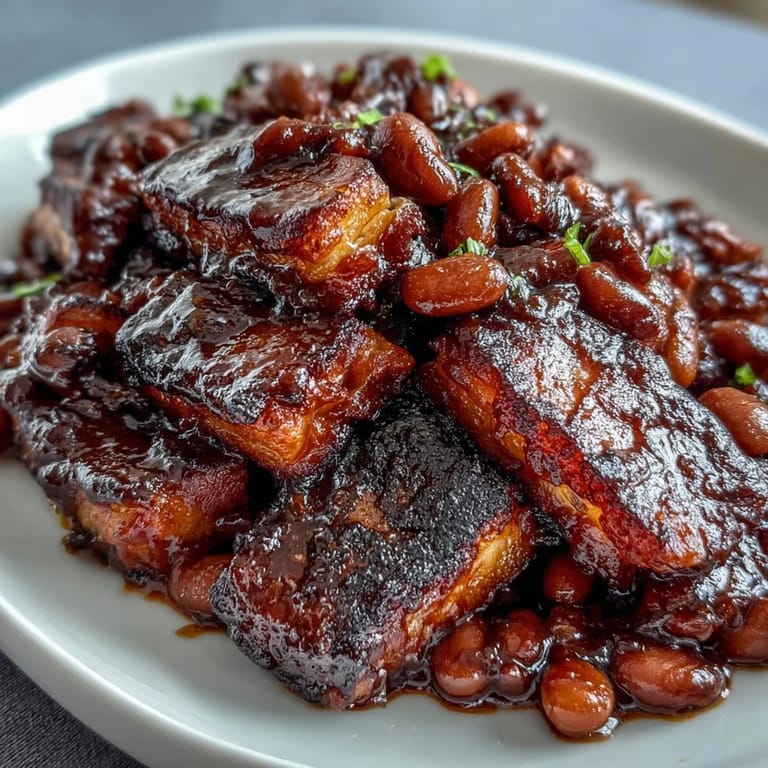
Save My neighbor handed me a foil-wrapped container at a Fourth of July cookout years ago, and I've been chasing that exact flavor ever since. Those baked beans were dark, glossy, and studded with crispy bacon—nothing like the canned version I'd grown up with. When she finally shared her method, I realized the secret wasn't complicated at all, just good ingredients given time in a hot oven to become something irresistible. Now I make these every summer, and somehow they're always the first thing people ask about.
I'll never forget bringing this to a potluck where someone's aunt also brought baked beans, and mine disappeared while hers sat untouched. I wasn't trying to one-up anyone, but the combination of smoky bacon fat, caramelized brown sugar, and that tangy molasses undertone just won people over. It was the first time I understood that a side dish could genuinely steal the show.
Ingredients
- Canned navy beans (4 cups, drained and rinsed): Canned beans are perfect here—they're already tender and you avoid the long soak. Always rinse them well to remove the excess sodium and starch that can make the sauce cloudy.
- Thick-cut bacon (8 slices, chopped): The thickness matters because thin bacon turns to dust, but thick-cut pieces stay chewy and distinct throughout the baking. Don't skip rendering the fat; it's where half the flavor lives.
- Yellow onion and green bell pepper (1 medium and 1 large, finely diced): These soften into the sauce and add subtle sweetness and body. Keep them small so they disappear into the beans rather than announcing themselves as chunks.
- Dark brown sugar (1/2 cup, packed): Don't use light brown sugar here—the molasses content in dark sugar is what gives these beans their burnished color and complex sweetness.
- Molasses (1/4 cup): This is the backbone. It adds deep, almost earthy sweetness and a slight bitterness that keeps the dish from becoming cloying. Unsulphured works best if you can find it.
- Ketchup (3/4 cup): It acts as a binder and adds tomato body plus a tiny bit of acidity. Use the plain kind, not the fancy varieties with added spices.
- Dijon mustard (2 tablespoons): This cuts through the sweetness with a sharp, slightly spicy note that makes people wonder what they're tasting. Don't substitute yellow mustard; it doesn't have the same complexity.
- Worcestershire sauce (2 tablespoons): The umami bomb. It deepens everything and adds that savory depth that makes people keep coming back for another bite. Use gluten-free if needed.
- Apple cider vinegar (1 tablespoon): A small amount keeps the sauce from being one-note sweet and adds brightness. It balances the molasses perfectly.
- Smoked paprika (1 teaspoon): This adds a whisper of smokiness that echoes the bacon without overpowering the sauce. Regular paprika won't give you that campfire quality.
- Garlic powder, black pepper, salt, and cayenne (as listed): These are your season-to-taste army. Start with what's called for, then adjust at the end if the flavors feel flat or need heat.
Tired of Takeout? 🥡
Get 10 meals you can make faster than delivery arrives. Seriously.
One email. No spam. Unsubscribe anytime.
Instructions
- Get your oven ready and crisp that bacon:
- Preheat to 350°F and lay out your bacon in a large oven-safe skillet over medium heat. Let it cook slowly until the edges are dark and the pieces are absolutely crunchy—this takes about 8 minutes. Listen for that sizzle to calm down, which means the water's cooked out and the fat is rendering.
- Build your base with the vegetables:
- Remove the bacon with a slotted spoon and pour off all but 2 tablespoons of the fat. Add your diced onion and pepper to that same pan and let them cook for 4 to 5 minutes, stirring occasionally, until they're soft and the onions turn translucent. You'll smell the sweetness as they caramelize slightly in the bacon fat.
- Bring everything together in the pan:
- Add your rinsed beans, most of the cooked bacon (save a small handful for topping), and every ingredient from the sauce. Stir thoroughly until the brown sugar dissolves and the color becomes uniform and glossy. It should smell simultaneously sweet and savory, almost like you're making a barbecue sandwich filling.
- Transition to the oven:
- Let the mixture come to a simmer on the stovetop, then remove from heat. If you're not using an oven-safe skillet, transfer everything to a baking dish now. Scatter your reserved bacon pieces over the top like you're finishing a dish that deserves care.
- Let the oven work its magic:
- Bake uncovered at 350°F for 1 hour, stirring once halfway through if you remember. The sauce will bubble around the edges, thicken up, and the beans will soften further until they're creamy inside. The top layer might caramelize slightly, which is exactly what you want.
- Rest before serving:
- Pull the dish out and let it sit for 10 minutes—this helps the sauce set slightly and allows the flavors to continue developing. It also gives you time to get other dishes ready.
 Save
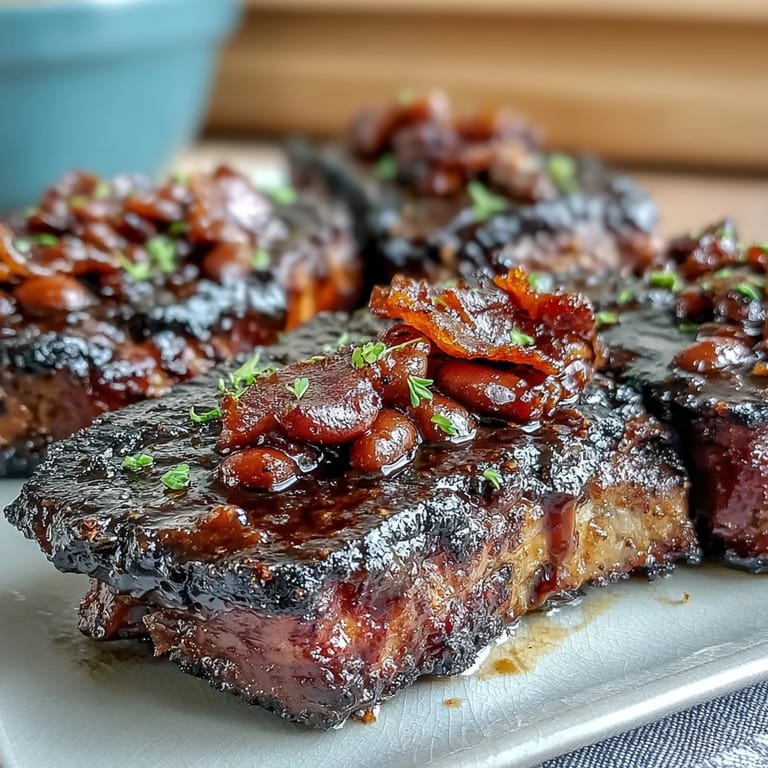
Save Years ago I brought these beans to a family reunion, and my uncle asked for the recipe before he'd finished his first plate. He wasn't the type to ask for recipes, ever, but something about the way the flavors worked together made him want to recreate that moment at home. That's when I realized this dish has a way of making people feel cared for in a way that fancy desserts sometimes don't.
The Bacon Fat Factor
The rendered bacon fat is genuinely half the recipe, even though it might seem like a tiny detail. It carries the smoky, salty flavor into every bean and transforms a simple sauté of onions and peppers into something that smells like a summer barbecue. If you skimp on this step or drain it too aggressively, the whole dish becomes flatter and less interesting, so treat it like the ingredient it is.
Timing and Temperature Matter
I learned this the hard way when I cranked the oven to 400°F to speed things up and ended up with beans that were split and mushy while the sauce was still thin. The low and slow approach at 350°F gives the sauce time to reduce and thicken while the beans stay intact and creamy. If you're in a rush, you can increase the heat to 375°F, but don't go higher or you'll sacrifice the texture.
Making It Your Own
The beauty of this recipe is how forgiving it is to personal preferences and dietary needs. I've made it vegetarian by swapping olive oil for bacon and adding smoked salt and a bit of liquid smoke to capture that BBQ feeling. I've also experimented with adding a splash of bourbon, hot sauce for heat, or even a pinch of coffee to deepen the molasses flavor.
- For vegetarian beans, use 2 tablespoons of olive oil and add a quarter teaspoon of liquid smoke to keep that smoky character alive.
- If you like heat, add cayenne to taste or a splash of your favorite hot sauce stirred in at the end so the flavor stays bright.
- Leftovers keep beautifully in the fridge for up to 4 days and actually taste better the next day after the flavors have had time to marry.
 Save
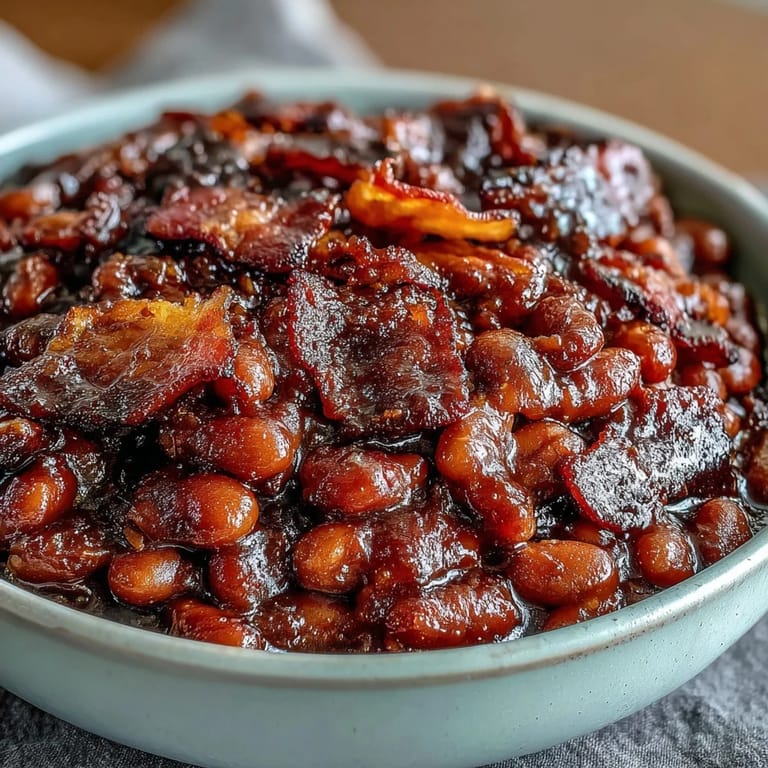
Save These beans have become my reliable answer to the question of what to bring to a summer gathering. They're humble enough to sit quietly alongside grilled meat and vegetables, but flavorful enough to hold their own as the dish people remember.
Common Questions
- → What type of beans work best for this dish?
Canned navy beans are recommended for their tender texture and flavor, but other white beans like cannellini can also work well.
- → Can I make this without bacon?
Yes, omit the bacon and use olive oil to sauté the vegetables for a vegetarian-friendly version with plenty of flavor.
- → How do I ensure the beans have a thick sauce?
Baking the beans uncovered allows the sauce to reduce and thicken, concentrated by the sugars and molasses in the mix.
- → What spices add the smoky flavor?
Smoked paprika plus the smoky bacon contribute the signature smoky depth in this dish.
- → How long can leftovers be stored?
Refrigerate leftovers in an airtight container and consume within 4 days. Reheat gently before serving.
- → Can I add heat to the beans?
Yes, a pinch of cayenne pepper or a splash of hot sauce can be added to introduce some spice.