 Save
Save There's something about the sizzle of chicken hitting a hot pan that makes you feel like you're cooking something important, even on a random Tuesday night. I discovered teriyaki chicken and rice bowls during a phase where I was trying to recreate my favorite takeout at home, mostly because I was tired of waiting for delivery and wanted to eat while the food was still steaming. The first time I nailed the glaze, watching it transform from a loose liquid into something glossy and clingy around the chicken pieces, I understood why this dish has become a weeknight staple in so many kitchens. What started as an experiment turned into something I make whenever I need to feed people quickly without sacrificing that restaurant-quality feeling.
I remember cooking this for my sister when she was going through a phase of eating only things that were both healthy and tasted like they weren't, and watching her face light up when she bit into a piece of chicken coated in that sweet-savory glaze was worth every minute of prep work. She asked for the recipe immediately, which felt like the highest compliment I could receive at that moment.
Ingredients
- Boneless, skinless chicken thighs or breasts: Thighs stay more tender and forgiving if you accidentally overcook them, but breasts work if that's what you have, just watch them closely.
- Soy sauce: Use tamari or coconut aminos if you need gluten-free, and measure carefully because it's salty enough to throw off your whole balance if you're heavy-handed.
- Mirin: This Japanese sweet rice wine is what makes the glaze taste authentic and glossy, but honey mixed with a splash of rice vinegar works as an emergency substitute.
- Brown sugar and honey: Both contribute to that deep, rounded sweetness that keeps the sauce from tasting one-dimensional.
- Rice vinegar: Just enough to cut through the sweetness and keep things from cloying on your palate.
- Garlic and ginger: Fresh always beats pre-minced here, and you'll taste the difference in that bright, living quality they bring.
- Sesame oil: A little goes a long way, and it's what gives the sauce that whisper of nutty depth.
- Jasmine or short-grain rice: Jasmine is slightly more fragrant, but honestly either works beautifully here.
- Fresh vegetables: Broccoli, carrots, bell pepper, and snap peas all add texture and color, but swap them based on what's in your crisper drawer.
- Pineapple garnish: Fresh is best, and those little bursts of tropical sweetness against the savory glaze create magic.
- Sesame seeds and scallions: The final touches that make your bowl look intentional rather than thrown together.
Tired of Takeout? 🥡
Get 10 meals you can make faster than delivery arrives. Seriously.
One email. No spam. Unsubscribe anytime.
Instructions
- Rinse and start your rice:
- Run your rice under cold water until the water runs clear, which removes excess starch and helps each grain stay separate instead of clumping. Combine it with water and a pinch of salt in a saucepan, bring to a boil, then drop the heat to low and cover tightly.
- Simmer and rest:
- Let the rice cook covered for 15 minutes, then remove it from heat and let it sit undisturbed for another 10 minutes so the grains finish absorbing moisture and become fluffy.
- Build your sauce:
- Whisk together soy sauce, mirin, brown sugar, honey, rice vinegar, minced garlic, grated ginger, and sesame oil in a small bowl until everything dissolves and blends into a cohesive glaze. Taste it now and adjust if it's too salty or too sweet.
- Coat the chicken:
- Pour half of your teriyaki sauce over the chicken pieces in a bowl and toss everything to coat evenly, then let it sit while you prep the vegetables. This doesn't need to be a long marinate, but even 10 minutes helps the chicken absorb some flavor.
- Get your vegetables tender-crisp:
- Heat oil in a large skillet or wok over medium-high heat until it shimmers, then add your broccoli, carrots, bell pepper, and snap peas all at once. Stir constantly for about 3 to 4 minutes until they're cooked through but still have some bite and crunch.
- Cook the chicken until golden:
- Scoop out the vegetables and set them aside, then add the marinated chicken to the same pan and let it cook undisturbed for a minute so it gets a little color, then stir occasionally for another 5 to 7 minutes until it's cooked through and browning in spots.
- Thicken your glaze:
- Pour the remaining teriyaki sauce into the pan and stir it around, then mix your cornstarch with water to make a slurry and drizzle it in while stirring constantly. Simmer for 2 to 3 minutes until the sauce turns glossy and clings to the chicken.
- Bring it all together:
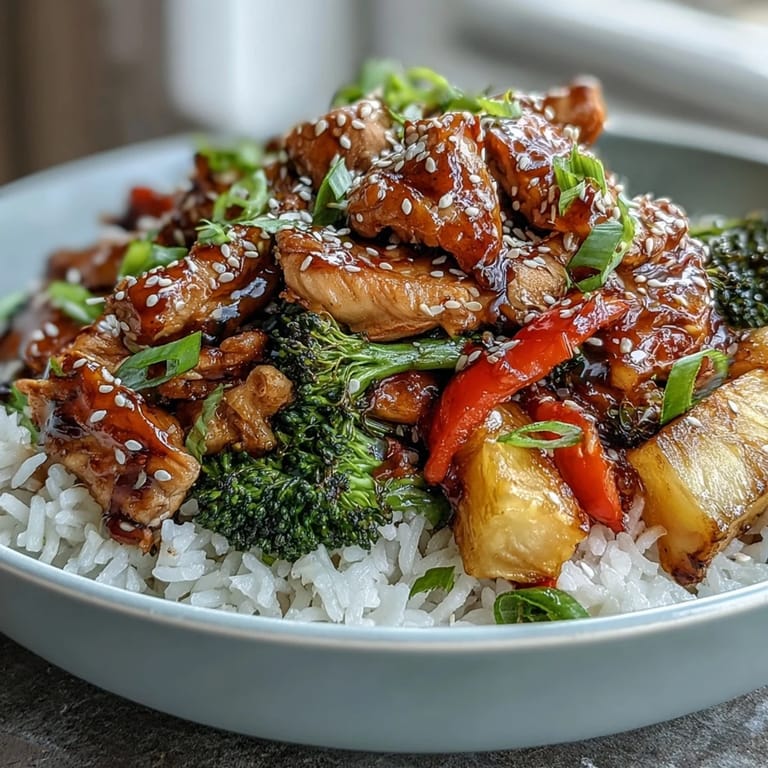
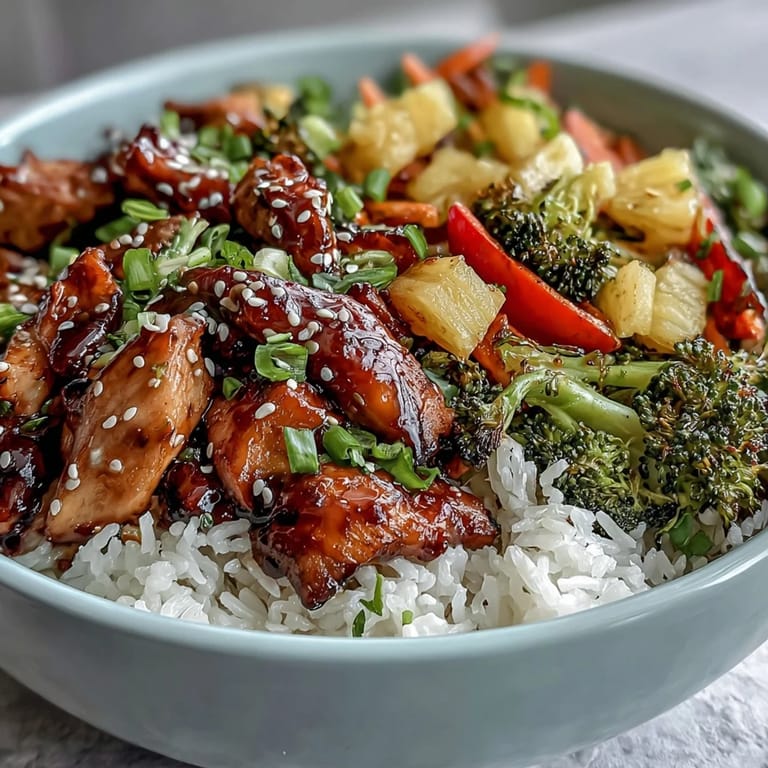
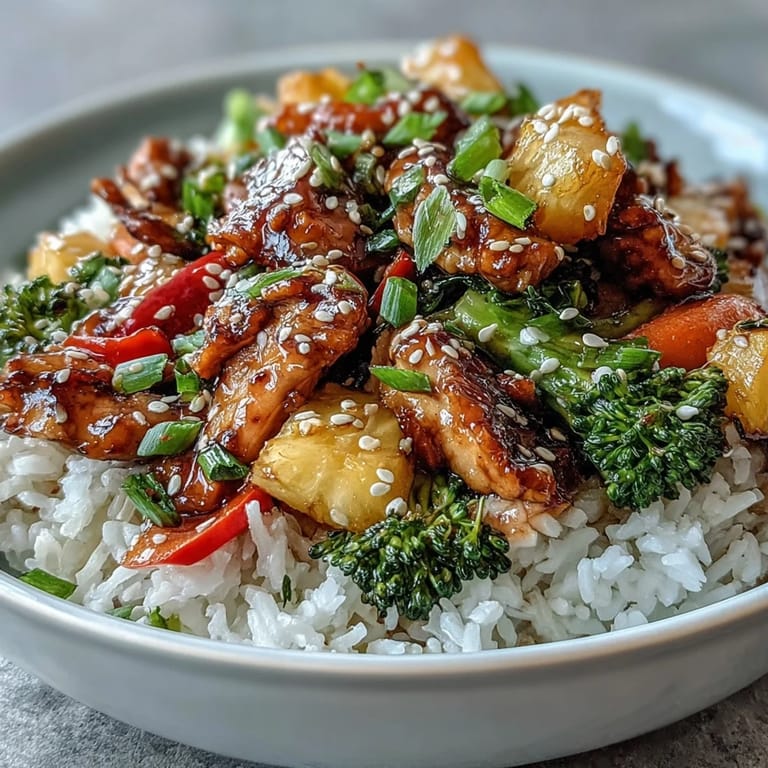
- Divide your fluffy rice among four bowls, then arrange the teriyaki chicken on top, scatter your cooked vegetables around, and finish with fresh pineapple, sliced scallions, and a sprinkle of toasted sesame seeds.
 Save
Save This dish became something more than just dinner the night my best friend tried it for the first time and said it reminded her of the place she used to go in the city, the one she had to move away from. Somehow, feeding someone something that transported them back to a good memory felt like the most meaningful thing I could do in that moment.
Why The Glaze Is Everything
The magic of this bowl lives entirely in that sauce, and once you understand how it works, you can apply the same technique to literally anything you want to glaze. The balance of salty, sweet, and tangy is what makes your mouth want more, and the sesame oil at the end is what keeps it from tasting like something from a bottle. I've learned that the glaze is worth taking seriously, because a mediocre sauce will make even perfectly cooked chicken feel forgettable.
Swaps and Substitutions That Actually Work
I've made this bowl with tofu pressed and cubed, with tempeh marinated in extra sauce, with shrimp that only needs a couple of minutes in the pan, and even with mushrooms for vegetarian guests. The vegetables are the most flexible part, so don't stress if you don't have snap peas or need to use whatever's available in your produce section. The sauce is really what makes this dish work, so as long as you nail that part, the rest can be personalized to whatever your kitchen holds and whatever your cravings lean toward.
Serving and Pairing Ideas
This bowl is complete on its own, but I've discovered that a crisp white wine like Sauvignon Blanc beside it feels sophisticated without being fussy. A drizzle of sriracha or chili oil on the side lets people adjust the heat to their own preference, and sometimes a tiny squeeze of lime over the pineapple brightens everything up. Fresh ginger tea on the side feels like a natural pairing if you're going alcohol-free.
- Serve this straight from the pan into bowls so the heat and the glaze stay as glossy as possible.
- Make sure everyone gets some of the glaze pooled at the bottom of their bowl, because it's the best part.
- Leftover rice and chicken can be stored separately and reheated gently, though the vegetables are best eaten fresh.
 Save
Save This is the kind of dish that teaches you that restaurant food isn't magic, it's just technique and good ingredients applied with care. Once you make it once and taste how good it can be, you'll find yourself making it again and again.
Common Questions
- → What makes homemade teriyaki sauce better than store-bought?
Homemade teriyaki sauce uses fresh ingredients like minced garlic and grated ginger that provide vibrant aromatic flavors you won't find in bottled versions. You can also adjust the sweetness and saltiness to your exact taste preferences, and avoid preservatives or artificial additives found in commercial sauces.
- → Can I use brown rice instead of white jasmine rice?
Absolutely. Brown rice adds nutty flavor and extra fiber, though it requires a longer cooking time of about 40-45 minutes. You may need slightly more water—roughly 2.5 cups instead of 3. The heartier texture pairs beautifully with the rich teriyaki glaze.
- → How do I prevent the sauce from becoming too thick or clumpy?
Always mix the cornstarch with cold water to create a smooth slurry before adding it to the hot sauce. Whisk continuously while pouring, and simmer gently rather than boiling vigorously. The sauce should coat the back of a spoon without forming gelatinous lumps.
- → What protein alternatives work well with this preparation?
Firm tofu cubes, tempeh strips, or salmon fillets all adapt beautifully to teriyaki glazing. For plant-based options, press the tofu first to remove excess moisture, allowing it to absorb more marinade and develop a crispy exterior when seared in the hot pan.
- → Can I meal prep these bowls for the week?
These bowls meal prep exceptionally well. Store each component separately in airtight containers—rice, chicken with sauce, and vegetables—to maintain optimal texture. Reheat portions in the microwave for 2-3 minutes, adding a splash of water if needed to refresh the sauce.