 Save
Save I'll never forget the first time I attempted an artisan charcuterie board at a dinner party—I thought I could simply arrange some cheese and meat on a plate and call it elegant. That humble effort taught me everything about presentation, balance, and the art of creating something that looks impossible but feels effortless. Years later, after countless gatherings and experiments with folding techniques, I discovered that the most show-stopping boards aren't about quantity alone, but about transforming simple ingredients into edible architecture. This advanced board represents that evolution: a celebration of texture, color, and the small moments of pride when guests gasp at what's before them.
I remember assembling one of these boards late on a Saturday afternoon, my kitchen counter covered in papers with sketches of color arrangements. My daughter wandered in, watched me carefully fan the prosciutto into delicate ribbons, and asked if I was making art. That's when it clicked—this isn't just food, it's a edible still life that brings people together. Since then, I've made these boards for anniversaries, celebrations, and quiet moments when I simply wanted to remind myself that beauty and nourishment go hand in hand.
Ingredients
- Prosciutto, soppressata, capicola, chorizo, and mortadella (500 g total): Each meat brings its own character—the delicate sweetness of prosciutto, the peppery bite of soppressata, the subtle smoke of chorizo. The key is slicing them paper-thin and arranging them while still slightly chilled; they'll be more pliable and hold their beautiful folds longer.
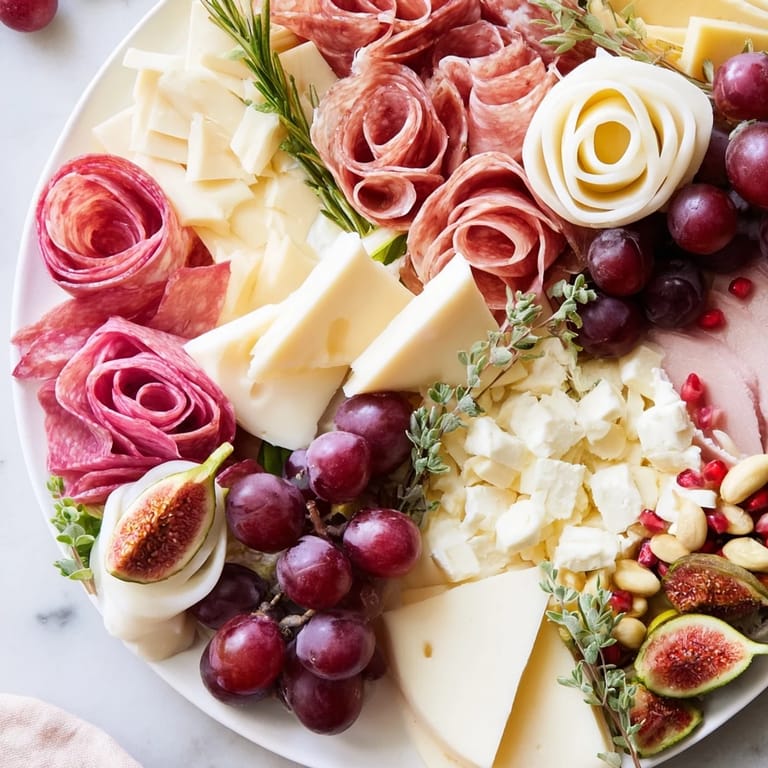
- Brie, manchego, aged cheddar, goat cheese, gouda, and provolone (850 g total): This mix gives you soft, semi-hard, and hard textures. Provolone becomes your sculptural hero—chill it well, then use a vegetable peeler for long, thin ribbons that roll beautifully into roses.
- Red and green grapes, figs, pomegranate, apple, and pear: These fresh elements cut through the richness and add brightness. Prepare them close to serving time; apples and pears benefit from a light lemon juice brush to prevent browning.
- Dried apricots, cherries, and figs, plus Marcona almonds and pistachios (275 g total): Dried fruits concentrate flavor and add jewel-like pops of color. Toast nuts lightly beforehand if you want to deepen their flavor and make them even more memorable.
- Cornichons, mixed olives, roasted red peppers, artichoke hearts, whole grain mustard, fig jam, and honey: These are your flavor anchors. Small bowls keep them contained and make them easy to reach; guests love having little flavor surprises to explore.
- Baguette, assorted crackers, and grissini: Think of bread as your edible utensil. Slice the baguette at an angle for elegance, and leave some crackers in their sleeves for visual interest—standing them upright creates height and movement.
- Fresh rosemary, thyme, edible flowers, microgreens, and radish roses: These garnishes transform good into breathtaking. They're the finishing brushstrokes that tell guests you've truly thought about every detail.
Tired of Takeout? 🥡
Get 10 meals you can make faster than delivery arrives. Seriously.
One email. No spam. Unsubscribe anytime.
Instructions
- Prepare Your Canvas:
- Wipe your board completely dry—moisture is the enemy of presentation. Arrange small bowls for your jams, honey, and pickles in pleasing spots; step back and imagine where your eye naturally travels, then place these anchors there.
- Sculpt Your Cheese Roses:
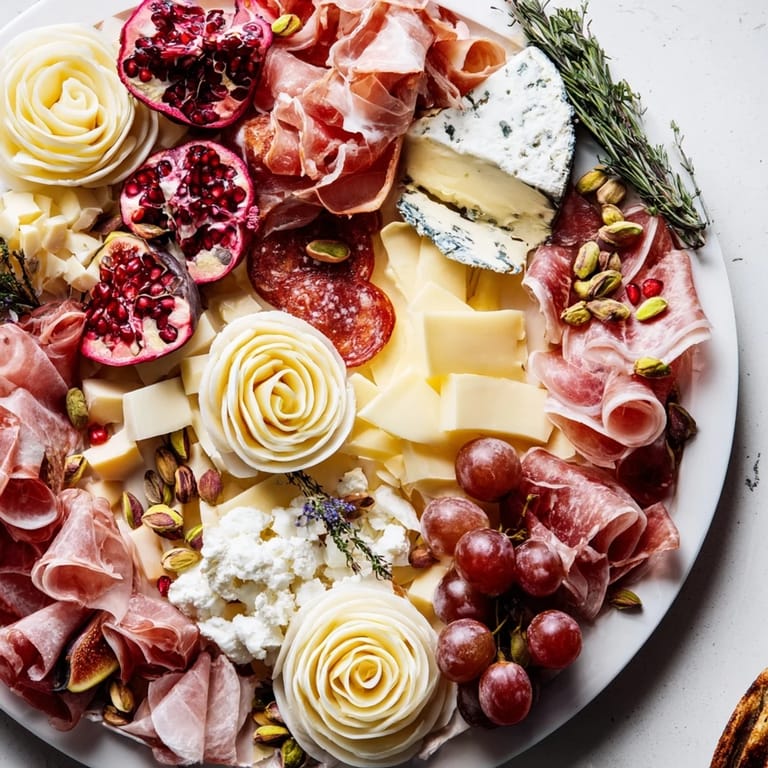
- Working with cold provolone, use a vegetable peeler to create long, thin ribbons. Lay a ribbon flat, then roll it tightly from one end, allowing the outer edges to unfurl slightly as you go. Gently fan the petal-like edges outward. This takes practice—your first roses might look imperfect, but that imperfection is part of their charm.
- Create Meat Roses and Folds:
- Lay a slice of prosciutto flat and roll it loosely from one corner, creating a loose spiral. Do the same with soppressata or capicola. For folded arrangements, accordion-fold slices and stand them upright, catching light beautifully. Work quickly—cold meat is more forgiving and holds its shape better.
- Build Your Cheese Foundation:
- Cut wedges, irregular shards, and cubes of varying sizes. Place your sculptural roses first as focal points, then fill around them. Think about height and depth; you want to create visual movement, not a flat landscape.
- Cluster Your Fruits:
- Group similar fruits together—red grapes in one cluster, green in another, creating color blocks that guide the eye. Nestle pomegranate seeds in small pockets; their jewel-like quality deserves to be seen.
- Scatter Nuts, Olives, and Pickles:
- These aren't just fillers—they're flavor highlights. Create small, intentional piles rather than random dots. A cluster of Marcona almonds beside a wedge of manchego creates an expected pairing; guests instinctively understand they go together.
- Arrange Bread and Crackers:
- Fan baguette slices gently, slightly overlapping. Place some crackers standing upright in small stacks, others lying flat in groups. Leave some grissini bundled together—it creates visual rhythm and makes them easy to grab.
- Garnish with Intention:
- This is where your board transforms from impressive to absolutely stunning. Tuck rosemary sprigs vertically, scatter microgreens in delicate piles, place edible flowers in strategic gaps, and crown it all with radish roses. Step back frequently to ensure no area feels sparse or overcrowded.
- Final Check and Service:
- Run your eye across the board one more time. Does it feel balanced? Are there peaks and valleys, colors that pop, and elements that draw attention? Serve immediately for maximum impact, or cover loosely with plastic wrap and refrigerate until your guests arrive.
 Save
Save I made one of these boards for my parents' anniversary celebration, and I watched my father—a man of few words—spend ten minutes just looking at it before serving himself. Later, he told my mother it was too beautiful to eat. She laughed and told him that's exactly when you know you've succeeded: when food becomes a memory before it becomes sustenance.
The Art of Assembly
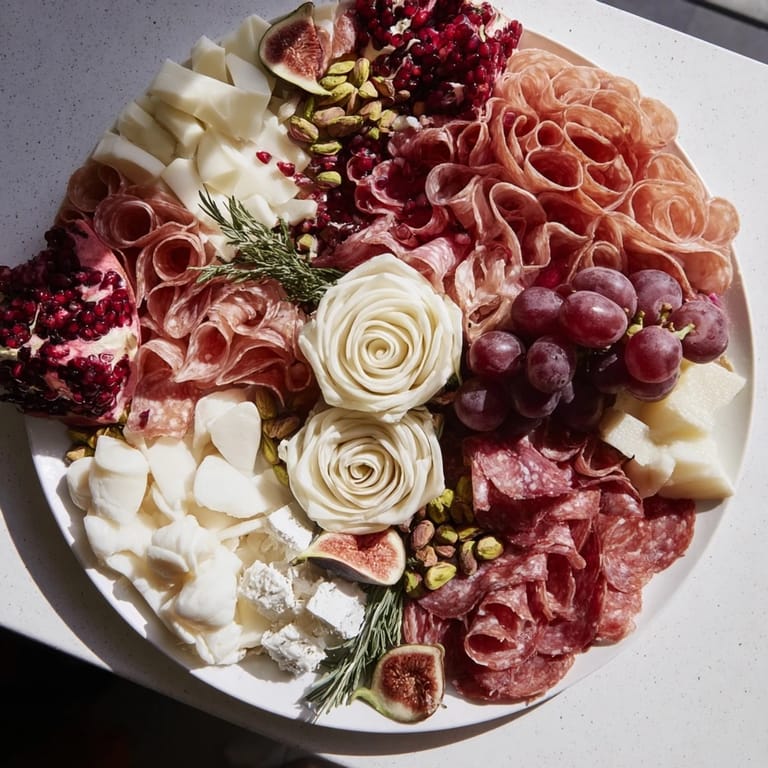
Creating an artisan board is as much about understanding visual composition as it is about ingredient selection. Think of yourself as a painter choosing a palette. The cured meats provide rich burgundies and deep reds; the cheeses offer creams, golds, and whites; the fruits bring brightness in crimsons and amber. The eye naturally follows color, so strategically placing jewel tones—pomegranate seeds, dried cherries, pistachios—creates focal points that draw people around the board. Every element should have a reason to be exactly where it is, whether that's flavor pairing, color balance, or simply creating an unexpected surprise when someone discovers a cluster they hadn't noticed before.
Flavor Pairings That Sing
The true magic of an advanced charcuterie board lies not in individual components but in how they dance together. The salinity of aged cheddar finds its match in the sweetness of fig jam; the earthiness of goat cheese bridges perfectly to roasted red peppers; the delicate funk of mortadella becomes transcendent when paired with a fig. I've learned that the best boards tell a story of intentional pairing. As you arrange, think about what you'd naturally eat together—that instinct, multiplied across your board, creates an experience where every bite feels thoughtful, never random or overwhelming.
Making It Yours
This board is a template, not a rulebook. The first time I made one, I stressed about finding every specific ingredient; now I understand that it's the principles that matter. You might swap manchego for gruyère, add smoked cheeses, include candied nuts, or layer in dark chocolate truffles for those guests who lean sweet. You might garnish with edible flowers from your garden or microgreens you sprouted yourself. The technique—the sculpting, the layering, the thoughtful composition—is what transforms your personal preferences into something genuinely artisan.
- Prep components separately, then come together for final assembly; this makes the process feel less overwhelming and more creative.
- Invest in a proper cheese knife and vegetable peeler; the right tools make sculpting feel effortless rather than frustrating.
- Remember that this board improves as people eat from it—the negative space fills, flavors mingle, and the presentation becomes more intimate and lived-in, which is when it truly comes alive.
 Save
Save These boards remind me why I cook: not just to nourish, but to create moments where people gather, linger, and feel special. Every time you make one, you're not just serving food—you're serving an experience.
Common Questions
- → How do I sculpt the cheese roses?
Use pliable provolone slices rolled tightly and gently fanned out to mimic petals. Repeat with thin salami for meat roses.
- → What are ideal accompaniments for this board?
Pair with bold reds like Syrah or sparkling wines to complement the rich flavors and textures.
- → How can I vary the textures on the board?
Include a mix of hard and soft cheeses, crunchy nuts, crisp crackers, and tender fruits to balance textures.
- → What garnishes enhance the presentation?
Fresh rosemary, thyme, edible flowers, microgreens, and radish roses add color and a refined touch.
- → Can this board accommodate dietary preferences?
Yes, consider gluten-free crackers or plant-based alternatives to suit different dietary needs.
- → How to store leftovers effectively?
Cover tightly and refrigerate; best consumed within 24 hours for freshness and texture.