 Save
Save My neighbor Sarah showed up at my door one Saturday morning with a loaf of sourdough she'd been nurturing for weeks, insisting I needed to do something special with it. I'd been staring at my blueberries, wondering if they'd make it through the weekend, and suddenly the idea of a make-ahead bake felt less like cooking and more like solving a delicious puzzle. There's something deeply satisfying about a dish that asks you to prep it the night before, then wake up to the smell of cinnamon and caramelizing bread without any morning rush.
I made this for my book club last spring, and watching four women argue over the last corner piece—the one with the darkest, crispiest edges—told me everything I needed to know about whether this recipe was a keeper. One of them asked for it that very afternoon, and I realized then that the best dishes are the ones people remember enough to ask for before they've even left your kitchen.
Ingredients
- Sourdough bread, cut into 1-inch cubes: About 400 g (1 loaf)—the tang of sourdough is essential here, as it cuts through the richness of the custard and prevents the whole thing from feeling heavy; day-old bread works better than fresh because it holds its shape during soaking.
- Fresh or frozen blueberries: 2 cups (300 g)—frozen ones are honestly just as good and sometimes even more flavorful since they're picked at peak ripeness; no need to thaw them before adding.
- Large eggs: 6—the backbone of your custard, providing richness and structure.
- Whole milk: 2 cups (480 ml)—keeps the custard creamy without being overly heavy.
- Heavy cream: 1/2 cup (120 ml)—this is what makes every bite feel indulgent.
- Granulated sugar: 1/3 cup (65 g)—sweetens the custard without making it cloying.
- Pure vanilla extract: 2 tsp—don't skip the word pure; it makes a real difference in the final flavor.
- Ground cinnamon: 1 tsp in the custard, plus 1/2 tsp for the topping—the spice that ties everything together with warmth.
- Ground nutmeg: 1/4 tsp—just a whisper, but it deepens the whole flavor profile in a way people can't quite identify but absolutely notice.
- Fine sea salt: 1/4 tsp—enhances all the other flavors and balances the sweetness.
- Unsalted butter, melted: 2 tbsp—for the topping, keeping it from being one-dimensional.
- Brown sugar: 2 tbsp—creates those caramelized bits on top that everyone fights over.
Tired of Takeout? 🥡
Get 10 meals you can make faster than delivery arrives. Seriously.
One email. No spam. Unsubscribe anytime.
Instructions
- Prepare your stage:
- Butter or spray a 9x13-inch baking dish so the bread doesn't stick during the long soak. This small step prevents disaster and makes cleanup immensely easier.
- Layer your foundation:
- Spread the cubed sourdough evenly across the bottom of the dish, then scatter blueberries over the top like you're planting a garden. Don't worry about perfect distribution; the blueberries will settle into pockets as the custard soaks in.
- Make the custard magic:
- Whisk together eggs, milk, cream, sugar, vanilla, cinnamon, nutmeg, and salt in a large bowl until completely smooth with no streaks of egg white visible. The whisking matters because you're incorporating air and ensuring even distribution of spices.
- Soak it down:
- Pour the custard mixture slowly and evenly over the bread and blueberries, then gently press down with a spatula so the bread absorbs the liquid. It won't look like enough liquid at first, but trust the process—the bread will drink it all up.
- The overnight wait:
- Cover the dish tightly with plastic wrap and refrigerate for at least 2 hours, though overnight is truly best. This is when the magic happens: the bread becomes saturated, the flavors meld, and everything becomes one cohesive, custardy mass.
- Add the crumble crown:
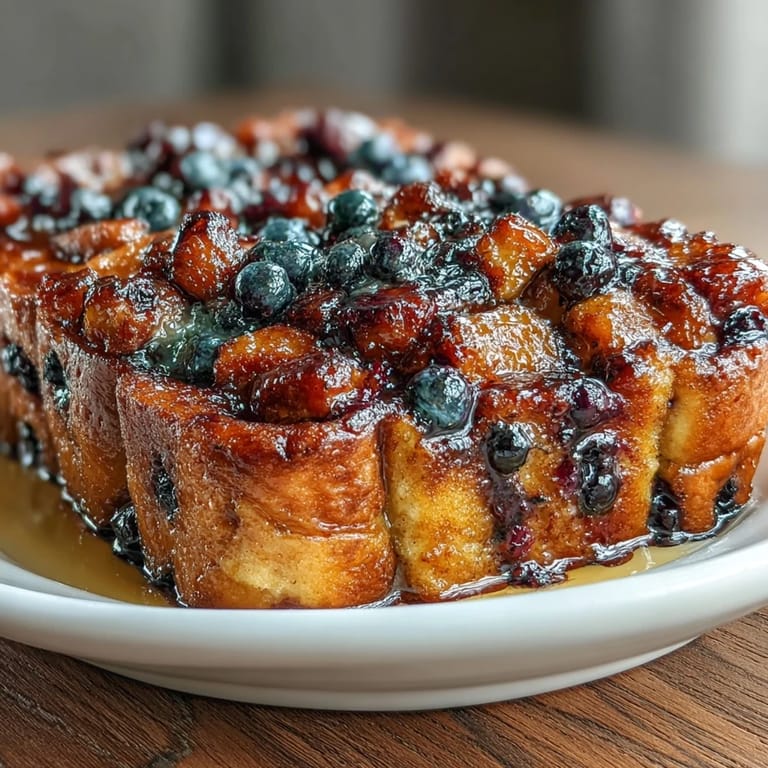
- About an hour before baking, preheat your oven to 350°F. In a small bowl, mix melted butter with brown sugar and cinnamon, then drizzle it evenly over the top of your soaked bake. The brown sugar will caramelize into crispy, sweet clusters.
- Bake until golden:
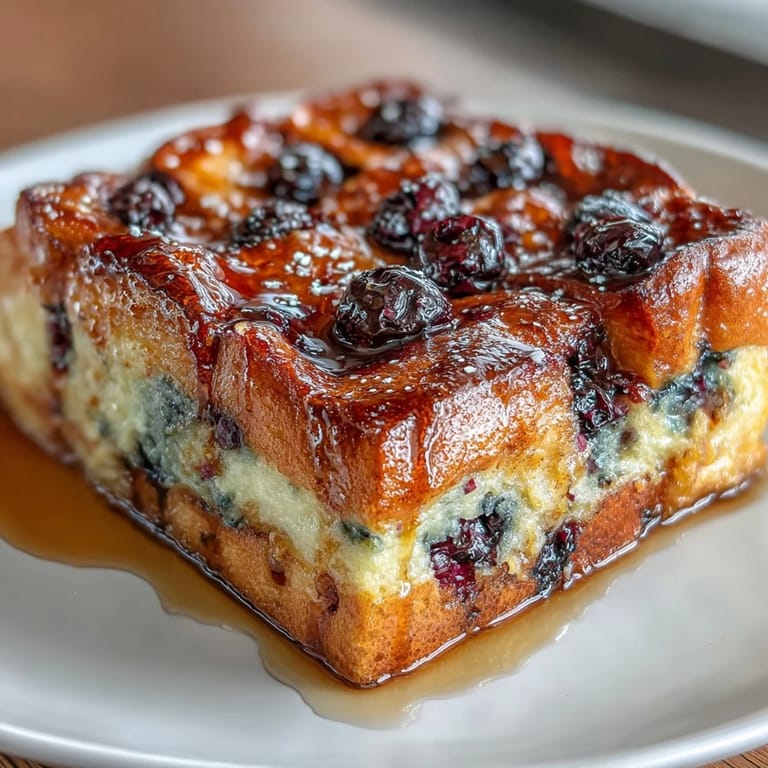
- Bake uncovered for 40 to 45 minutes, until the center is set but still has a tiny bit of jiggle when you nudge the pan, and the edges are deep golden brown. The top should look rich and caramelized, almost like a bread pudding's fancy cousin.
- Rest and serve:
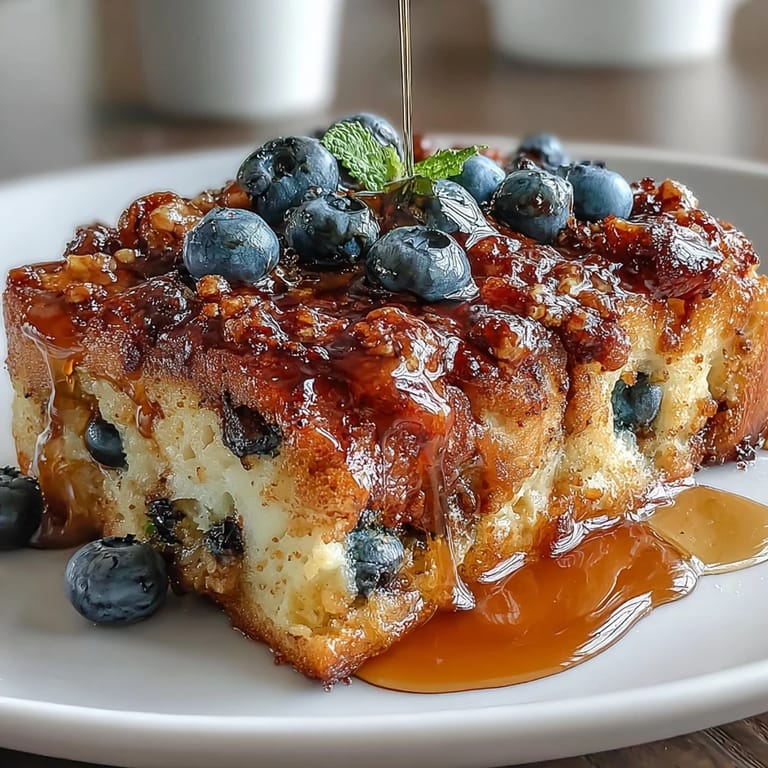
- Let it cool for about 10 minutes—this gives it structure so it won't fall apart when you cut it, but it's still warm enough to be truly special. Serve with maple syrup, powdered sugar, whipped cream, or fresh fruit alongside.
 Save
Save The real moment this dish became more than just breakfast was when my partner woke up to the smell of it baking and came downstairs with their eyes half-closed, just standing in the kitchen in silence for a minute. Sometimes the best part of cooking isn't the eating—it's knowing you've made something that pulls people toward the kitchen before they're even awake.
Why Sourdough Changes Everything
Sourdough has this tang that does something almost magical when it meets sweetness—it prevents the whole dish from cloying, keeps it from feeling one-note. I learned this accidentally when I once substituted brioche and found the result felt a bit flat, missing that complexity that makes you reach for another bite. The sourdough's slight chewiness also holds up beautifully during the overnight soak, becoming tender but not mushy, which is the Goldilocks zone you're aiming for.
Make-Ahead Magic and Timing
The real gift of this recipe is that it invites you to be strategic—you can soak it overnight, add the topping an hour before baking, and have the whole thing ready to slide into the oven while you're still in your first cup of coffee. I've learned that the best entertaining happens when the hardest work is done before your guests arrive, and this bake embodies that philosophy perfectly. It also freezes beautifully after baking, so you can make it weeks ahead if you want to be truly ahead of the game.
Variations and Personal Touches
This bake is forgiving enough to handle your improvisation, which is part of why I keep coming back to it. I've added everything from pecans to cardamom to a drizzle of honey on top, and each variation has been worth keeping. Some mornings I've swapped in blackberries, other times I've added a splash of rum to the custard for a more grown-up brunch, and the dish has never let me down.
- Toast your nuts before adding them to the topping—it awakens their flavor and prevents them from tasting raw against the custard.
- If you're making this for someone with a gluten sensitivity, brioche made with gluten-free flour soaks up the custard just as beautifully as the traditional version.
- The dish is best served the same day it's baked, but leftovers reheat gently in a low oven without losing their character.
 Save
Save There's something wonderful about a dish that lets you slow down on a weekend morning, that asks you to think about it the night before and then rewards your patience with something genuinely special. This bake has become my answer to the question of how to feed people you love without stress.
Common Questions
- → Can I prepare this dish the night before baking?
Yes, covering and refrigerating the soaked bread and custard mixture overnight enhances flavor and texture.
- → What bread types work well besides sourdough?
Brioche or challah provide a richer, softer texture and work beautifully as substitutes.
- → Are frozen blueberries suitable?
Absolutely, frozen blueberries can be used directly without thawing before baking.
- → How can I add extra crunch to the topping?
Mixing chopped pecans or walnuts into the cinnamon-sugar topping adds a delightful crunch.
- → What serving suggestions complement this dish?
Serve warm with maple syrup, a dusting of powdered sugar, or alongside fresh fruit and strong coffee.