 Save
Save My uncle's kitchen in New Orleans always smelled like this—that particular blend of caramelized meat, celery, and something warm that made you want to pull up a chair and stay for hours. The first time he made dirty rice for me, I watched him brown the pork with focused intensity, like he was coaxing flavor out of every grain. He didn't measure much, just tasted and adjusted, which terrified and fascinated me in equal measure. Now when I make it, I understand what he was listening for—that quiet moment when the rice absorbs the broth and the kitchen fills with something deeper than just dinner.
I made this for friends who'd never had proper dirty rice, and I was nervous in that way you get when sharing something you love. Halfway through dinner, one of them went quiet, took another bite, and just nodded—no words needed. That's when I realized this dish carries something beyond ingredients, it's about generosity and the confidence that comes from knowing you're feeding people well.
Ingredients
- Ground pork: The backbone of authentic dirty rice, it browns quickly and holds the spices like a sponge; don't skip the browning step because that's where the deep flavor lives.
- Ground beef or chicken livers: If you want traditional flavor, chicken livers add an earthy richness that beef can't quite match, though beef works beautifully if that's what you have.
- Onion, bell pepper, and celery: The holy trinity of Southern cooking—their softness creates a flavor base that everything else builds on, so don't rush the sautéing.
- Garlic: Three cloves minced fine, because garlic cooked in that meaty oil becomes almost sweet and rounds out the spices.
- Long-grain white rice: Rinsing it matters more than you'd think; it removes excess starch and keeps each grain separate and distinct.
- Chicken broth: The liquid that carries all the flavor into the rice, so use something you'd actually drink, not the salty ghost of chicken.
- Cajun seasoning, thyme, smoked paprika: Together they create warmth without overwhelming heat; the smoked paprika especially adds complexity that feels like a secret ingredient.
- Salt, black pepper, cayenne: Season as you go and taste constantly—this is how you learn what your palate needs.
Tired of Takeout? 🥡
Get 10 meals you can make faster than delivery arrives. Seriously.
One email. No spam. Unsubscribe anytime.
Instructions
- Brown the meat with confidence:
- Heat oil until it shimmers, then add pork and beef together. Break it up as it cooks, and don't stir constantly—let it sit for moments so it can develop a caramelized crust. You want deep brown bits, not pale and steamed, which takes about 6 to 7 minutes total.
- Build the flavor base:
- Add your chopped vegetables to the hot oil and meat, and sauté until they soften and the kitchen smells alive with possibility. Listen for the quiet sizzle and watch for the onions to turn translucent—that's your signal, roughly 5 minutes.
- Bloom the spices:
- Stir in all your seasonings and let them coat everything evenly, cooking for just a minute so the spices wake up and release their oils. This step transforms raw spice powder into something fragrant and integrated.
- Toast the rice briefly:
- Add your rinsed rice and stir it through the spiced meat mixture for 1 to 2 minutes. You're not cooking it yet, just letting each grain get coated in the flavorful oil, which deepens its final taste.
- Add broth and simmer gently:
- Pour in the broth, bring to a boil, then immediately reduce heat to low and cover. Resist the urge to lift the lid and peek—the steam needs to stay trapped so the rice steams evenly for 20 to 22 minutes.
- Rest and fluff:
- When the rice is tender and the liquid has vanished, turn off the heat and let it sit covered for 5 minutes. This resting period lets the rice settle into its final texture, then a gentle fluff with a fork separates the grains.
- Finish with garnish:
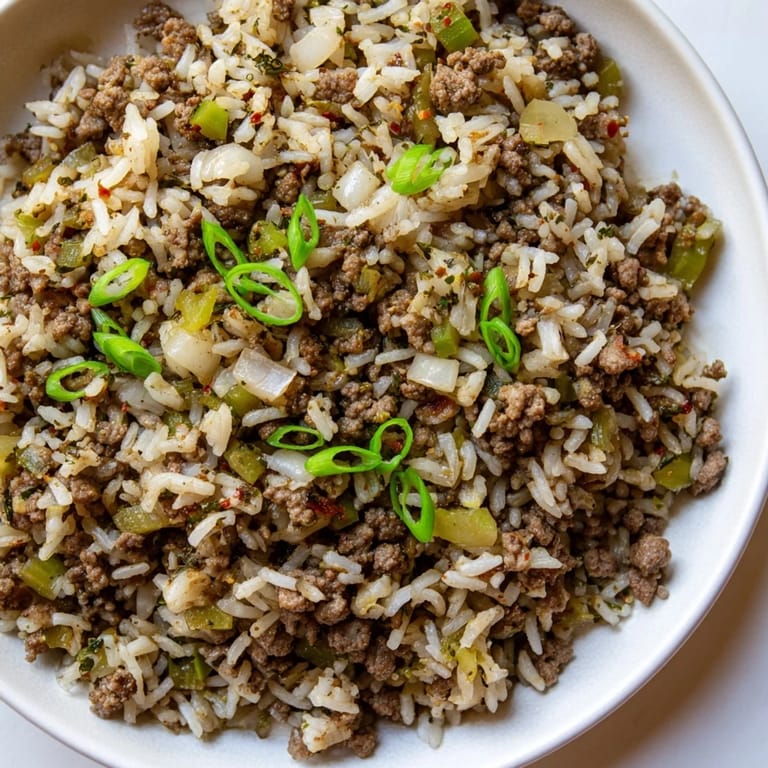
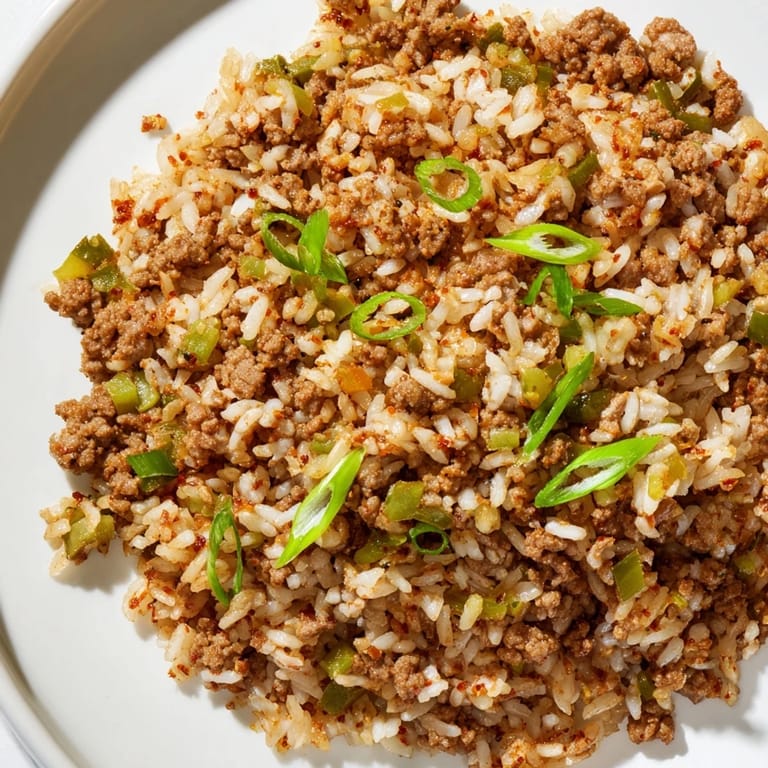
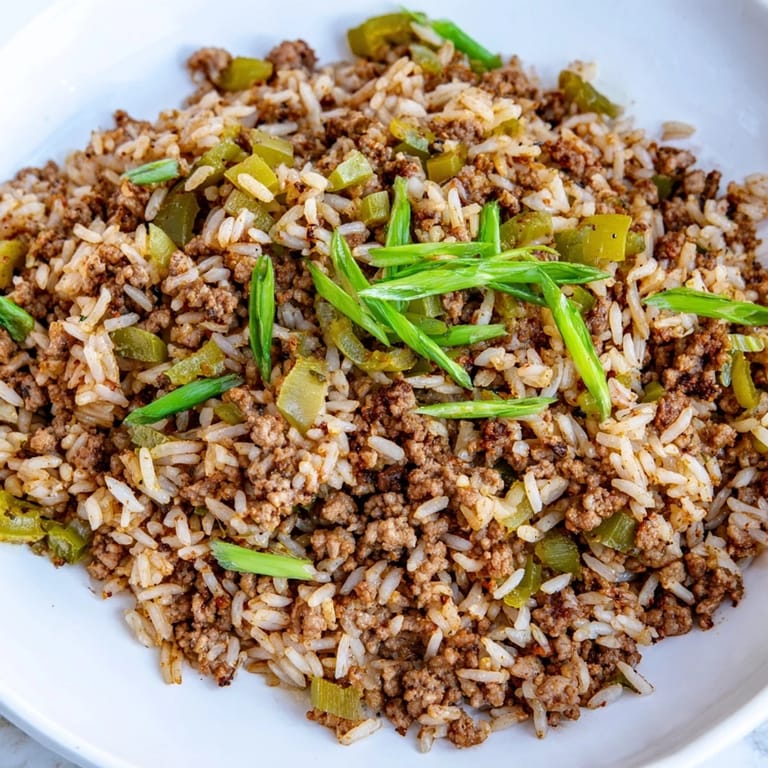
- Scatter sliced spring onions over the top just before serving, adding brightness and a sharp note that cuts through the richness.
 Save
Save There's a moment when you're standing at the stove, steam rising from under the pot lid, and you realize you've made something whole and complete with your own hands. Dirty rice does that—it turns simple things into comfort, and that matters.
Why This Tastes Like Home
Dirty rice earned its name because of the way the meat colors the grains, making them speckled and earthy looking. But there's nothing humble about the flavor—it's concentrated and unapologetic, built on the principle that good food doesn't need to look pristine to be profound. Every spoonful carries the meat, the vegetables, and the spices in one bite, which is why one pot is enough and why you'll find yourself reaching for seconds without thinking.
Variations to Make It Yours
If chicken livers aren't calling to you, ground chicken mixed with the pork works, though you'll lose a little of that deep earthiness. Some people stir in diced tomatoes or a splash of hot sauce at the end, which adds brightness and heat. I've also seen cooks add diced andouille sausage for smokiness, which transforms it into something different but equally compelling.
Serving and Pairing
Dirty rice is a main dish that stands alone, though a simple green salad with sharp vinaigrette on the side feels right. It reheats beautifully, actually tasting better the next day when flavors have had time to marry. Cold beer is the natural pairing, or white wine if that's what's in your glass—this food is forgiving and generous that way.
- If it's too thick after sitting, stir in a splash of broth to loosen it.
- Leftovers keep for three days refrigerated and freeze well for up to two months.
- Serve it warm, in a wide bowl, with hot sauce on the table for anyone who wants to push the heat further.
 Save
Save This is the kind of food that doesn't ask for much but gives everything—simple ingredients, one pot, and the knowledge that you're cooking something real. Make it for people you want to feed well.
Common Questions
- → What meats can be used in this dish?
Ground pork and beef are traditional, but chicken livers offer a classic alternative for authentic flavor.
- → How can I adjust the spiciness level?
Omit or reduce cayenne pepper for milder heat, or add more for extra spiciness depending on your preference.
- → What vegetables enhance the flavor?
Onions, green bell peppers, celery, and garlic provide aromatic depth and balance the spices beautifully.
- → Can I use a different type of rice?
Long-grain white rice is preferred for texture, but jasmine or basmati can be used with slight adjustments in cooking time.
- → What dishes pair well with this meal?
Serve alongside a crisp lager or chilled white wine to complement the bold and hearty flavors.