 Save
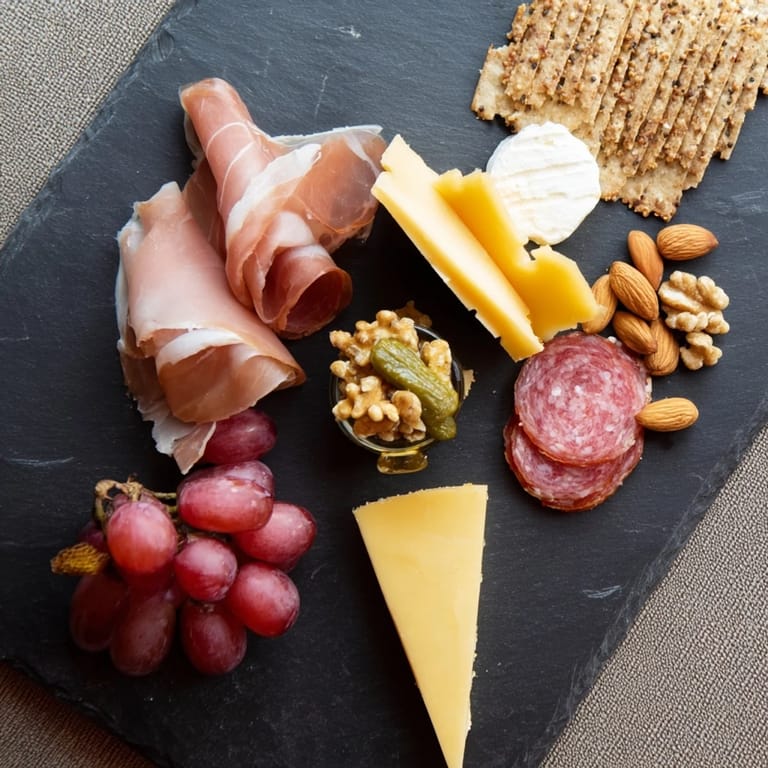
Save I remember the first time I made a charcuterie board just for myself—it felt almost indulgent, like I was giving myself permission to slow down. I was having one of those evenings where takeout felt wrong and a full meal felt like too much, so I gathered whatever beautiful things I could find in my kitchen. A few slices of prosciutto I'd been saving, some aged cheddar that had been calling to me, a handful of grapes. I arranged them on a small slate coaster with the kind of care I'd usually reserve for hosting, and something magical happened: sitting alone with that beautiful little board became a moment of pure contentment. It taught me that elegance and joy don't require an audience.
I've made this board countless times now, and each time it reminds me of those quiet evenings at home—maybe after work, or on a Sunday afternoon when I wanted something that felt more like an experience than just eating. My friends have started asking me to bring these to gatherings, and I've discovered that what started as a solo indulgence has become a conversation starter, a bridge between courses, a reason to linger at the table together.
Ingredients
- Prosciutto (2 slices): The thinness of prosciutto is its magic—it melts on your tongue and adds an elegant, salty depth. Ask the deli counter to slice it paper-thin if you can, and handle it gently as you arrange it. The delicate texture is half the appeal.
- Soppressata or Salami (2 slices): I prefer soppressata for its slightly peppery bite and cleaner flavor, but any quality cured meat works. These are your flavor anchors, so choose something you genuinely enjoy eating by itself.
- Aged Cheddar or Brie (30 g / 1 oz): Go for something with real character—a sharp aged cheddar or a creamy, almost-runny brie makes all the difference. Cut it into small wedges or cubes so the flavors reveal themselves gradually.
- Soft Goat Cheese or Blue Cheese (30 g / 1 oz): This is your wildcard ingredient. Soft goat cheese adds a tangy brightness, while blue cheese brings an earthy intensity. A tiny amount goes a long way in flavor.
- Grapes or Fresh Berries (small handful): These aren't just decoration—they're the sweet punctuation mark between savory bites. Seedless grapes are easiest to eat, but raspberries or blueberries add visual beauty and a different sweetness.
- Mixed Nuts (1 tablespoon): Toast them lightly in a dry pan if you have time—just 2 minutes transforms them from background players to something memorable. Almonds and walnuts are my go-tos for their different textures.
- Cornichons or Baby Gherkins (2–3): These tiny pickles provide a sharp, refreshing contrast that makes you want another bite of cheese right after. They're the secret that keeps your palate interesting.
- Whole Grain Mustard (1 teaspoon): A small dollop is all you need. The seeds give you little bursts of mustard flavor without overwhelming anything else.
- Crackers or Baguette Slices (3–4): These are your foundation for enjoying everything else. I prefer sturdy crackers that won't crumble under soft cheese, but thin, crispy baguette slices work beautifully too. Choose something you genuinely like eating on its own.
Tired of Takeout? 🥡
Get 10 meals you can make faster than delivery arrives. Seriously.
One email. No spam. Unsubscribe anytime.
Instructions
- Choose Your Canvas:
- Select a small slate coaster, wooden board, or appetizer plate as your base. The surface matters more than you'd think—I find slate has a sophisticated quality that makes even simple ingredients feel special. If you're using a coaster, it should be large enough to hold everything without feeling cramped, but small enough that everything feels intentional and arranged, not scattered.
- Arrange the Meats with Care:
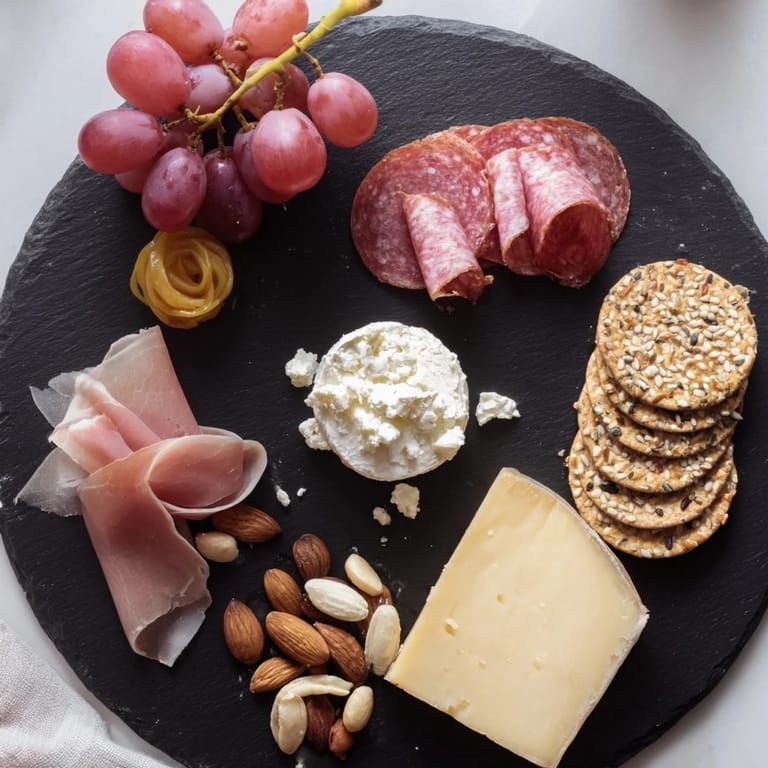
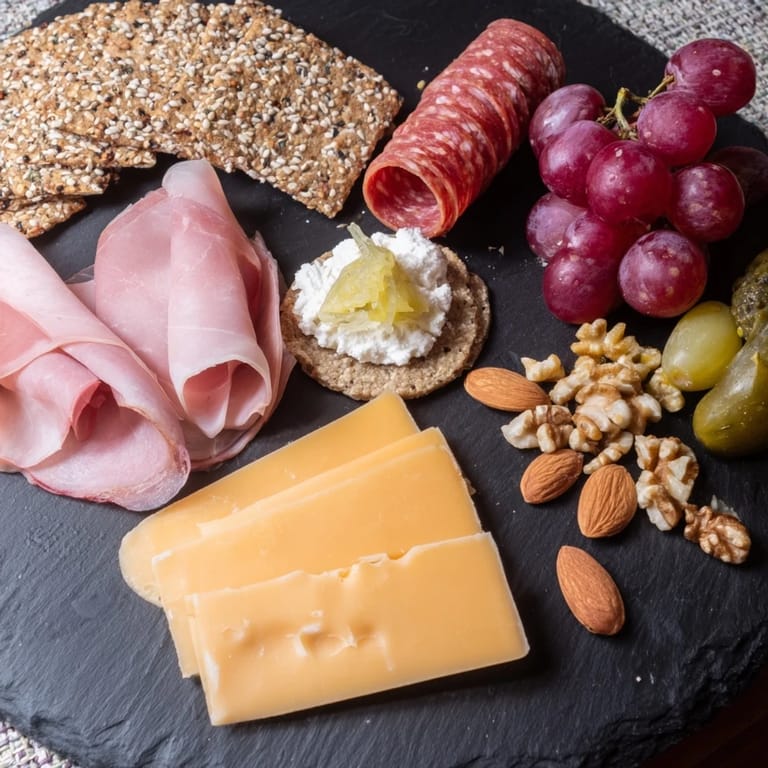
- Lay the prosciutto in gentle folds on one side of your board, letting it drape naturally. Don't flatten it out—its delicate, ruffled texture is part of its charm. Place the soppressata or salami next to it, slightly overlapping if you like. Meat creates the structure, so give it a place of honor.
- Position Your Cheeses Thoughtfully:
- Place the aged cheddar and soft cheese in separate spots, keeping them distinct so you can taste each one on its own. I like to position harder cheese near the meats and softer cheese where it can be spread on crackers. Leave a little breathing room between elements so each ingredient feels like its own small gift.
- Fill the Spaces with Colors and Flavor:
- Scatter your grapes or berries where they'll catch the light—this creates visual interest and breaks up the savory elements. Distribute the nuts and cornichons around the board, thinking about balance. The goal is for every bite to have something different in it, so scatter rather than cluster.
- Add Your Tangy Note:
- Place a small dollop of mustard directly on the board, or in a tiny dish if you have one. This becomes your secret accent that transforms each bite when you want it to.
- Stack Your Crackers with Intention:
- Arrange crackers or baguette slices neatly, either standing upright or slightly fanned. This signals to yourself (or a guest) that everything is ready to eat. Neat stacking also prevents them from breaking before you're ready to use them.
- Step Back and Look at Your Creation:
- Before you eat, take a moment to see what you've made. Is there color balance? Does the eye have places to rest and places to explore? Adjust as needed—move a grape here, position a cracker there. This isn't about perfection; it's about creating something that feels visually and conceptually complete. Serve immediately and enjoy every bite with intention.
 Save
Save There was an evening when a friend stopped by unexpectedly, and instead of ordering something or scrambling to cook, I reached into my fridge and made one of these boards for the two of us. We sat on the couch with it between us, talking for hours, and something about the simplicity of it—the permission it gave us to eat slowly, to taste carefully, to linger—turned an ordinary evening into something I still think about. It became clear that this wasn't just about food; it was about creating a moment where quality and care mattered, even in the smallest gestures.
Building Your Perfect Board Around What You Have
One of my favorite discoveries is that this board is endlessly forgiving. Don't have brie? Aged cheddar alone is stunning. No goat cheese? The soppressata and aged cheddar conversation becomes the star. Out of cornichons? A handful of roasted almonds or a few olives do the same job—cutting through the richness and waking up your palate. The magic isn't in following the recipe exactly; it's in understanding the purpose of each element. Cured meats bring salt and richness. Cheese brings umami and texture. Fruits and pickles bring brightness and contrast. As long as you have those conversations happening on your board, you have something wonderful.
The Wine Pairing Conversation
I've learned through trial and error that wine isn't just nice to have with a board like this—it changes the entire experience. A crisp white wine like a Sauvignon Blanc or Vermentino makes the meats taste even more savory and the cheese even creamier. A light red like a Pinot Noir works if you're having the board in the evening, adding a subtle earthiness that pairs beautifully with aged cheddar and nuts. If wine isn't your thing, sparkling water with fresh lemon or a cup of tea works equally well. The point is to have something to sip between bites, something that creates rhythm and prevents the richness from overwhelming you. This simple addition transforms eating alone from something practical into something to savor.
Elevating Your Solo Moments
What I love most about this board is the permission it gives you to treat yourself with the same care and intention you'd offer a guest. It's not complicated, but it's thoughtful. It takes 10 minutes to assemble, but it feels like a gift you're giving yourself. Some nights I add a small square of dark chocolate at the edge—the bitter sweetness after salty prosciutto is almost transcendent. Sometimes I light a candle, put on music, and actually set aside 20 minutes to enjoy it slowly instead of eating at my desk. It sounds simple, but these small rituals have taught me that joy isn't about how much effort you put in; it's about the intentionality behind it.
- If you find yourself making this often, keep a small selection of quality meats and cheeses in your fridge specifically for board nights—it makes spontaneous self-care so much easier.
- Slice your cheese just before serving so it doesn't dry out or develop that plastic-wrapped taste.
- Remember that every element on this board is meant to taste good on its own, so choose ingredients you actually want to eat, not just things that look pretty.
 Save
Save This little board changed how I think about feeding myself. It taught me that taking care of yourself doesn't always mean a big meal or a complicated recipe—sometimes it means gathering beautiful things and giving yourself permission to enjoy them slowly.
Common Questions
- → What meats work best for a single serving charcuterie?
Thinly sliced cured meats like prosciutto, soppressata, or salami create delicate folds and add rich flavor without overwhelming the plate.
- → Which cheeses pair well on a minimalist board?
Combining aged cheddar or brie with soft goat cheese or blue cheese offers contrasting textures and complementary tastes.
- → How should accompaniments be arranged?
Place fresh grapes or berries and mixed nuts in gaps to add color and texture, balancing each element visually and flavor-wise.
- → Can I customize the board for dietary needs?
Yes, use gluten-free crackers or bread alternatives and swap nuts or cheeses based on preference or allergies.
- → What tools are helpful for assembling this board?
A small slate coaster or plate along with a cheese knife helps arrange ingredients neatly for an elegant presentation.
- → Is cooking required for this preparation?
No cooking is needed; the board is assembled fresh using pre-sliced meats and cheeses, taking about 10 minutes in total.