 Save
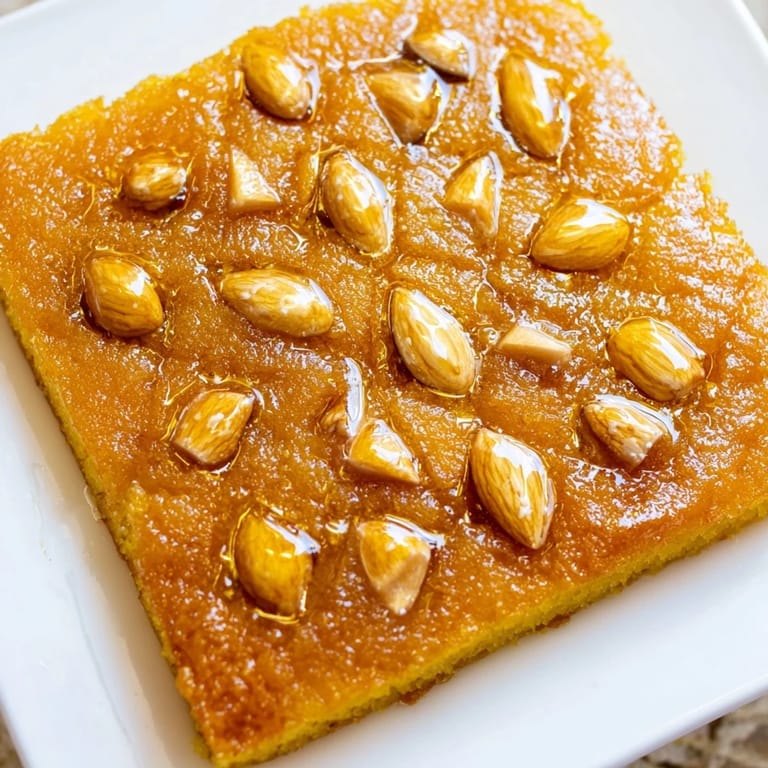
Save My neighbor brought over a tray of basbousa one afternoon, and the kitchen filled with this warm, toasted coconut smell that made everything else fade away. She explained how her grandmother made it the same way for decades, and watching her arrange those little almond jewels on top felt like witnessing a quiet ritual. That first bite—the way the semolina cake was both tender and substantial, then that immediate sweetness from the syrup soaking through—changed how I thought about desserts. I had to learn to make it myself, and now I understand why this recipe has survived generations.
I made this for a small gathering and watched my friend eat three pieces without saying much, just closing her eyes between bites. When she finally spoke, she asked if I'd made the syrup myself, and I realized that this dessert doesn't try to impress—it just quietly becomes the best part of the meal. That's when I knew I'd gotten it right.
Ingredients
- Fine semolina: This is the backbone; it creates that tender crumb when combined with yogurt and butter.
- Granulated sugar: Sweet and grounding, it balances the earthiness of coconut and semolina.
- Desiccated coconut, unsweetened: Use unsweetened so you control the sweetness; it adds moisture and a subtle tropical warmth.
- Plain yogurt: The secret to keeping this cake tender and slightly tangy; don't skip it.
- Unsalted butter or ghee, melted: Ghee adds richness and a nutty depth if you have it on hand.
- Baking powder: A small amount gives the cake a gentle lift without making it fluffy.
- Vanilla extract: Just a touch to brighten the coconut flavor.
- Salt: A pinch to heighten all the other flavors.
- Whole blanched almonds: Placed on each piece before baking, they stay crisp and become little anchors of texture.
- Granulated sugar for syrup: Creates the soaking liquid that makes basbousa what it is.
- Water: The base for the syrup, kept simple so nothing competes with the coconut.
- Lemon juice: A squeeze prevents the syrup from becoming cloying and adds brightness.
- Rose water or orange blossom water: Optional but worth it; one teaspoon transforms the syrup from sweet to aromatic.
Tired of Takeout? 🥡
Get 10 meals you can make faster than delivery arrives. Seriously.
One email. No spam. Unsubscribe anytime.
Instructions
- Heat your oven and prepare the pan:
- Set the oven to 350°F (180°C) and grease your baking pan with butter or a light coat of tahini so the basbousa releases cleanly. A dry pan will stick and frustrate you later.
- Mix the dry ingredients:
- Combine semolina, sugar, coconut, baking powder, and salt in a large bowl, stirring until everything is evenly distributed. This base mixture is where the texture begins to develop.
- Add the wet ingredients:
- Pour in the yogurt, melted butter, and vanilla extract, then stir until a thick batter forms that holds together when pressed. The mixture should feel dense but workable, not thin like a cake batter.
- Spread and score:
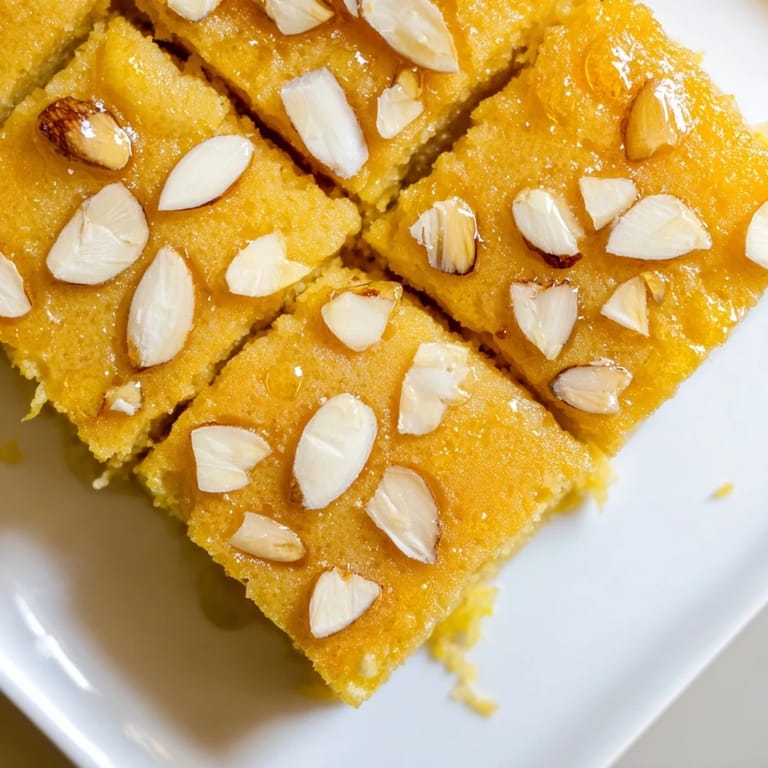
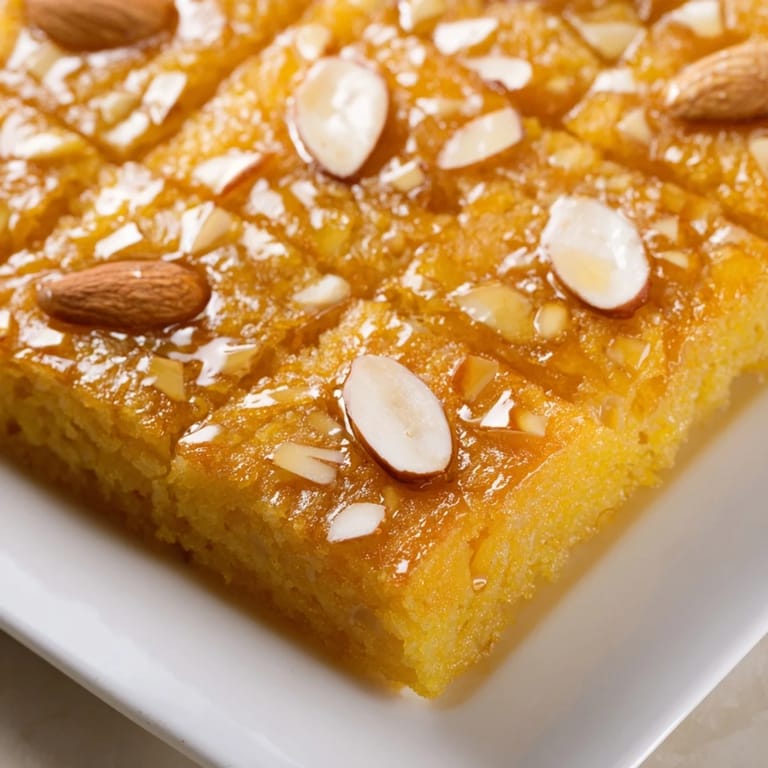
- Press the batter firmly and evenly into the baking pan, then use a sharp knife to score it into 12 squares or diamonds before placing an almond in the center of each piece. Scoring before baking ensures clean breaks when you cut it later.
- Bake until golden:
- Bake for 30 to 35 minutes, watching until the top turns a light golden brown and a toothpick comes out clean. The smell will tell you when it's close—your kitchen will smell incredible.
- Prepare the syrup while baking:
- Combine sugar, water, and lemon juice in a saucepan over medium heat, bringing it to a boil, then letting it simmer gently for 8 to 10 minutes until slightly thickened. Remove from heat and stir in rose water or orange blossom water if using, then let it cool to room temperature.
- Soak the cake:
- The moment the basbousa comes out of the oven, pour the cooled syrup evenly over the hot cake and let it sink in as everything cools. This is the magic moment—the contrast between hot cake and cool syrup lets the cake absorb sweetness without becoming soggy.
- Cool and serve:
- Once completely cool, re-cut along the scored lines with a sharp knife and serve at room temperature. Each piece should break cleanly and feel moist throughout.
 Save
Save I once forgot to score the basbousa before it went in the oven, and the result was still delicious but crumbly and messy to share. My mother gently pointed out what I'd missed, and now every time I score those clean lines, I remember that small lesson in preparation. It's one of those quiet kitchen moments that sticks with you.
Variations to Explore
Basbousa welcomes gentle changes depending on what you have or what you're craving. Substitute half the yogurt with sour cream for extra richness and tang, or try pistachios instead of almonds for a brighter, more delicate flavor. Some people add an extra sprinkle of coconut on top before baking, and I've seen versions where a touch of cardamom or cinnamon deepens the flavor in unexpected ways. The recipe is forgiving enough to adapt to your preferences while keeping its essential character.
Pairing and Serving
Basbousa is at its best with tea—whether mint tea, black tea, or something herbal—because the warm drink echoes the warm spice and coconut of the cake. Turkish coffee works beautifully too, its bitterness a perfect counterpoint to the syrup's sweetness. I've found that cutting it into smaller pieces makes it easy to offer to guests, and somehow the size makes people more likely to linger with you over a cup and conversation rather than rushing through dessert.
Storage and Make-Ahead Tips
Basbousa actually improves after a day, as the flavors meld and the cake becomes even more tender. Store it covered at room temperature for up to three days, or wrapped well in the refrigerator for up to a week. You can also freeze the baked, un-soaked cake, then thaw and pour fresh syrup over it when you're ready to serve, which lets you make this ahead for unexpected guests without much last-minute work.
- Let the batter come to room temperature before baking for even, predictable results.
- If your syrup thickens too much, warm it gently and add a splash of water to loosen it.
- Always use unsweetened coconut to keep the sweetness balanced and true to the original recipe.
 Save
Save This dessert has a way of becoming part of your kitchen routine, something you make for moments that matter. Every time you pull the pan from the oven and pour that cool syrup over the warm cake, you're doing exactly what countless people have done before you.
Common Questions
- → What type of semolina is best for this cake?
Fine semolina works best to achieve a smooth, moist texture in the cake. Coarser semolina may result in a grainier crumb.
- → Can I substitute the yogurt in the batter?
Yes, you can replace half the yogurt with sour cream to add richness and a slight tang to the flavor.
- → How do I make the syrup fragrant?
Adding lemon juice and a teaspoon of rose water or orange blossom water to the sugar syrup infuses it with a delicate floral aroma.
- → What is the purpose of scoring the batter before baking?
Scoring helps portion the cake easily once baked and allows the syrup to penetrate each piece evenly.
- → Are there nut alternatives to garnish this cake?
Yes, pistachios or other preferred nuts can replace almonds for garnish, offering a different flavor and texture.