 Save
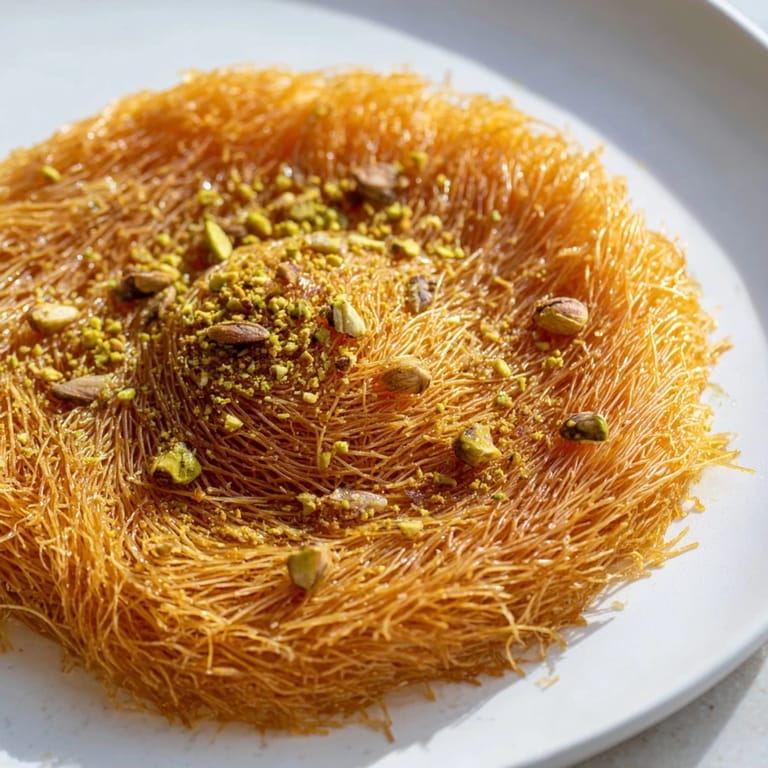
Save The first time I tasted konafa was at a neighborhood bakery on a humid Cairo morning, the kind where the air itself seemed to carry the scent of toasted nuts and caramelized sugar. I watched the baker pull a golden square from the oven, honey still pooling on top, and knew I had to learn to make it. Years later, I finally did, and discovered that this crispy-layered dessert is far more forgiving than it seems, rewarding even small mistakes with its own kind of charm.
I made this for my mother-in-law's birthday dinner, nervous about the layers holding together, only to watch her take one bite and close her eyes like she was tasting a memory. That's when konafa stopped being just a recipe for me and became something I make whenever I want to say thank you without words.
Ingredients
- Kataifi dough (500 g): This shredded phyllo is your foundation, and thawing it completely before you start makes all the difference—rushed thawing leads to clumpy, frustrating strands.
- Unsalted butter (200 g), melted: The butter glues everything together and creates those crackling, golden layers that shatter under your fork.
- Walnuts (150 g), finely chopped: The backbone of the filling, with an earthy warmth that plays beautifully against the sweetness.
- Pistachios (100 g), finely chopped: They add color and a subtle brightness that makes people wonder what you did differently.
- Almonds (50 g), finely chopped: The quieter ingredient that rounds out the nut symphony without overpowering.
- Granulated sugar (60 g for filling, 200 g for syrup): Use regular granulated sugar, not muscovado—you want the spices to shine, not compete with molasses notes.
- Ground cinnamon (1 tsp): This is where the Middle Eastern magic lives, warming every bite.
- Ground cardamom (1/4 tsp): A pinch is enough; too much and it tastes like you're eating perfume.
- Honey (2 tbsp): Real honey, not the squeeze bottle stuff—it adds depth the syrup wouldn't have alone.
- Water (120 ml) and lemon juice (1 tsp): The syrup's structure and brightness, keeping it from cloying.
- Rose water or orange blossom water (1 tsp, optional): If you have it, use it; if not, your konafa will still be beautiful.
Tired of Takeout? 🥡
Get 10 meals you can make faster than delivery arrives. Seriously.
One email. No spam. Unsubscribe anytime.
Instructions
- Get your pan ready and prep the phyllo:
- Preheat your oven to 180°C and butter a 23 cm round pan like you're patting something precious. Gently separate the kataifi strands with your fingers—this takes patience, but rushing here creates clumps that won't crisp properly.
- Build the first layer:
- Press half the loosened kataifi into the pan to form an even base, then drizzle it generously with half the melted butter. The butter should coat every visible strand, but you're not drowning it.
- Mix and spread the nut filling:
- Combine all the nuts with sugar, cinnamon, and cardamom in a bowl, stirring until the spices are evenly distributed. Spread this mixture in an even layer over the buttered phyllo, knowing some uneven spots add character.
- Cap it with the final phyllo layer:
- Spread the remaining kataifi over the filling and press down gently but firmly—you're sealing everything together without squashing it into dense submission. Drizzle with the remaining melted butter, making sure it reaches into the crevices.
- Bake until golden and crackling:
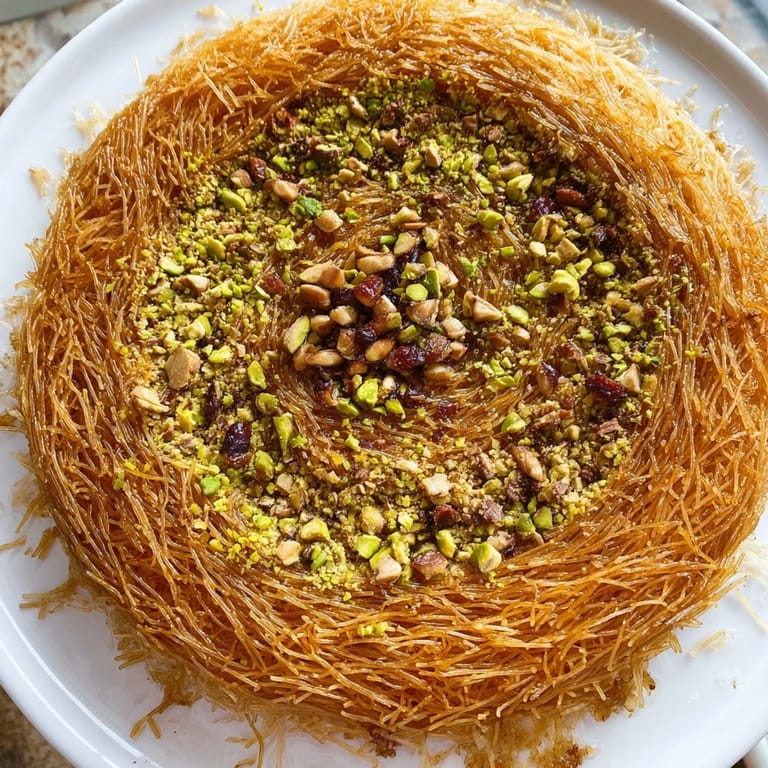
- Slide the pan into the oven for 30–35 minutes, watching it transform from pale to deep amber. You'll know it's ready when the edges sound crispy when you tap the pan and the top is genuinely golden, not just pretending.
- Make the honey syrup while it bakes:
- In a saucepan, combine sugar and water, bring to a boil, then lower the heat and let it simmer for 7–8 minutes until it thickens slightly. Remove from heat, stir in honey, lemon juice, and floral water if you have it, then let it cool for just a few minutes.
- The critical moment—syrup on hot pastry:
- The instant the konafa comes out of the oven, pour the warm syrup evenly over it. This is where the magic happens; the hot phyllo absorbs the syrup while the outside stays crisp, creating layers of texture.
- Cool with patience:
- Let it sit at room temperature for 30 minutes before cutting. This rest time lets everything set up properly and cools it to the perfect eating temperature.
 Save
Save I once brought konafa to a potluck where someone from Alexandria was attending, and she took one bite and asked if I'd learned from her grandmother. I hadn't, but in that moment, I understood that some foods carry more than just flavor—they carry a kind of permission to be part of a story larger than yourself.
Why Kataifi Stays Crispy
The secret is respecting the phyllo's nature as a delicate thing that needs butter to protect it from humidity. Once the konafa cools completely, store it in an airtight container with parchment between layers, and it will stay crackling for two days, maybe three. The syrup-soaked interior keeps everything moist while the exterior somehow maintains that shattering quality that makes people gasp a little when they bite into it.
Customizing Your Nut Blend
The ratio of nuts matters far less than you'd think—I've made this with hazelnuts one season, cashews the next, and once, regrettably, with peanuts that made it taste like dessert imitating itself. What works is respecting the total weight and understanding that every nut brings its own personality. Walnuts give earthiness, pistachios bring lightness, almonds ground everything in subtle sweetness. Pecans add richness, hazelnuts a gentle nuttiness. You can follow the recipe exactly or use what you have and love.
Serving and Storage Wisdom
Room temperature is where konafa truly lives—chilled, it becomes slightly dense and loses some of its shattering quality. Fresh berries on the side brighten its richness, and a small dollop of whipped cream or thick yogurt creates a cool counterpoint to the warm spice. Some people add a thin layer of sweetened ricotta between the phyllo layers before baking, which turns it into something almost pie-like in its decadence.
- Make it a day ahead and keep it covered at room temperature for the best texture.
- If you add ricotta, use the sweetened kind and spread it thin so the layers don't slide apart during baking.
- Leftover pieces stay wonderful for three days, though they gradually soften into something more cake-like and equally delicious.
 Save
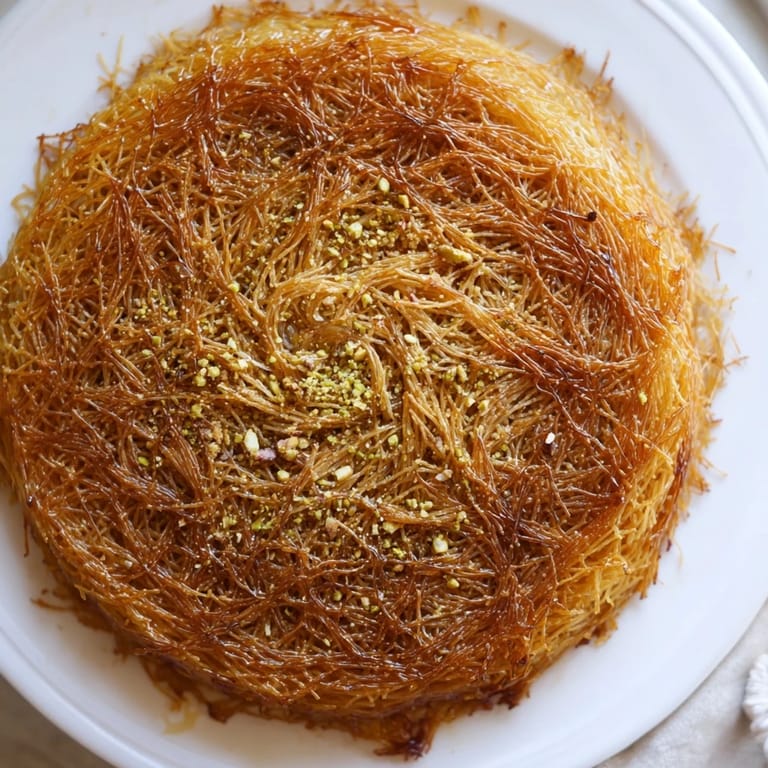
Save Every time I make konafa, I'm making peace with the fact that some desserts don't need to be complicated to be unforgettable. This one just asks for patience, butter, and the willingness to let crispy phyllo and warm spices speak for themselves.
Common Questions
- → What type of nuts are best for the filling?
A mix of walnuts, pistachios, and almonds works traditionally, but hazelnuts, cashews, or pecans can be good substitutes to vary the flavor and texture.
- → How can I ensure the kataifi turns crisp?
Evenly drizzling melted butter over the kataifi strands before baking helps achieve that golden, crisp texture throughout the layers.
- → What does the honey syrup add to the dessert?
The syrup soaks into the warm pastry, adding moisture, sweetness, and subtle floral notes if rose or orange blossom water is included.
- → Can the spice blend be adjusted?
Yes, cinnamon and cardamom provide warmth, but you can adjust quantities or add nutmeg or cloves to suit your preference.
- → Is there a way to make the dish richer?
Adding a layer of sweetened ricotta or clotted cream between the kataifi layers introduces creaminess and depth to the texture.