 Save
Save I still remember the first time I put together a proper sharing platter for my cousin's birthday gathering. I was nervous about feeding so many people on a tight budget, but my grandmother pulled me aside and said, "The secret isn't fancy ingredients—it's giving people choices and making everything easy to reach." That advice changed how I approach entertaining. Now, whenever I build one of these platters, I think about those words. It's become my go-to move for bringing people together without the stress or the expense.
My favorite moment was when my colleague brought this exact platter to our office potluck, and I watched as people circled it three times just picking at different things. Someone said, "This feels fancier than it actually is," and she laughed and told them it took her 15 minutes. That's when I realized—a good platter isn't about complexity. It's about abundance and thoughtfulness arranged in a way that makes people feel welcomed.
Ingredients
- Sliced cooked ham (200 g): The backbone of your platter. Buy the good stuff from the deli counter if you can—it makes a real difference in flavor, and it's still budget-friendly compared to restaurant appetizers
- Sliced turkey breast (200 g): This adds variety without heaviness. The pale color creates nice visual contrast on the platter
- Sliced salami (150 g): The flavor hero. Even a small amount adds a punch of taste and visual interest with its deep red color
- Mild cheddar, sliced (200 g): Familiar, reliable, and everyone eats it. No surprises here, which is sometimes exactly what you want
- Swiss cheese, sliced (150 g): Those holes make it look more abundant than it actually is—practical visual magic
- Cream cheese (100 g): Your spreadable element. Keeps things interesting and gives people another way to enjoy their crackers
- Large carrots, sliced into sticks (2): Raw vegetables do the heavy lifting of making your platter look fresh and organized. Cut them ahead of time and they'll stay crisp in the fridge
- Cucumber, sliced into rounds (1): Cool, refreshing, and the rounds stack beautifully
- Red bell pepper, sliced (1): The color alone is worth it. Sweet, crunchy, and adds brightness
- Cherry tomatoes (1 cup): Leave them whole—they're easier to grab and look charming clustered together
- Assorted budget-friendly crackers (400 g): This is where quantity matters more than premium quality. Look for variety in textures and shapes to keep things interesting
- Baguette, sliced (1): Toast or serve fresh—either way, it's a crowd pleaser that adds substance
- Hummus (1 cup): A protein-packed dip that feels elevated but costs next to nothing. Use it as a base for vegetable dipping or spread it on crackers
- Green olives (1/2 cup): Small but mighty flavor elements. They prove that quantity doesn't equal cost
- Pickles (1/2 cup): The unexpected element that people are secretly grateful for
Tired of Takeout? 🥡
Get 10 meals you can make faster than delivery arrives. Seriously.
One email. No spam. Unsubscribe anytime.
Instructions
- Prep and arrange your meats:
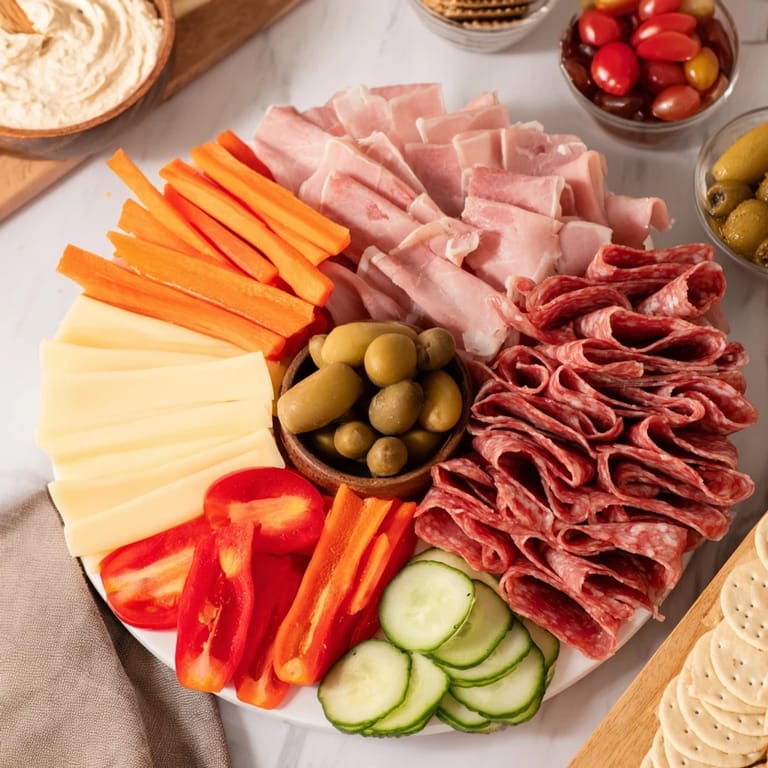
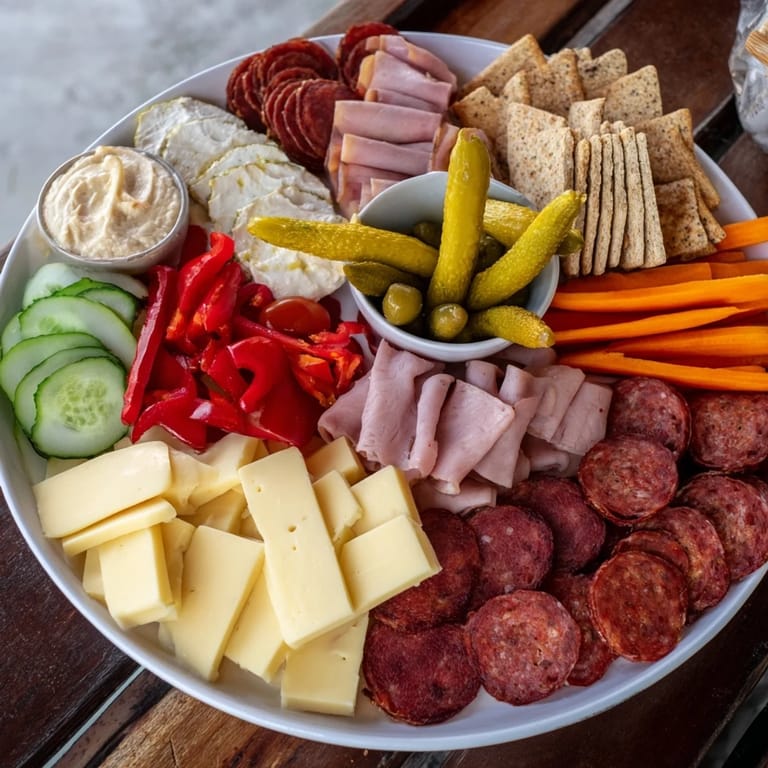
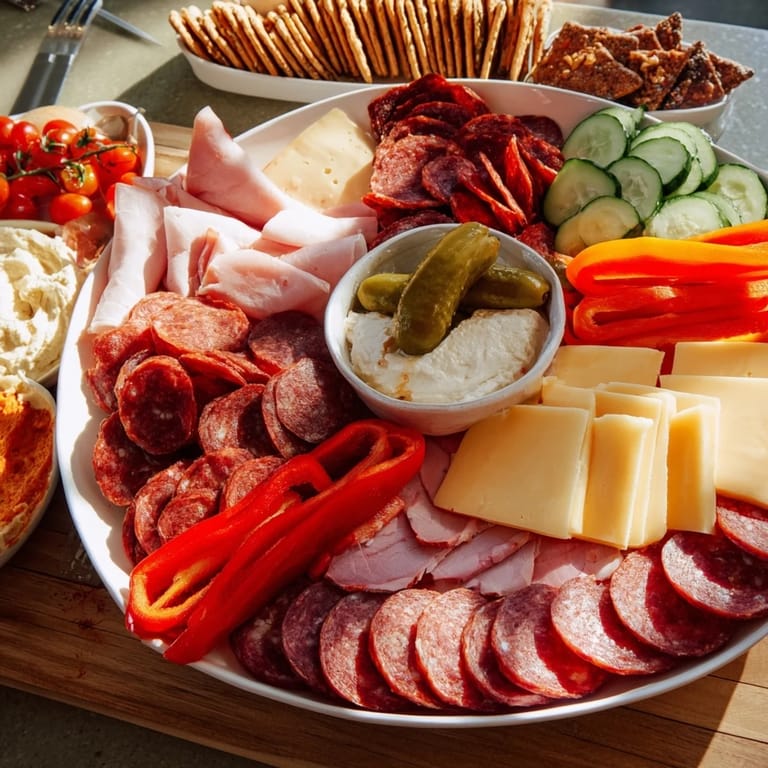
- Lay out your large platter or tray first—think of it as your canvas. Take the sliced meats and create generous piles at different corners or sections. Don't skimp here; abundance is part of the appeal. The pile should look inviting enough that someone would want to dive right in.
- Fan out your cheeses:
- Next to the meats, lay down the cheese slices slightly overlapping, like they're fanned open. This arrangement isn't just pretty—it makes it easy for people to grab exactly one slice without disrupting the whole stack. Vary the cheeses so there's clear visual distinction between them.
- Create vegetable zones:
- Group your vegetables by type in large, accessible heaps. The carrots together, the peppers together, the tomatoes in their own little cluster. This organization makes it easy for guests to load up on what they want without feeling like they're rearranging your carefully laid-out platter. The visual clarity also makes everything look more intentional and abundant.
- Set out your dips and extras:
- Fill small bowls with your cream cheese, hummus, olives, and pickles, then position them around the platter where they can be easily reached from multiple sides. These little bowls break up the platter visually and give people more reasons to linger.
- Stack your crackers and bread:
- This is the final touch and the most important one for a budget-friendly platter. Create high-volume stacks of crackers and baguette slices positioned so people can grab them from all angles. Make sure they're easily accessible—you want the crackers and bread to be as grabable as the meats and cheeses. These are the vehicles that carry everything else.
- Serve and refresh:
- Bring it out to your guests and watch it get loved. As items get depleted, keep replenishing. A platter that's been picked through actually looks MORE inviting because it shows people have been enjoying it.
 Save
Save What I love most about this platter isn't just the food—it's the permission it gives people to relax. There's no "proper" way to eat it. Some people build little sandwiches, some grab cheese and crackers, some just eat olives straight from the bowl. Everyone finds their own rhythm, and somehow that makes gathering feel less formal and more genuine. That's when food becomes memory.
Why This Works for Any Occasion
Whether it's a birthday, a casual afternoon with friends, a holiday gathering, or just because—this platter adapts to whatever you need it to be. The beauty is that it requires zero cooking and minimal planning, which means you can throw it together even on days when cooking feels impossible. I've made this for everything from office parties to weekend hangouts with friends who showed up unannounced. It's become my answer to "What should I bring?" because it always feels thoughtful without ever feeling stressed.
Making It Your Own
This is where the real fun happens. The foundation I've given you is just a starting point. In winter, I add apple slices and dried cranberries for sweetness and a festive look. In summer, I throw on fresh grapes and peach slices. I've swapped out cheeses for whatever was on sale that week, tried different deli meats, even added roasted vegetables and nuts. Local bakeries, farmers market finds, whatever you can get your hands on—it all works. The point isn't perfection; it's generosity and good taste (literally and figuratively).
Budget Stretching Tips That Actually Work
I learned these tricks over years of feeding people without spending a fortune. The real wisdom is knowing where to invest and where to save. Buy quality meats and cheeses from the deli counter—they're usually cheaper than pre-packaged versions and taste noticeably better. Fill your platter with vegetables and crackers, which are where your volume comes from, then use the pricier items (quality meats, specialty cheeses) as the flavor stars that make everything else taste better. It's economics and cooking at the same time, and it works every single time.
- Buy "budget-friendly" crackers in bulk and mix several types for visual variety without the boutique price tag
- Vegetables are your volume heroes—carrots, peppers, and cucumbers are cheap, colorful, and fill space beautifully
- Cream cheese is an inexpensive way to add another layer of flavor and texture options for your guests
 Save
Save Every time I set out one of these platters, I'm reminded that the best entertaining isn't about impressing people with your cooking skills—it's about creating a moment where everyone feels welcomed and cared for. This simple, honest spread does exactly that.
Common Questions
- → How can I make this platter vegetarian?
Simply omit the meats and add extra cheese varieties, roasted vegetables, or plant-based deli slices for a satisfying vegetarian option.
- → What types of cheeses work best for this spread?
Mild cheddar, Swiss cheese, and spreadable cream cheese complement the flavors and textures well in this assortment.
- → Are there recommended accompaniments for this platter?
Fresh seasonal fruit like apple slices or grapes, along with light white wine or sparkling water, pair beautifully with the spread.
- → How should I arrange the platter for easy access?
Place sliced meats in piles at the corners, layer cheeses nearby, surround with grouped vegetables, and arrange crackers and breads in stacks for convenient reaching.
- → What are some allergen considerations for this spread?
Contains dairy, gluten, and may include soy in hummus or certain crackers. Always check labels to accommodate dietary needs.