 Save
Save Last winter, my neighbor brought over a thermos of ginger soup when I was stuck in bed with a scratchy throat, and I remember thinking how the steam alone seemed to clear my head before I even tasted it. That first spoonful—bright, warm, and somehow both simple and complex—made me want to recreate it in my own kitchen. I started experimenting with proportions and vegetables, and somehow this became the soup I make whenever someone needs comfort or when I just want to feel like I'm taking care of myself.
There's this moment when I'm chopping the ginger and the kitchen fills with that sharp, almost peppery scent—my partner always knows what I'm making before I even say a word. Once, I made three huge pots of this for my book club, and everyone spent more time talking about how clean and alive they felt afterward than they did discussing the actual book, which tells you something about the power of a good bowl of soup.
Ingredients
- Fresh ginger, peeled and grated: This is the soul of the soup—don't skip it or substitute powdered ginger, which tastes completely different and frankly, boring.
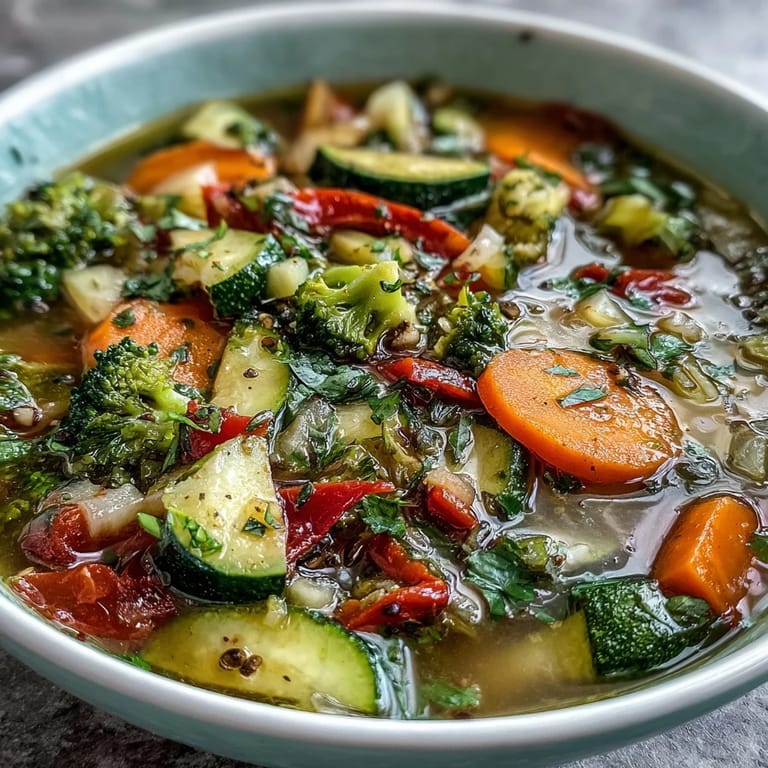
- Onion, carrots, and celery: This classic trio builds the flavor foundation, and yes, it matters that you give them those first five minutes to soften properly.
- Red bell pepper: Adds sweetness and a pop of color that makes the soup feel intentional rather than just thrown together.
- Zucchini: Mild and absorbs the broth beautifully, keeping the soup from feeling too heavy.
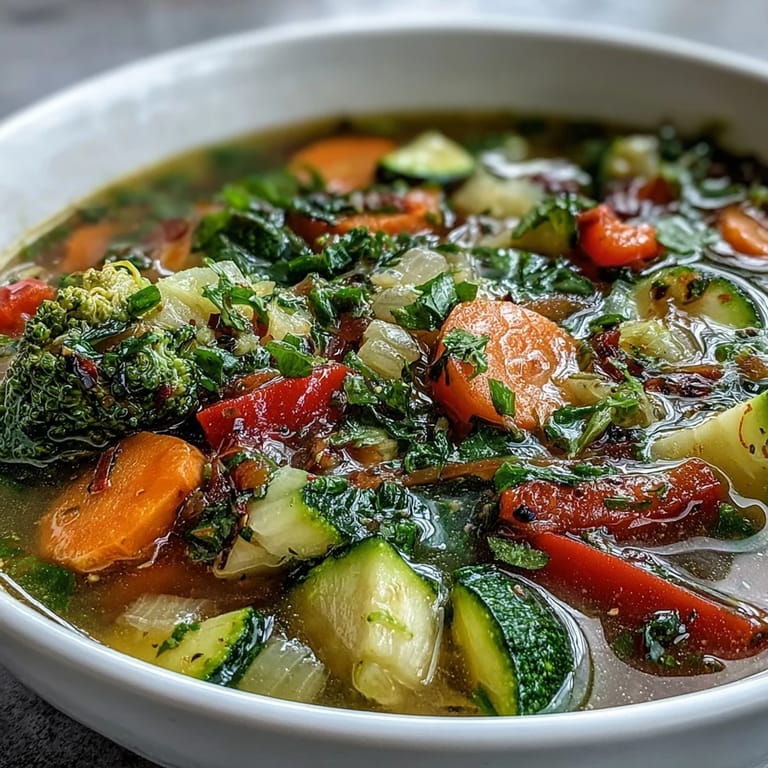
- Broccoli florets: The texture hero here—stays slightly firm even after simmering, giving each spoonful something to hold onto.
- Garlic, minced: Two minutes in hot oil with the ginger creates this aromatic moment that honestly cannot be rushed.
- Vegetable broth: Use the good stuff or make your own—it's the liquid foundation everything else floats on.
- Olive oil: Just enough to coat the bottom of the pot and help the aromatics bloom.
- Sea salt and black pepper: Taste as you go; what works for one batch might need tweaking the next depending on how much you've reduced the broth.
- Soy sauce or tamari: Optional but worth it—adds a subtle umami depth that makes people wonder what your secret ingredient is.
- Fresh cilantro or parsley: The finishing touch that wakes everything up and reminds you that this soup is alive and current, not just warming.
- Toasted sesame oil: A drizzle at the end transforms it from soup into something you'll want to make again immediately.
Tired of Takeout? 🥡
Get 10 meals you can make faster than delivery arrives. Seriously.
One email. No spam. Unsubscribe anytime.
Instructions
- Wake up your aromatics:
- Heat olive oil in a large pot over medium heat and add your diced onion, carrots, and celery. Let them soften for five full minutes—don't rush this part, as it's where all the flavor starts building. You'll know they're ready when the onion starts turning translucent and the kitchen smells like home cooking.
- Bloom the ginger and garlic:
- Add your minced garlic and grated ginger to the pot and cook for exactly two minutes, stirring often so nothing burns. This is when the magic happens—that sharp, warming ginger smell fills the air and you know you're making something special.
- Add the rest of your vegetables:
- Stir in the bell pepper, zucchini, and broccoli florets, then cook for three more minutes to let everything get a little acquainted. The vegetables will start to soften slightly around the edges, and that's exactly what you want.
- Pour in the broth and bring it together:
- Pour in your six cups of vegetable broth and turn the heat up until you see a gentle boil happening. Once it's boiling, immediately reduce the heat to low and let it settle into a quiet simmer—this is where patience pays off.
- Season and let it breathe:
- Add your salt, pepper, and soy sauce if you're using it, then let the whole thing simmer uncovered for fifteen to twenty minutes until the vegetables are tender but still have some personality. Taste it around the fifteen-minute mark and adjust seasoning, remembering that salt brings everything into focus.
- Finish and serve:
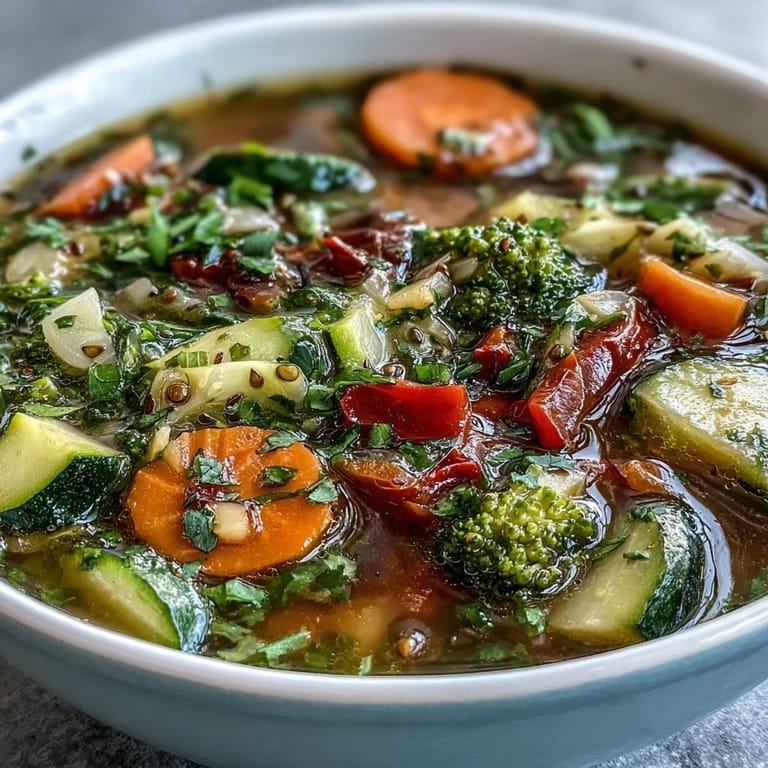
- Ladle the soup into bowls, then drizzle each one with a tiny bit of toasted sesame oil and scatter fresh herbs over the top. The sesame oil hits the hot soup and releases this nutty aroma that makes everything feel elevated.
 Save
Save I'll never forget when my youngest asked if we could have this soup for her birthday dinner because it made her feel brave and strong before a big school presentation. It's those small moments—when food becomes more than sustenance—that remind me why I keep cooking.
Ways to Make It Your Own
This soup is genuinely flexible, which is probably why it's become a year-round staple in my kitchen. I've added snap peas in spring, spinach right at the end in summer, mushrooms in fall, and sometimes I'll throw in a can of coconut milk when I want something creamier. The vegetables can shift based on what's in my crisper drawer or what's on sale at the farmers market, and it never tastes like I'm making do—it just tastes like dinner.
Boosting the Protein
For nights when I need this to be more substantial or filling, I'll add cooked lentils or cubed tofu right as the broth is simmering. Chickpeas work wonderfully too, especially if you drizzle a bit of extra sesame oil over them. The soup transforms from a light starter into something that feels like a complete meal without losing any of its brightness or digestibility.
Serving and Storage Secrets
Serve this soup with crusty bread for soaking up the broth, or alongside rice noodles if you want to make it more of an Asian-inspired bowl situation. It keeps beautifully in the refrigerator for up to four days, and actually tastes better the next day as the flavors settle together. I always store it without the garnish so the fresh herbs stay bright, then add them fresh right before reheating.
- A pinch of chili flakes stirred in at the end adds heat without overwhelming the delicate ginger notes.
- If you make a big batch, it freezes well for up to three months in airtight containers.
- Reheat gently on the stove rather than blasting it in the microwave, which somehow flattens the flavor.
 Save
Save This soup has become my answer to almost everything—when someone's sick, when the weather turns cold, when I need to feel capable and generous. It reminds me that the simplest dishes, made with attention and good ingredients, can feel like pure magic.
Common Questions
- → Can I make this soup ahead of time?
Absolutely. The flavors actually develop and deepen when refrigerated overnight. Store in an airtight container for up to 4 days. Reheat gently on the stovetetop, adding a splash of broth if needed.
- → What vegetables work best in this soup?
The recipe highlights vegetables that hold their shape well during simmering—carrots, celery, bell pepper, zucchini, and broccoli florets. Feel free to substitute snap peas, green beans, bok choy, or mushrooms based on seasonality.
- → How can I add more protein?
Stir in cooked lentils, chickpeas, or cubed tofu during the final 5 minutes of simmering. For a non-vegan option, poach eggs directly in the hot broth or add shredded chicken.
- → Can I freeze this soup?
Yes, though the vegetables will soften slightly upon thawing. Cool completely before transferring to freezer-safe containers. Leave an inch of space for expansion. Thaw overnight in the refrigerator before reheating.
- → What can I serve alongside?
Crusty bread, warm naan, or fluffy rice noodles make excellent accompaniments. The soup also pairs beautifully with a simple side salad dressed with vinaigrette.