 Save
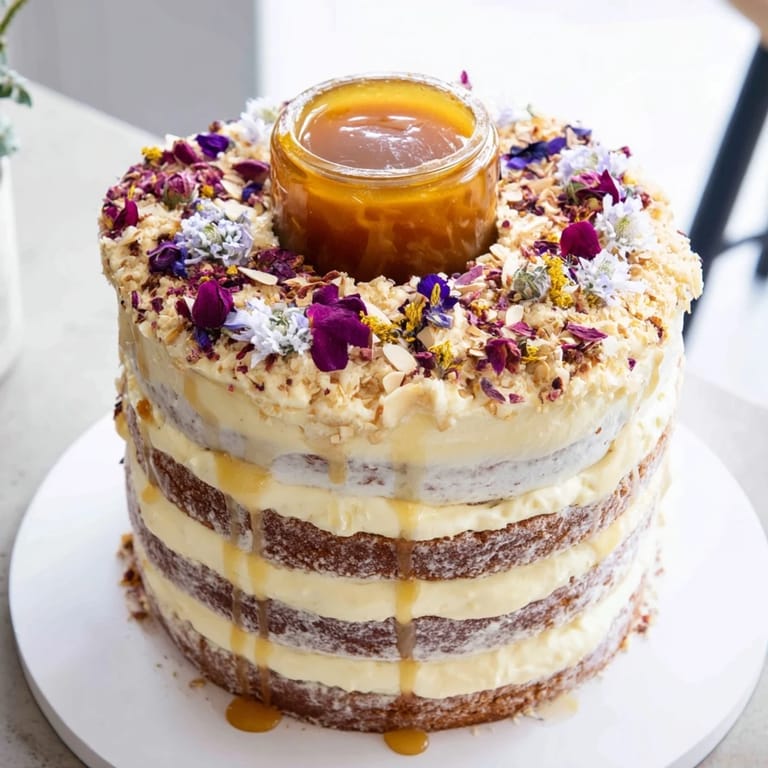
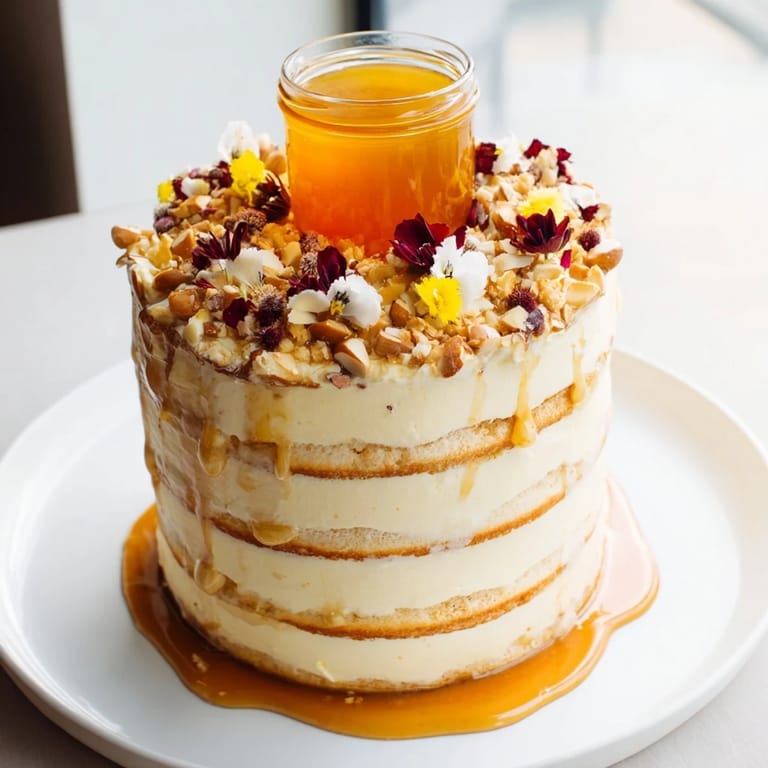
Save The first time I served this was almost by accident—I'd been thinking about honey all week, how it catches the light, how it pools and moves. I wanted to make something that celebrated that fluidity, that made people pause before eating. So I started layering: honey into the cake itself, then into whipped cream, and finally, that central pot of warm honey waiting in the middle like a secret. When my guests leaned in to dip their forks, I knew I'd made something worth the mess.
I remember my sister watching me carve out that center hole, convinced I was ruining it. Then the first guest took a bite, dipped it deep, and got that golden thread of honey on their fork, and suddenly everyone understood. She laughed and said it was the most beautiful mistake I'd ever made on purpose.
Ingredients
- All-purpose flour: Use the kind you know—this isn't the moment for experimentation, but do measure by weight if you can.
- Baking powder and baking soda: Fresh matters here; stale leavening means dense, flat cake that won't support the layers you're about to build.
- Unsalted butter: Softened but not melted; it should hold a fingerprint but still be cool enough to cream properly.
- Honey: This is doing real work in the batter, not just sweetening; use something with flavor—wildflower or acacia if you can find it.
- Eggs: Room temperature, added one at a time so they emulsify properly into the butter.
- Heavy cream and mascarpone: The cream carries the honey into cloud-like territory; mascarpone adds tang that keeps it from being one-dimensional.
- Liquid honey for serving: This is what guests will actually taste, so choose it with intention.
- Toasted almonds: The crunch matters—it's a textural anchor against all that softness.
Tired of Takeout? 🥡
Get 10 meals you can make faster than delivery arrives. Seriously.
One email. No spam. Unsubscribe anytime.
Instructions
- Set the stage:
- Preheat to 350°F and line your pans with parchment; this cake wants to rise gently, and a hot oven will set the edges before the center catches up.
- Mix your dry ingredients:
- Whisk flour, baking powder, baking soda, and salt together in a bowl; this distributes the leavening evenly and prevents lumps.
- Cream butter and sugar until it's pale:
- This takes 3-4 minutes with an electric mixer; you're incorporating air that will make the cake tender. Add honey slowly, letting each addition incorporate before the next.
- Add eggs one at a time:
- Wait for each egg to disappear into the mixture before adding the next; this prevents the batter from looking curdled and ensures even distribution.
- Alternate dry and wet:
- Start with dry, end with dry, and don't overmix; you want just-combined batter that still has tiny flour streaks in it.
- Bake until barely done:
- At 22-25 minutes, the toothpick should come out with just a crumb or two clinging to it; overcooked cake tears when you slice it horizontally.
- Whip the honey cream:
- Heavy cream to soft peaks first, then fold in honey and mascarpone gently; overwhipping at the end makes it grainy.
- Slice the layers:
- A long serrated knife works better than anything else; a steady hand and a hot, wet cloth between slices helps keep layers intact.
- Stack with care:
- Place each layer gently on honey cream; the weight of all four layers compresses everything, which is exactly what you want.
- Cut the center hole:
- A 3-inch round cutter works, but go slowly and twist gently to avoid crumbling the cake around the opening.
- Set the honey pot:
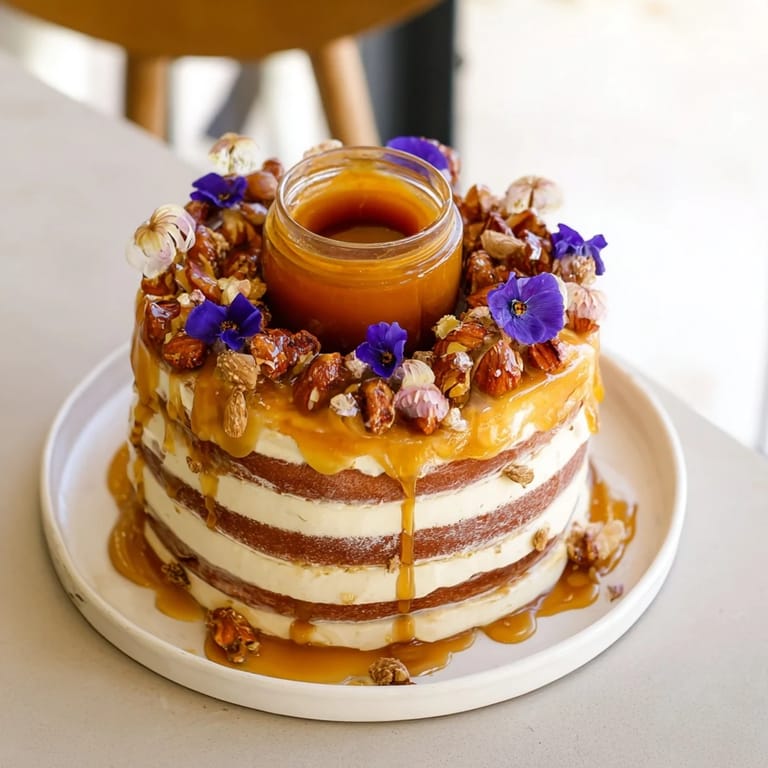
- It should sit flush with the top of the cake, stable and level, filled just before serving so it's still warm when guests arrive.
 Save
Save What I didn't expect was how the warmth of the honey pot would make people linger, how they'd come back for second bites just to chase that temperature contrast—cool cake, warm honey. That's when it stopped being a recipe and became a reason to gather.
Choosing Your Honey
This is where personality matters. Wildflower honey is broad-shouldered and complex, acacia is delicate and clean, and chestnut honey brings an almost savory edge that surprises people in the best way. I've also used orange blossom honey, which adds a whisper of something floral that makes the whole cake taste like an afternoon in Provence. The honey you choose for the center pot is tasted directly, so it deserves more thought than the honey baked into the cake.
Making It Your Own
Once you understand the structure, you can shift it. I've seen people add a thin layer of ground pistachios between cake layers, others a whisper of cardamom in the cream. One friend made a version with lavender honey and edible flowers arranged like a garden on top. The skeleton of this recipe—honey in three places, layers, interactive serving—stays the same, but the details can bend toward whatever feels right to you.
The Details That Matter
Bake the cakes on the same oven rack so they rise evenly and slice horizontally without drama. Let them cool completely before touching them; warm cake is fragile cake. If you're making this ahead, assemble it no more than a few hours before serving, and store it in a cool place, not the refrigerator, so the layers don't get stiff.
- The 3-inch hole is standard, but you can go bigger or smaller depending on how much honey you want in each bite.
- Mascarpone can be hard to find; full-fat Greek yogurt works as a substitute if you strain it first to remove excess liquid.
- If almonds aren't your thing, toasted hazelnuts or a sprinkle of fleur de sel creates the same textural contrast.
 Save
Save This cake is generous—it feeds eight and leaves people happy and a little sticky. Serve it with something light, a Moscato or the kind of dessert wine that tastes like honey itself.
Common Questions
- → What type of honey works best for this dessert?
Wildflower or acacia honey are excellent choices due to their floral notes and smooth texture, complementing the cake layers.
- → Can I omit the almonds in the garnish?
Yes, almonds can be excluded for nut-free preferences without compromising the overall flavor and texture.
- → How do I create the hollow center for the honey pot?
After stacking and layering the cake, use a 3-inch round cutter to carefully remove the center, allowing space for the honey pot.
- → What is the best way to serve this honey-centered dessert?
Guests cut slices from the layered cake and dip each bite into the warm honey pot for a sweet, interactive experience.
- → Can this dessert be prepared ahead of time?
Yes, the cake layers and honey cream can be prepared earlier and assembled before serving for convenience.