 Save
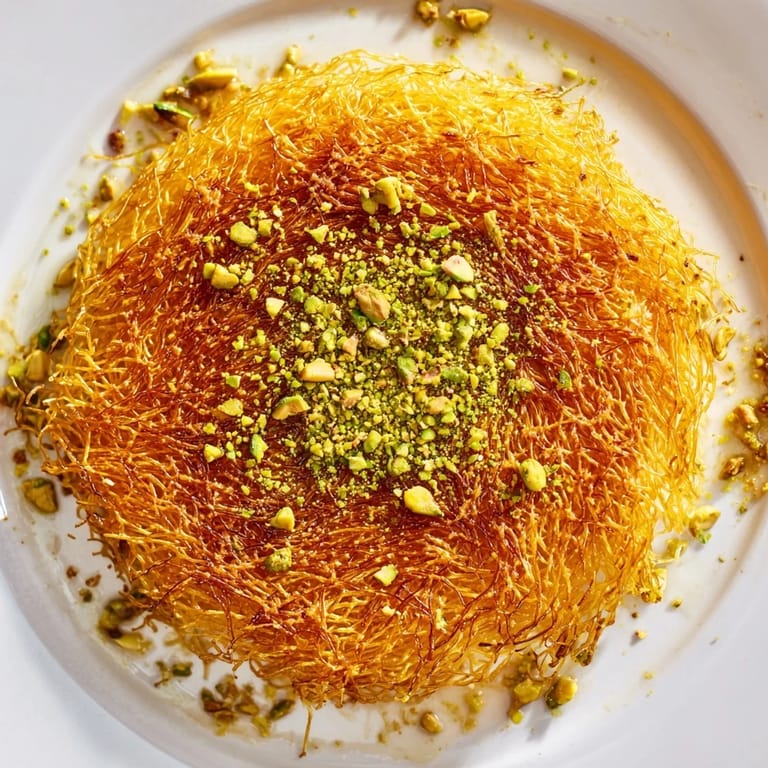
Save The first time I made knafeh, my kitchen filled with this intoxicating aroma of butter and honey that made my neighbor knock on the door asking what smelled so incredible. I'd watched my aunt make it countless times, but the moment those golden strands hit the hot syrup and that sizzle echoed through the pan, I understood why this dessert commands such reverence in Lebanese kitchens. It's not just sweetness—it's theater, tradition, and pure comfort all layered together.
I made this for my friend Sarah's birthday last spring, and watching her face light up when she bit into it reminded me that some foods transcend ingredients—they become memories. The way the cheese stretched as she lifted her fork, the honey dripping golden in the afternoon light through my kitchen window, the three of us sitting around the table just savoring quiet moments between bites. That's when I knew this recipe was worth mastering.
Ingredients
- Akawi Cheese (or unsalted mozzarella), 400 g: This is the soul of knafeh—it needs to be mild and stretchy, and soaking it removes excess salt that can overwhelm the dessert. If you can't find Akawi, low-moisture mozzarella works beautifully and requires less prep.
- Ricotta Cheese, 200 g: The ricotta adds a subtle, creamy texture that prevents the filling from being one-note. It acts like a binding agent while keeping things light.
- Kataifi (Shredded Phyllo Dough), 250 g: These delicate, thread-like strands are what create that signature crunch—thaw them completely before using, and be gentle when separating them so they don't clump.
- Unsalted Butter, 100 g, melted: The butter is your secret weapon for crispiness. Don't skip the melting step or use cold butter; it won't coat the strands evenly.
- Granulated Sugar, 250 g: Sugar is the foundation of your syrup, and the amount creates the perfect balance between sweetness and flow.
- Water, 180 ml: This becomes your syrup base and carries all the floral flavors throughout the dessert.
- Lemon Juice, 1 tbsp: A small squeeze of lemon juice cuts through the sweetness and adds brightness—it's an underrated secret in traditional knafeh.
- Orange Blossom Water, 1 tbsp: This is non-negotiable for authentic knafeh; it adds an elegant floral note that transforms the entire experience.
- Rose Water, 1 tbsp: Like orange blossom water, this brings sophistication and that distinctly Middle Eastern flavor profile.
- Finely Chopped Pistachios, 2 tbsp: The pistachios add color, crunch, and a subtle nuttiness that contrasts beautifully with the syrup and cheese.
- Honey (optional), 1 tbsp: A final drizzle adds extra richness and visual appeal, though it's truly optional depending on how sweet you like your desserts.
Tired of Takeout? 🥡
Get 10 meals you can make faster than delivery arrives. Seriously.
One email. No spam. Unsubscribe anytime.
Instructions
- Prepare Your Cheese Filling:
- Start by soaking your Akawi cheese in fresh water, changing it every hour if you can—this removes the excess salt that would make your dessert unpleasantly salty. You'll notice the water getting cloudier each time, which means it's working. Once it's drained and patted dry, gently shred it or slice it thin, then mix it with the ricotta in a bowl and set it aside.
- Coat the Pastry Strands:
- Pour your melted butter over the thawed kataifi and gently separate and toss those delicate strands until every inch glistens with butter. This is where patience matters—rough handling will break the strands and ruin the texture, but spending a quiet minute making sure each one is coated will reward you with perfect crunch.
- Build Your Layers:
- Grease your round baking dish generously, then spread half your buttered kataifi as an even, compact base layer, pressing it down gently so it holds together. Spread your cheese mixture evenly over this base, then top with the remaining kataifi, pressing gently so everything stays intact during baking.
- Bake Until Golden:
- Slide everything into your preheated 180°C oven and bake for 30 to 35 minutes until the top turns a deep golden brown and you can see the pastry crisping up. The kitchen will smell absolutely incredible during this time—that's your signal it's almost ready.
- Make the Syrup While It Bakes:
- In a saucepan, combine your sugar, water, and lemon juice and bring it to a gentle boil, then let it simmer for 8 to 10 minutes until it becomes slightly thickened and syrupy. Remove it from heat, stir in the orange blossom and rose water, and let it cool completely—this is crucial because pouring hot syrup onto hot knafeh creates a different texture than using cooled syrup.
- The Inversion and Syrup Pour:
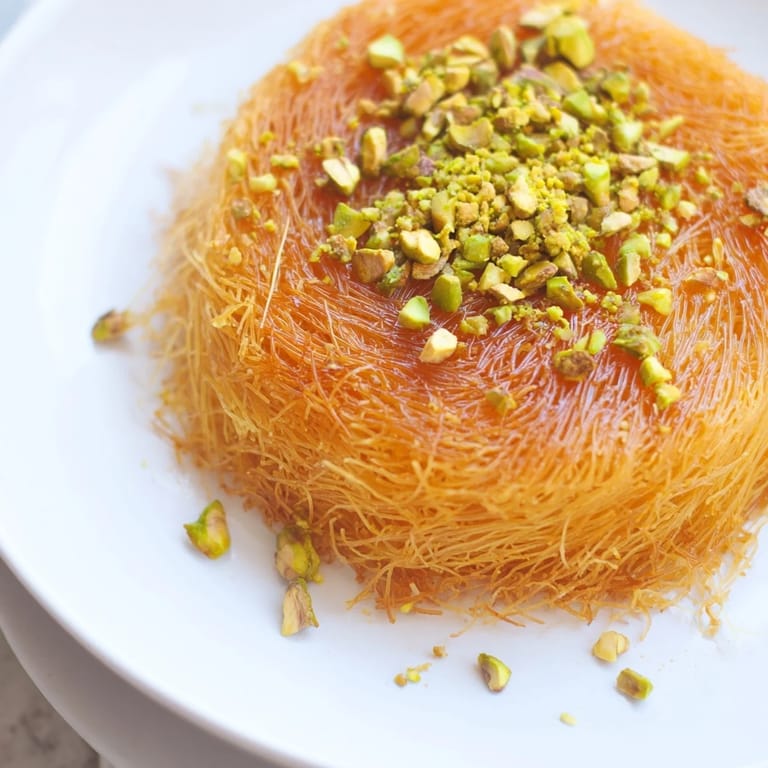
- This is the moment that feels like magic: remove the knafeh from the oven, place your serving platter upside down on top, and flip the whole thing over with confidence. Immediately pour half your cooled syrup over the hot knafeh and let it soak in, then top with fresh pistachios and a final honey drizzle if you like.
 Save
Save I'll never forget the day my grandmother took my hand while I was pouring the syrup and said, 'You're making this for someone you love now.' It hit me that knafeh isn't really about the ingredients—it's about the intention behind each step, the care in each layer, the moment you choose to make something beautiful for the people around you.
The Cheese Question
Finding authentic Akawi cheese can be tricky depending on where you live, and I've definitely had moments of standing in specialty stores squinting at labels trying to figure out what would work. The truth is, Akawi and low-moisture mozzarella are surprisingly similar—both are mild, both melt beautifully, and both create that signature stretchy texture. The main difference is that mozzarella doesn't require soaking, which actually saves you time. I've made knafeh both ways and honestly couldn't tell a huge difference blind-folded, so don't stress if you can't find the traditional cheese.
Texture and Timing
The magic of knafeh lives in its contrasts—crispy outside, melting inside, sweet syrup against mild cheese. Timing is everything here, and I've learned this through happy accidents and a few 'oops' moments. If your oven runs hot, check it around the 25-minute mark. If it runs cool, give it the full 35 minutes. The kataifi should be deep golden, almost mahogany in places, not pale blonde. And that final inversion? It needs confidence and speed—hesitation leads to collapsed pastry, while a decisive flip means a picture-perfect presentation.
Serving and Pairing
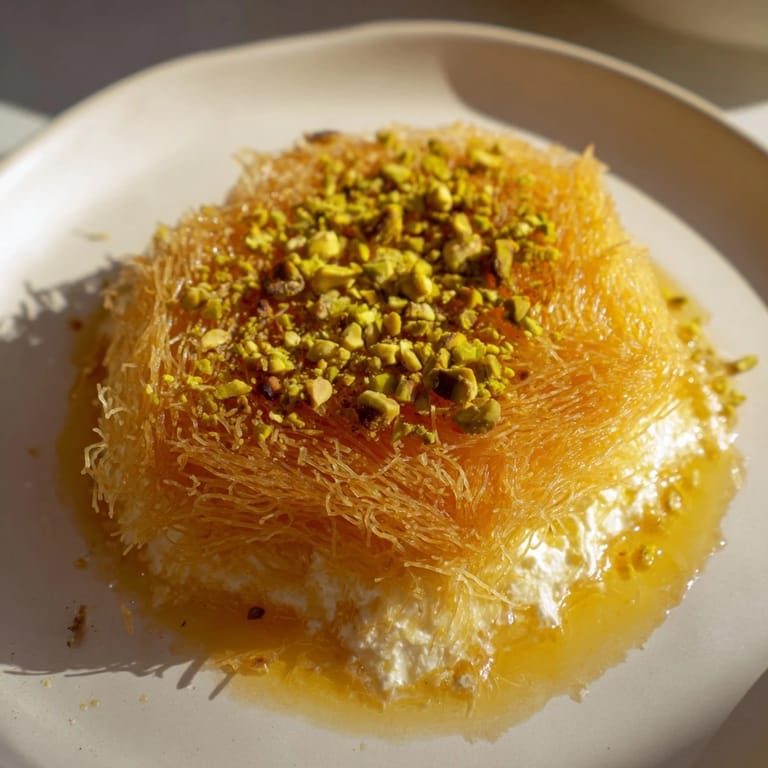
Knafeh demands respect as a standalone dessert, but it truly sings when paired with something to cut through its richness. I learned early on that serving it with strong coffee or mint tea isn't just tradition—it's strategy. The bitterness or cooling mint cleanses your palate between bites, making each taste of knafeh feel fresh again. I also discovered that serving it on a large platter and letting people serve themselves creates a wonderful moment of anticipation and sharing.
- Brew strong Turkish or Arabic coffee to complement the honey sweetness and floral notes.
- Fresh mint tea adds a cooling, herbaceous element that feels especially nice in warm weather.
- Have extra syrup on the side for people who want to drizzle more—some people are syrup enthusiasts and deserve that option.
 Save
Save Every time I make knafeh, I'm reminded that the best recipes aren't just instructions—they're invitations to slow down, to be present, and to create something that brings people together. This dessert deserves your best effort, and it will absolutely reward you with gratitude from everyone who tastes it.
Common Questions
- → What cheese can I use if Akawi is unavailable?
Low-moisture mozzarella serves as a good alternative to Akawi, offering similar texture and mild flavor.
- → How is the syrup prepared for this dish?
The syrup is simmered from sugar, water, and lemon juice, then infused with orange blossom and rose waters for aroma and sweetness.
- → How do I achieve a crispier top layer?
Broil the dish for 1–2 minutes after baking to add a crunchy golden finish on top.
- → What pastry is used to create the crunchy layers?
Thin strands of kataifi pastry are buttered and layered to create a crisp exterior that contrasts with the soft cheese.
- → Can this be prepared ahead of time?
For best texture, serve immediately after baking and syrup application, as the crispness diminishes over time.
- → What beverages pair well with this dish?
Turkish coffee or mint tea complement the floral and sweet notes, balancing richness and cleansing the palate.