 Save
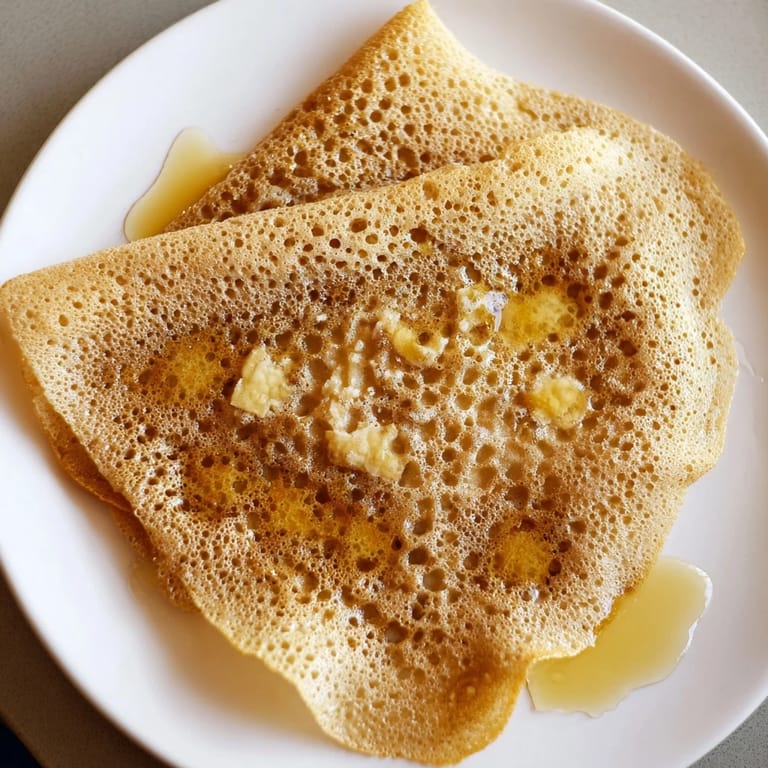
Save The first time I tasted baghrir, I was sitting in a small riad in Marrakech, morning light streaming through carved wooden screens, and a plate of these impossibly delicate pancakes arrived with a small glass of fresh orange juice. The moment I bit into one, I understood why Moroccan families make these for special mornings—that honeycomb texture dissolving on my tongue felt like eating a cloud made edible. I've been chasing that same magic in my own kitchen ever since, and I'm thrilled to share how to make them.
I made these for my partner on a quiet Sunday after they'd mentioned missing Moroccan food, and watching their face light up when they bit into that first warm crepe with honey dripping down made the whole thing worthwhile. There's something about serving food that transports someone to a place they love that makes cooking feel less like a chore and more like a small act of magic.
Ingredients
- Fine semolina: This is the star that creates that distinctive texture, finer than you might expect and worth seeking out because all-purpose flour alone just won't give you those gorgeous holes.
- All-purpose flour: Balances the semolina so the crepes stay tender and don't become too dense or gritty.
- Warm water: Activates the yeast and helps develop that airy, bubbly batter that's the secret to the honeycomb structure.
- Active dry yeast: Works gently with the baking powder to create hundreds of tiny bubbles that form those characteristic holes as the crepe cooks.
- Baking powder: Gives you extra lift and ensures a light result even if your yeast seems sleepy.
- Granulated sugar: Feeds the yeast and adds subtle sweetness without overpowering the delicate flavor.
- Salt: Balances everything and brings out the nuttiness in the semolina.
- Unsalted butter and honey: The finishing touch that makes these crepes sing, warm and glossy and utterly irresistible.
Tired of Takeout? 🥡
Get 10 meals you can make faster than delivery arrives. Seriously.
One email. No spam. Unsubscribe anytime.
Instructions
- Mix your dry ingredients:
- Combine semolina, flour, sugar, yeast, baking powder, and salt in a large bowl, making sure everything is evenly distributed so the yeast doesn't clump when it hits the water.
- Whisk in the water slowly:
- Add warm water gradually while whisking constantly, aiming for a consistency like thin pancake batter that flows easily but isn't watery. This is your moment to prevent lumps from forming, so take your time.
- Let it rest and bubble:
- Cover the bowl with a cloth and leave it at room temperature for 30 minutes while the yeast wakes up and fills the batter with tiny air pockets. You'll see it become slightly bubbly and a bit thicker.
- Heat your pan properly:
- Use a nonstick skillet or crepe pan over medium heat with no oil or butter, which would interfere with the honeycomb texture. Let it get hot enough that a drop of water sizzles briefly before evaporating.
- Pour and spread gently:
- Pour about ¼ cup of batter into the center and tilt the pan gently to spread it thin and even, but don't swirl aggressively. The batter will help itself spread as it cooks.
- Watch for the holes:
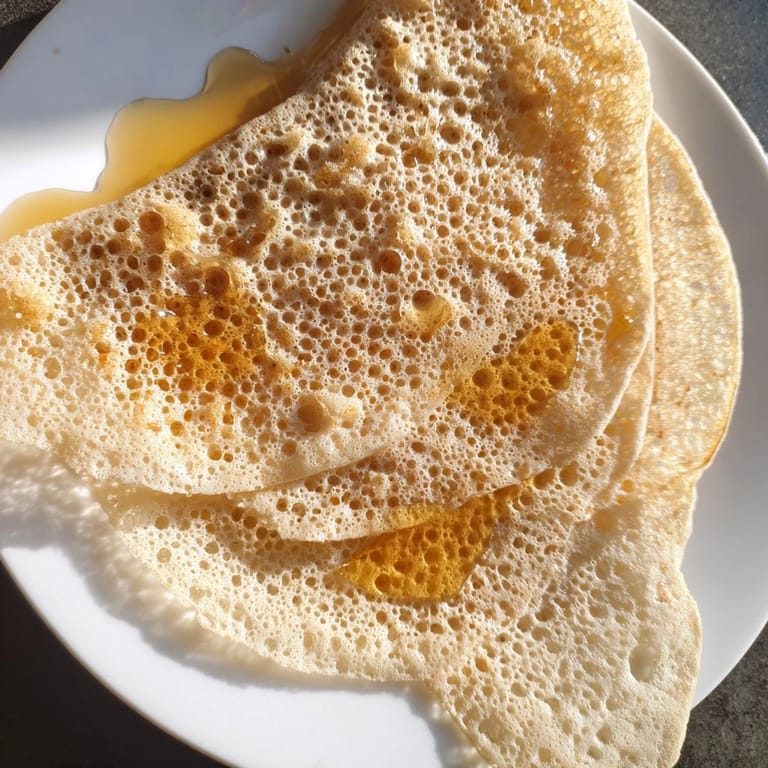
- Cook for 2 to 3 minutes without flipping, watching as the surface becomes covered with tiny holes and the top dries out completely. The bottom should be pale golden, never brown.
- Remove and repeat:
- Slide the baghrir onto a plate and stir the batter occasionally between crepes since the semolina likes to settle at the bottom. Keep going until you've used all the batter.
- Warm the honey butter:
- In a small saucepan over low heat, melt butter with honey together, stirring gently until combined and just warm through.
- Serve with warmth:
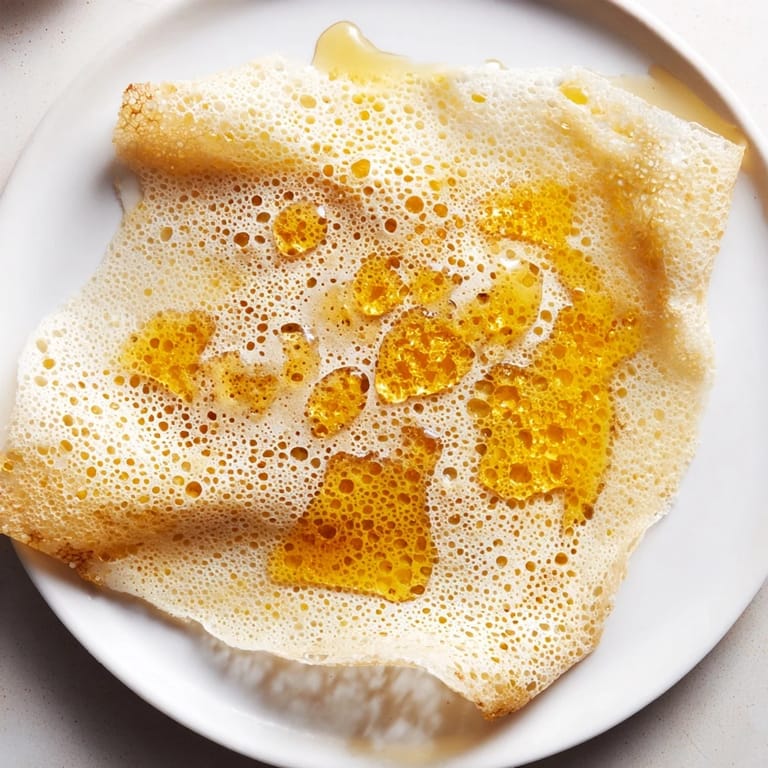
- Stack the baghrir on a plate while still warm and drizzle generously with the honey-butter mixture, letting it pool and soak in.
 Save
Save I remember my neighbor smelling baghrir cooking one morning and following the scent to my kitchen, completely charmed by the whole process and the way the aroma filled the hallway. We ended up making a second batch together and eating them straight off the pan with our fingers like a couple of kids, which somehow made them taste even better.
The Secret to Perfect Honeycomb Texture
The holes in baghrir aren't accidents—they're the result of steam escaping from thousands of tiny bubbles in the batter as it hits heat. The yeast and baking powder work together to create these bubbles, and the semolina's fine texture helps trap them perfectly. I learned this the hard way after trying to make these without yeast once, which resulted in dense, pancake-like crepes that missed the point entirely. The resting period is when all the magic happens, so don't skip it thinking you can rush the process.
Timing and Temperature
One afternoon I got distracted and let my pan get too hot, and the baghrir turned dark brown with no holes at all on top—a total loss. Now I use medium heat consistently and test the pan temperature by flicking a drop of water on it, watching for a gentle sizzle that's more of a whisper than a shout. The 2 to 3 minutes of cooking time matters too; it's just long enough for the top to dry and set while the bottom stays tender and pale.
Serving and Storage Ideas
These are best enjoyed warm and fresh, drizzled with honey butter while they're still steaming, but life isn't always perfect and sometimes you have leftovers. If you need to reheat them, a gentle warm skillet for a few seconds works better than a microwave, which tends to dry them out. Some people love them with a dusting of powdered sugar or a sprinkle of chopped almonds, and honestly, I've never met a version I didn't enjoy.
- For a richer variation, brush the warm crepes with melted butter before drizzling honey, creating an extra decadent layer.
- Rolled baghrir with jam or fresh fruit works beautifully if you want something different from the traditional flat presentation.
- Store any leftovers in an airtight container in the fridge and enjoy them within two days for best results.
 Save
Save There's a kind of joy in making baghrir that goes beyond the eating, something about how this humble breakfast brings warmth and memory to the table. Every time I make them, I'm grateful for that morning in Marrakech and how a simple crepe taught me that the best recipes are the ones shared with people you care about.
Common Questions
- → What gives baghrir its honeycomb texture?
The combination of yeast and baking powder in the batter creates bubbles during cooking, forming the characteristic honeycomb holes on the surface.
- → Why is the batter left to rest before cooking?
Resting allows the yeast to activate and develop bubbles, resulting in a light and airy texture once cooked.
- → How should baghrir be cooked for best results?
Cook on a medium heat nonstick pan without flipping until the surface is covered in holes and the top is dry.
- → Can I add toppings to baghrir other than honey and butter?
Yes, chopped nuts, jams, or syrups can complement the crepes for added texture and flavor.
- → Is baghrir suitable for a vegetarian diet?
Yes, the crepes contain no meat or animal products aside from butter, making them vegetarian-friendly.