 Save
Save The first time I made a proper tagine, I wasn't trying to recreate anything grand. My neighbour had mentioned she'd learned to cook it from her grandmother in Marrakech, and the way she described the smell of cinnamon meeting saffron made me curious enough to attempt it. I remember standing in my kitchen at dusk, the light golden, thinking how strange it was that fruit and meat belonged together. By the time that first batch finished, the aroma had convinced my entire apartment that something magnificent was happening.
Years later, I made this for friends who'd never had Moroccan food before, and watching them take that first spoonful was like seeing them understand something I'd been trying to explain. One person said it tasted like autumn and celebration at once, which I think captured exactly what I love about it. That dinner became the kind you remember not for the fancy plating but for how the conversation lingered and no one rushed to leave.
Ingredients
- Lamb shoulder, cut into 2-inch cubes (1.5 kg): Use shoulder rather than leg, as it has just enough fat to stay moist during the long braise and will shred slightly when tender, which lets the sauce cling beautifully.
- Olive oil (2 tbsp): This is for browning and building flavour at the start, so don't skip this step even though the sauce will add more richness later.
- Onions (2 large, finely chopped): These dissolve into the sauce and create the base, so chop them small and let them soften completely.
- Garlic (4 cloves, minced) and fresh ginger (1-inch piece, grated): Together they're the quiet backbone of warmth that ties everything together without announcing themselves.
- Ground spices (cinnamon, cumin, coriander, turmeric, black pepper, allspice, ground ginger): Toast these briefly in the pot after the aromatics soften so they wake up and release their essential oils, which makes an enormous difference.
- Saffron threads (1 pinch, optional): If you have it, it adds a subtle floral note that makes people ask what that whisper of flavour is, but the tagine works wonderfully without it.
- Beef or lamb broth (400 ml): Use good broth here, as it's building the base of your sauce, and inferior broth will show.
- Canned chopped tomatoes (400 g): Quality matters more than you'd think, so choose tomatoes you'd actually eat on their own.
- Honey (2 tbsp): This is not about sweetness alone, it's the bridge between savoury and sweet, so measure it carefully.
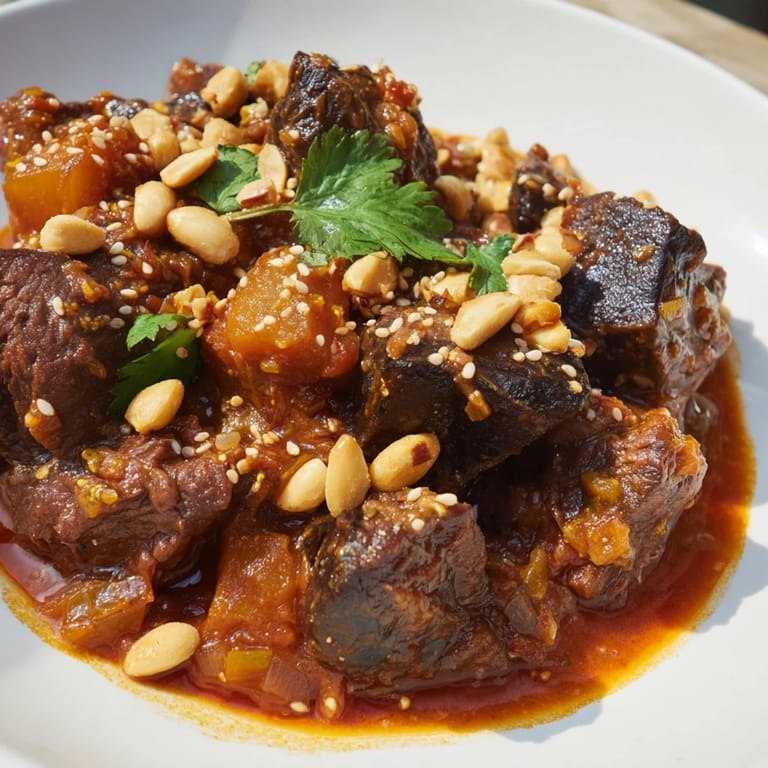
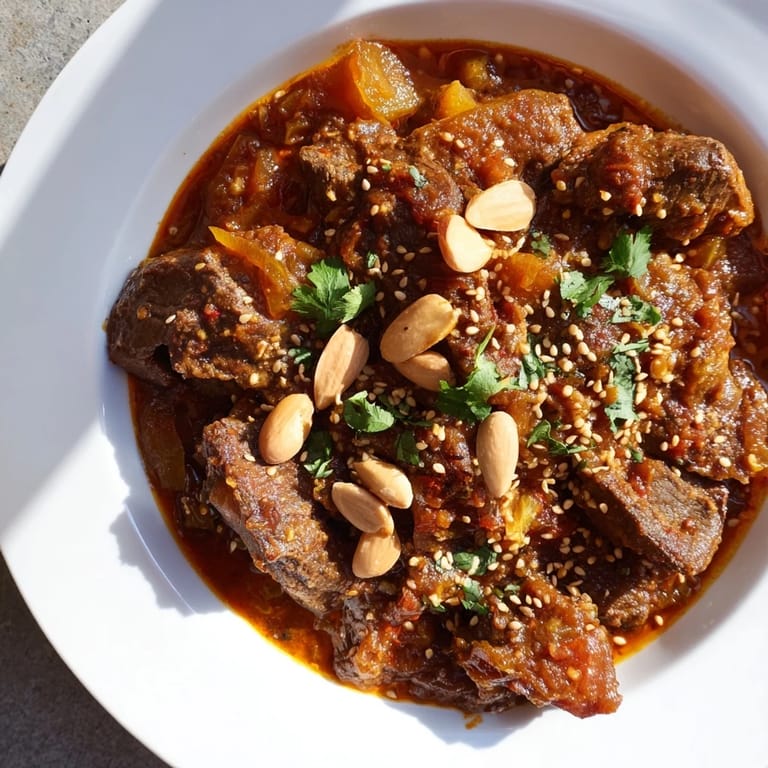
- Pitted prunes (200 g) and blanched almonds (80 g): Add these halfway through so the prunes plump and soften while the almonds stay toasted and textured rather than becoming mushy.
- Toasted sesame seeds and fresh cilantro or parsley: These finish the dish with brightness and prevent it from feeling heavy, so don't skip the garnish even if you're eating alone.
- Salt: Taste as you go, especially at the end when the sauce has reduced and concentrated.
Tired of Takeout? 🥡
Get 10 meals you can make faster than delivery arrives. Seriously.
One email. No spam. Unsubscribe anytime.
Instructions
- Heat your oven and prepare your vessel:
- Preheat to 160°C (325°F), or if you're using the stovetop instead, have your heat turned low and ready. A heavy-bottomed Dutch oven or traditional tagine makes all the difference because the heat distributes so evenly that nothing catches or burns.
- Brown the lamb in batches:
- Heat 1 tbsp olive oil until it shimmers, then add lamb pieces in a single layer without crowding the pot. Let each batch sit undisturbed for a few minutes so they develop that dark, crusty exterior that holds all the flavour. Transfer to a plate as they finish.
- Build your aromatics foundation:
- Add the remaining oil, then onions, garlic, and ginger, stirring often for about 5 minutes until the onions turn translucent and the kitchen fills with that warm, pungent smell. You're creating the base that all the spices will cling to.
- Bloom the spices:
- Add all your ground spices and saffron if using, stirring constantly for about 1 minute. You'll smell them transform from dusty to alive, which means they're releasing their essential oils. This one minute matters more than you'd expect.
- Combine everything and start the braise:
- Return the lamb to the pot, then add tomatoes, broth, and honey. Stir well and bring to a gentle simmer, then either cover and transfer to the oven or reduce heat to low on the stovetop. The tagine will cook low and slow for 1 hour 30 minutes, with occasional stirring to keep everything moving together.
- Toast your almonds while waiting:
- In a separate skillet over medium heat, toast whole almonds for 2-3 minutes, shaking the pan occasionally, until they turn golden and smell nutty. Set them aside so they stay crisp rather than softening into the sauce.
- Add the sweet finishing touches:
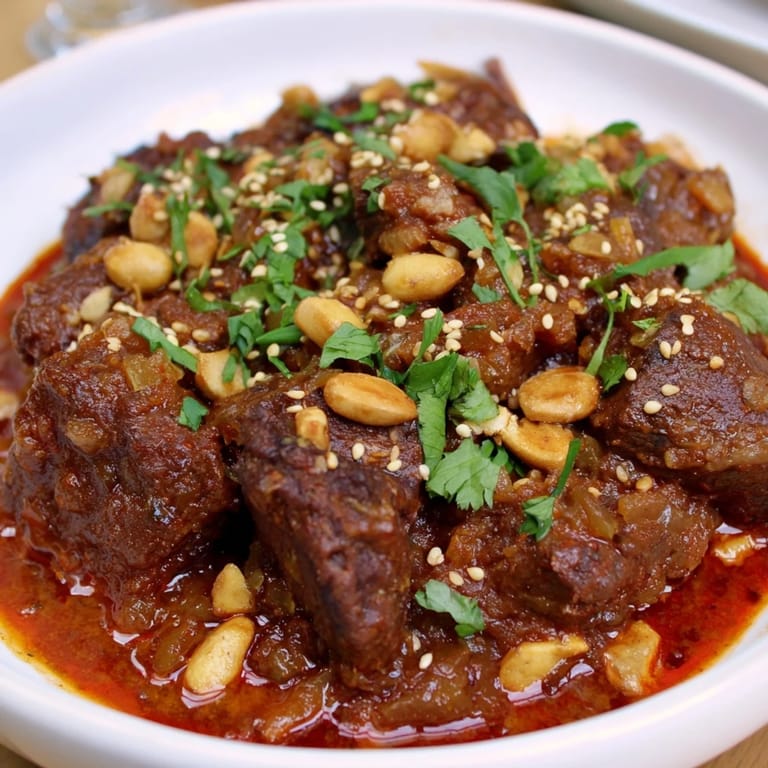
- After 1 hour 30 minutes, stir in the prunes and toasted almonds, then cover and cook for another 30-45 minutes. The prunes will plump and concentrate the sauce, the almonds will add texture, and the lamb will become so tender it practically falls apart.
- Taste and finish:
- Adjust salt to your preference, remembering that the sauce has been reducing and concentrating. Serve hot, garnished generously with sesame seeds and chopped cilantro or parsley for brightness and a little texture contrast.
 Save
Save There's a moment late in the cooking when you lift the lid and the aroma rushes out so intensely it feels like the house is breathing, and that's when you know it's going to be good. I've found that moment is worth waiting for, and it's why I always make this when I want the cooking itself to feel like a small celebration.
Why This Dish Becomes a Ritual
Tagines are slow food in the truest sense, the kind of cooking that asks you to trust the process and check in occasionally rather than hovering. There's something grounding about that rhythm, about the fact that the longer it cooks, the better it gets, and there's no such thing as overdoing it as long as the heat stays gentle. I've noticed that people who claim they don't have time to cook often find themselves making this one, because the time feels different when most of it is just letting something beautiful happen.
Serving and Pairing
Serve this over steamed couscous so it soaks up all that glossy sauce, or with saffron rice if you want richness, or with crusty bread if you want to be honest about chasing every last drop around the bowl. A Moroccan red wine is lovely, but honestly, the best pairing I've found is mint tea afterward, which feels like the natural ending to the meal and gives everyone an excuse to stay a little longer.
Variations and Experiments
Once you understand the core of this dish, it invites tinkering without judgment. I've substituted apricots for prunes when I had them on hand and the result was slightly brighter and less dense, which was lovely in its own way. Some nights I add a pinch more cinnamon if I'm feeling autumnal, or I marinate the lamb overnight in spices and oil if I remember ahead of time, which deepens everything and gives you more flexibility on cooking day. The bones of the recipe stay the same, but the variations are what keep it interesting after many repetitions.
- Toast your spices in a dry pan before adding them to the pot if you want them to taste even more pronounced and alive.
- Add preserved lemon in the final few minutes if you want a sophisticated citrus note that cuts through the richness without being obvious.
- Remember that this tastes even better the next day when the flavours have had time to marry and settle together.
 Save
Save This tagine has quietly become one of those dishes I return to again and again, the kind that never feels boring because it holds so many layers and so much warmth. It's the meal I make when I want cooking to feel less like a task and more like an act of something approaching love.
Common Questions
- → What cut of meat is best for this dish?
Lamb shoulder cut into cubes is ideal, as it becomes tender and flavorful when slow-cooked.
- → Can I use a substitute for prunes?
Yes, dried apricots make a great alternative, offering a similar sweetness and texture.
- → How do I toast almonds properly?
Toast almonds in a dry skillet over medium heat for 2–3 minutes until golden and fragrant; stir frequently to prevent burning.
- → Is saffron necessary for flavor?
Saffron adds a subtle aroma and color but is optional; the blend of other spices maintains depth in the dish.
- → What are good accompaniments for this dish?
Serve with steamed couscous, saffron rice, or crusty bread to soak up the sauce.
- → How long should the lamb be cooked?
Slow-cook for about 2 hours 15 minutes total, ensuring the meat is very tender and the sauce thickens nicely.