 Save
Save The first time I tasted kahk, I was sitting in my neighbor's kitchen on a Friday afternoon, the kind where sunlight streams through windows and the whole house smells like butter and toasted sesame. She pressed one into my hand still warm from the oven, and I bit through that tender shell to find the date paste center—sweet, spiced, utterly perfect. I spent the next hour watching her hands work the dough, asking questions I was sure she'd heard a thousand times. She didn't mind. She never does.
I made these for my daughter's school bake sale, and they sold out before the second shift even started. A parent I'd never met came back later asking if I'd share the recipe—turns out her grandmother used to make kahk the same way, and she was transported back to her kitchen in one bite. That's the magic of this cookie. It connects you to something real.
Ingredients
- All-purpose flour (3 cups): The foundation of your dough; don't sift it unless your flour is clumpy, and measure by spooning it into your cup rather than scooping directly from the bag, which compacts it.
- Unsalted butter (1 cup), softened: Softness is everything here—if it's still cold, the dough becomes dense and difficult to work; let it sit at room temperature for at least an hour.
- Powdered sugar (1/2 cup): This dissolves into the butter and creates tenderness; regular granulated sugar won't give you the same delicate crumb.
- Milk (1/4 cup, plus more as needed): Adds just enough moisture to bind the dough without making it sticky; add it slowly so you don't overshoot.
- Baking powder (1/2 teaspoon): A gentle lift that keeps the cookies tender rather than dense.
- Salt (1/4 teaspoon): Brightens the sweetness and shouldn't be skipped no matter how much butter is in the recipe.
- Vanilla extract (1 teaspoon): A subtle whisper that complements both the dates and sesame without overpowering them.
- Medjool dates (1 cup, pitted and chopped): Their natural sweetness and moisture create a filling that needs almost nothing else; cheaper dates work but tend to be drier.
- Unsalted butter for filling (2 tablespoons): Softens the dates into a spreadable paste and adds richness to the center.
- Ground cinnamon (1/2 teaspoon): Warm and familiar; don't use stale cinnamon or it tastes dusty.
- Ground cardamom (1/4 teaspoon, optional but recommended): This is what makes the filling taste authentically Palestinian rather than just sweet; it adds an almost floral note.
- Sesame seeds (1/2 cup, untoasted): Untoasted seeds have a milder, more delicate flavor that doesn't overwhelm the cookie itself.
Tired of Takeout? 🥡
Get 10 meals you can make faster than delivery arrives. Seriously.
One email. No spam. Unsubscribe anytime.
Instructions
- Prepare your workspace:
- Preheat your oven to 350°F and line a baking sheet with parchment paper. Having everything ready means you won't rush through the shaping, which is where these cookies either look beautiful or lumpy.
- Build the dough base:
- Cream the softened butter with powdered sugar until it's pale and fluffy, about two minutes with an electric mixer. This step aerates the dough so the finished cookies have that tender, almost delicate texture.
- Bring the dough together:
- Add vanilla extract, then gradually add flour, baking powder, and salt, mixing gently. The dough will look shaggy at first, and that's fine.
- Adjust moisture carefully:
- Add milk one tablespoon at a time, kneading gently until the dough becomes soft and slightly elastic—like a tender earlobe, not a tight ball. If you've added milk and the dough is still too dry, add a teaspoon more, but stop before it becomes sticky.
- Make the date filling:
- Combine chopped dates and butter in a small saucepan over low heat, stirring constantly for about five minutes until they break down into a smooth paste. Add cinnamon and cardamom, mix well, and let it cool completely so it won't soften the dough when you fill it.
- Shape the cookies:
- Divide the dough into 24 equal pieces (a kitchen scale helps here). Flatten each piece in your palm into a thin disk about the size of a quarter, place a teaspoon of date filling in the center, then fold the edges up and pinch them to seal, rolling gently into a ball so the seams disappear.
- Add the sesame coating:
- Pour sesame seeds onto a shallow plate and roll each ball until it's covered, pressing lightly so the seeds stick rather than just scatter. The pressure matters—too light and they fall off in the oven, too hard and you'll crack the dough.
- Create the signature pattern:
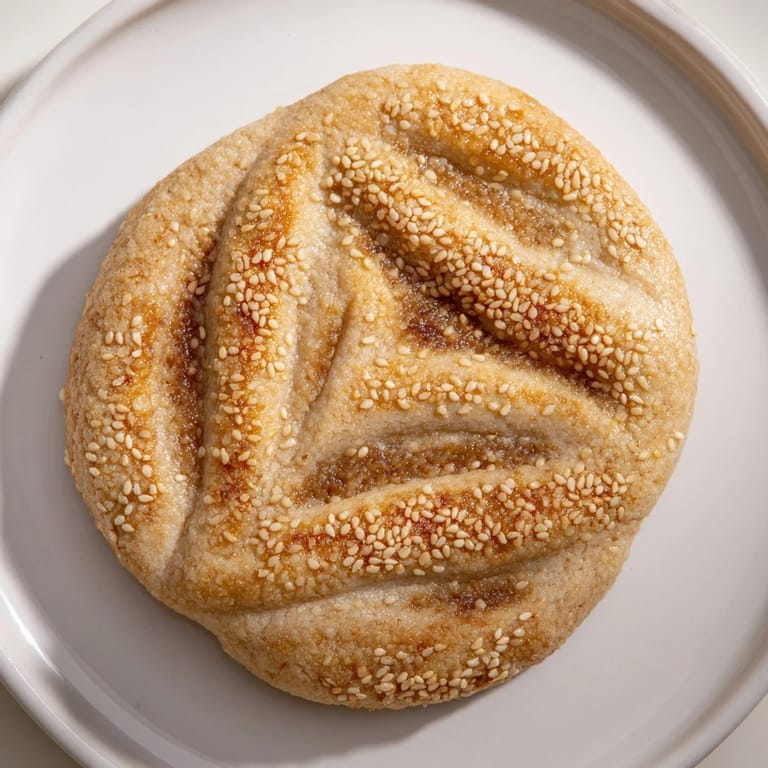
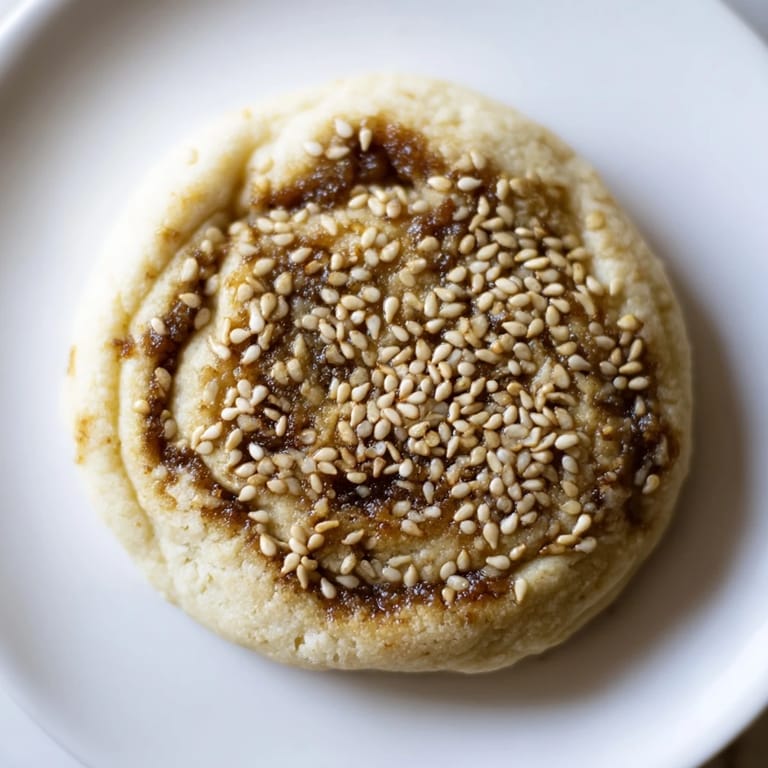
- Place each coated ball on your prepared baking sheet and use a fork or cookie mold to gently flatten it and press a decorative pattern into the top. This isn't just for looks; it also ensures even baking and helps the edges cook at the same rate as the center.
- Bake with intention:
- Bake for 18 to 20 minutes—the bottoms should turn golden but the tops should stay pale or only lightly colored. The cookies continue to set as they cool, so pulling them out a touch early is better than overbaking them.
- Cool properly:
- Transfer the cookies to a wire rack and let them cool completely before eating or storing. They'll firm up as they cool, becoming even more tender and crisp.
 Save
Save I think of these cookies as edible tradition. My neighbor once told me that making kahk was how her grandmother stayed connected to her own mother's kitchen, and now she makes them to stay connected to her family. When you pull a batch from the oven and smell that combination of butter and sesame, you're not just baking—you're holding onto something that matters.
The Dough Matters More Than You Think
This dough is intentionally tender and delicate, which means it responds to touch. If your kitchen is warm, the dough might soften faster than expected; if it's cold, you might need an extra tablespoon of milk. This isn't a sign something's wrong—it's just you listening to what the dough needs. The butter should always be soft, the milk should always be added gradually, and your hands should always be gentle. These constraints aren't limitations; they're what make kahk taste the way it's supposed to.
Why This Filling Works
Dates are already sweet, so the filling needs nothing but butter to soften them and spices to deepen the flavor. Cinnamon is warm and expected; cardamom is the surprise that makes people pause mid-bite and ask what they're tasting. If you add walnuts, chop them fine so they don't puncture the dough or change the texture. The filling should be thick enough that it doesn't ooze during shaping but soft enough to spread without cracking. That balance comes from cooking low and slow, not hot and fast.
Variations and Timing
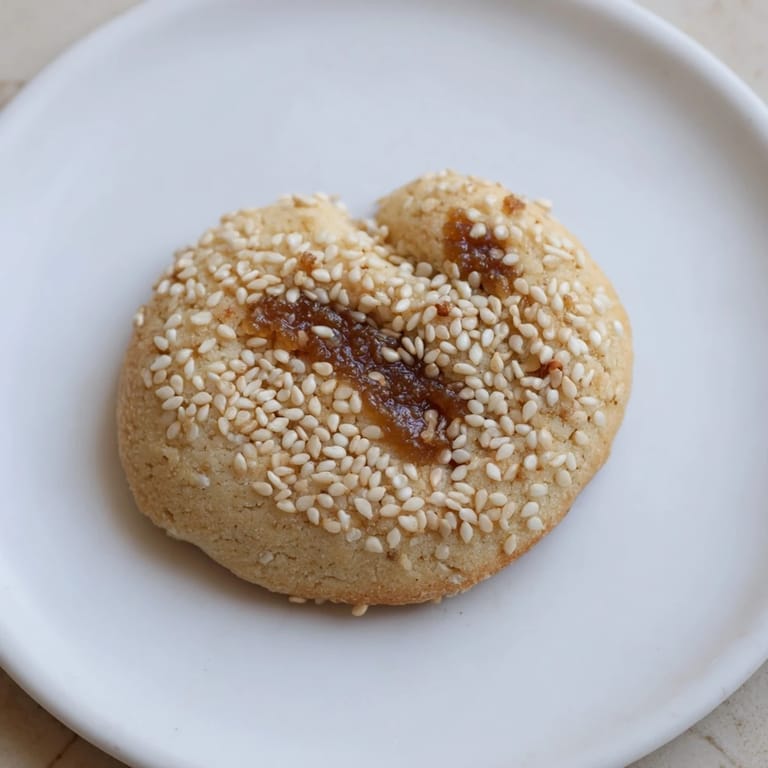
Kahk freezes beautifully—you can shape them, coat them with sesame, and freeze on a baking sheet, then bake straight from frozen, adding just two or three extra minutes to the bake time. Some families add a bit of mahlab (ground cherry pit kernel) or rose water for a more complex flavor, though the classic version here is perfect on its own. These cookies are best the day they're made, but they'll keep in an airtight container for up to a week if you can resist eating them sooner.
- For a nutty variation, fold 1/4 cup finely chopped walnuts into the cooled date filling for texture and extra depth.
- Serve with strong coffee or mint tea for an authentic Palestinian moment that transforms these cookies from dessert into ceremony.
- Make a double batch and freeze extra dough balls so you can always have fresh kahk ready to bake when someone stops by.
 Save
Save There's something about making these cookies that slows you down and asks you to pay attention. Each one takes a minute to shape, which means you can't rush, and maybe that's the point. They're meant to be made with intention, shared without apology, and eaten in the company of people you want to sit with a little longer.
Common Questions
- → What gives Kahk their unique flavor?
The blend of sweet date paste infused with cinnamon and optional cardamom creates Kahk's distinctive aromatic taste.
- → How do I achieve the perfect dough texture?
Using softened butter mixed with powdered sugar and gradually adding milk creates a soft, pliable dough that bakes tenderly.
- → Can I add nuts to the filling?
Yes, finely chopped walnuts can be added to the date paste for a crunchy, nutty variation.
- → What is the ideal baking temperature and time?
Bake at 350°F (175°C) for 18 to 20 minutes until the bottoms turn golden while tops remain pale.
- → How should Kahk be stored after baking?
Once cooled, store Kahk in an airtight container to keep them fresh for up to one week.