 Save
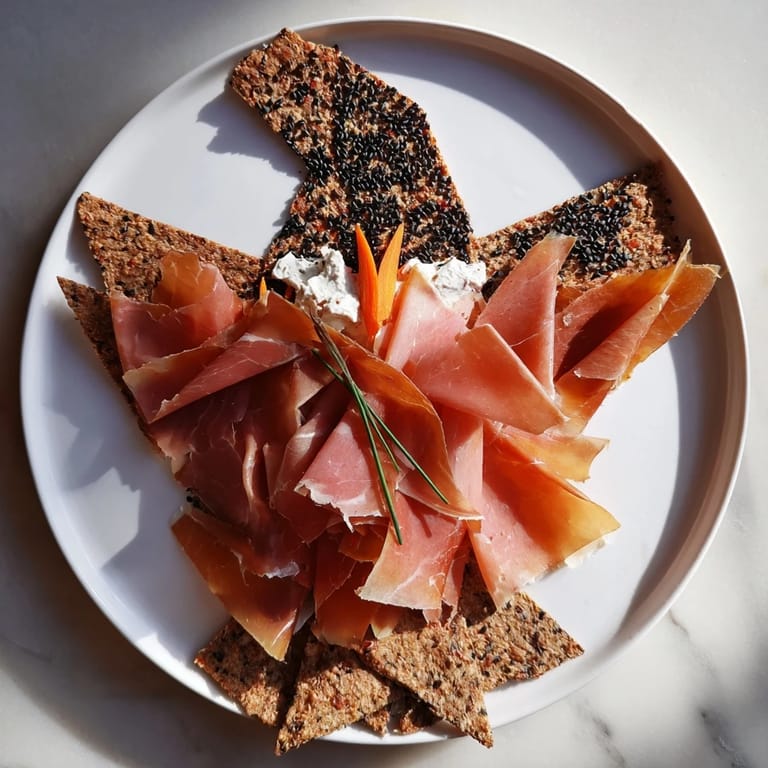
Save I discovered The Paper Crane at a gallery opening where the appetizer display stopped me mid-conversation. Someone had arranged cured meats and crackers into this impossible-looking bird, wings seeming to lift right off the platter. I spent the next twenty minutes studying how they'd folded the prosciutto before actually eating one, which felt somehow wrong but also exactly right. That night I went home and started experimenting with my own versions, learning that the magic wasn't in perfection but in the balance between precision and playful imperfection.
The first time I made this for my partner's birthday dinner, I got nervous about whether the carrot strips would hold and whether the whole thing would look intentional or just chaotic. Turns out a little wobble makes it feel more organic, like the crane is actually caught mid-flight. They took a photo before eating it, which I've never seen happen with appetizers before, and that's when I knew this dish had something special.
Ingredients
- Prosciutto, 100g thinly sliced: This is your crane's foundation—buy it sliced fresh from the counter if possible, as pre-packaged can tear. The salt and delicate texture are what make folding into clean triangles possible.
- Smoked turkey breast, 100g thinly sliced: Turkey brings a lighter smoke note that contrasts beautifully with prosciutto's richness. It's also forgiving to fold and creates visual variety with its slightly different color.
- Bresaola or pastrami, 80g thinly sliced: These lean, densely flavored meats become your wings—they hold their shape when fanned and add visual drama with their deep burgundy tones.
- Triangular whole-grain crackers, 16 pieces about 5cm each: Whole grain gives earthiness that prevents the dish from feeling too delicate. The triangle shape does half your design work for you.
- Black sesame or poppy seed crackers, 8 triangular: These provide contrast—visually and in flavor—anchoring the composition with their darker presence.
- Chives, 1 small bunch: Fresh chives smell green and alive when you cut them, which is exactly the sensory moment this dish needs. They become tail feathers and wing details with just a light hand.
- Carrot, 1 small peeled: A vegetable peeler creates ribbons thin enough to curve into a beak and spindly enough for crane legs. The natural sweetness balances the saltiness of the cured meats.
- Cream cheese, 2 tbsp: This is your edible glue—use it sparingly as the adhesive that holds your carrot pieces in place without overpowering the plate.
- Black sesame seeds, 1 tbsp: These become the eye and add visual texture that reads as intentional detail work, not accident.
Tired of Takeout? 🥡
Get 10 meals you can make faster than delivery arrives. Seriously.
One email. No spam. Unsubscribe anytime.
Instructions
- Slice your carrot into ribbons:
- Run your peeler along the carrot length to create thin, almost translucent strips. Cut two or three strips into narrow pieces for the beak and three or four for delicate legs—they should feel fragile in your fingers, almost like you might bend them.
- Build the crane's body:
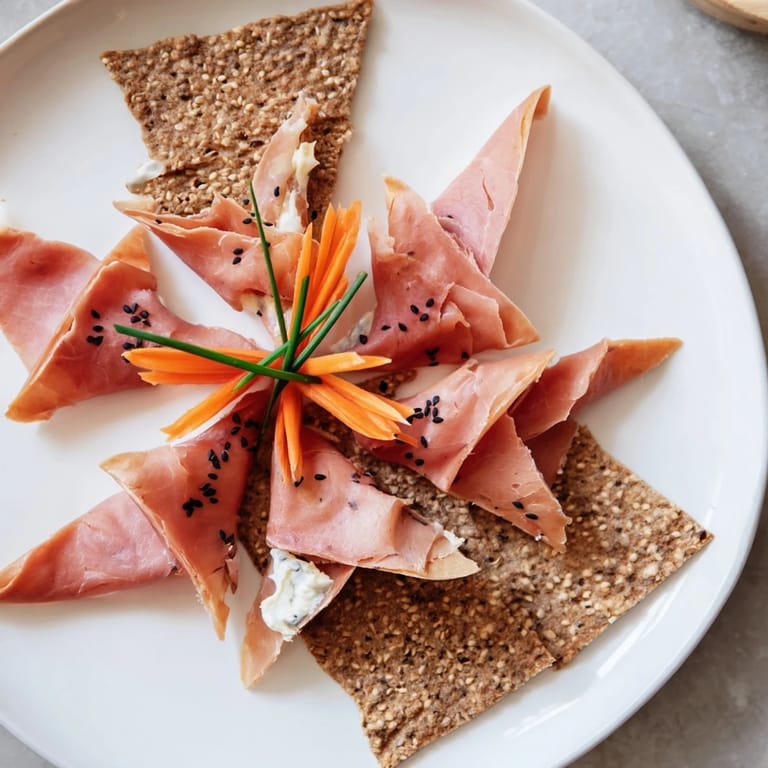
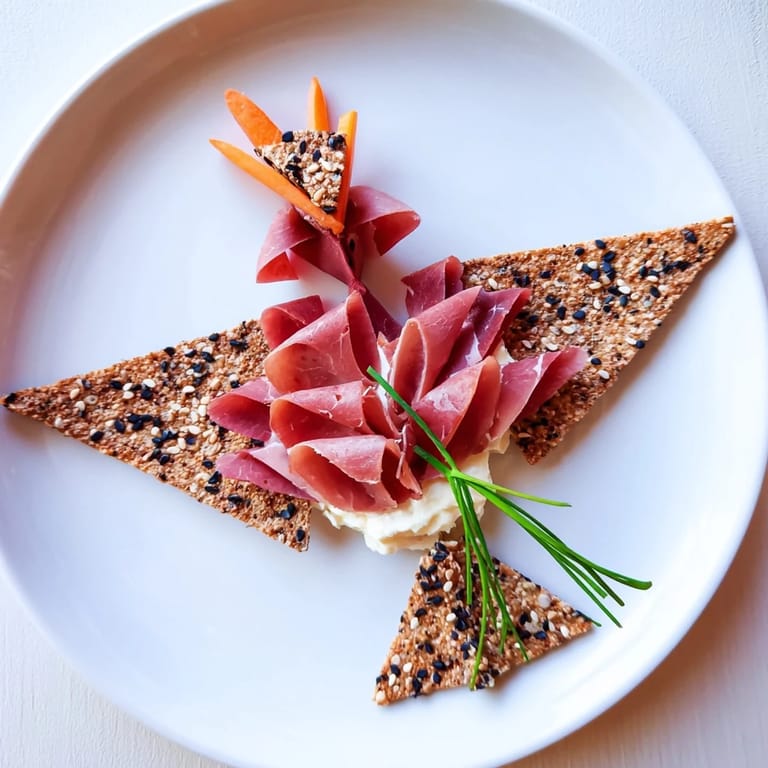
- Fold prosciutto and turkey slices into sharp triangles using origami-like precision, layering them in the center of your platter so they create dimension and seem to stand slightly off the surface. Think of it like stacking playing cards, each fold catching light differently than the last.
- Create the wings:
- Fold bresaola slices into triangles and arrange them fanned upward on either side of the body, each one slightly overlapping to suggest movement. The deeper color makes them read as wings immediately, almost without thinking.
- Position your crackers:
- Place your triangular crackers around the body and under the wings, using the whole-grain ones as the foundation and the black seed crackers as accents. Let them follow the crane's silhouette naturally—they're scaffolding that also becomes part of the design.
- Attach carrot details:
- Using a small dab of cream cheese, secure your carrot strip for the beak pointing forward and your thin legs extending downward. The cream cheese should be barely visible—you're not making sculpture, you're making suggestion.
- Add the finishing details:
- Arrange chives along the wing edges or trailing as tail feathers, then sprinkle black sesame seeds where an eye would naturally be. Step back and look—is it balanced, or does it need another chive on the other side?
- Finish and hold:
- Serve immediately while everything is crisp and the visual impact is sharpest, or cover loosely with plastic wrap and refrigerate up to an hour. The meats will soften slightly when cold, which changes the eating experience but not in a bad way.
 Save
Save Last month someone brought this to a potluck and spent five minutes watching people's faces as they realized the food was actually meant to be eaten, not just photographed. That hesitation before the first bite, that moment of deciding whether to preserve the art or enjoy the meal—that's when you know you've made something that transcends the category of "appetizer" and becomes an experience.
The Folding Philosophy
The real skill here isn't in creating perfect geometry—it's in understanding that slight imperfection reads as intentionality. When your prosciutto fold isn't razor-sharp, it suggests movement. When your wings don't match exactly, they look like they're actually mid-flight instead of museum pieces. I spent my first attempt obsessing over symmetry and ended up with something that felt stiff and anxious. The second time I leaned into asymmetry and suddenly it breathed.
Playing with Substitutions
The beauty of this recipe is that it's more about composition than specific ingredients. I've made it with smoked salmon folded into curves instead of triangles, creating a different but equally striking visual. For vegetarian guests, thin-sliced tofu takes on a delicate quality that's surprising, especially when you give the same attention to folding that you would the meats. The framework stays the same; only the ingredients change.
Making It Your Own
Once you've made this once, you'll see how the architecture can shift. Some nights I use rosemary crackers because I'm in that kind of mood, other times I go minimal with just prosciutto and whole grain. The sesame seeds might become microgreens, the chives might become thin threads of raw green onion. This recipe is permission to play with your platter as if it were a canvas.
- The best crackers are the ones you genuinely want to eat—if you don't like the base cracker, the whole thing falls apart.
- Make this the day of if possible, or keep it refrigerated in an airtight container for maximum crispness until the last possible moment before serving.
- If you're nervous about the beak holding, use a toothpick as an internal support hidden by the carrot—practical solutions are invisible solutions.
 Save
Save This dish taught me that appetizers don't have to be complicated to be memorable—sometimes they just need someone to care enough to make them look like they mean something. Once you serve this, people will ask for the recipe, and you'll get to watch their faces when you tell them it takes twenty minutes.