 Save
Save There's something almost magical about roasting garlic until it transforms into sweet, caramelized cloves that mellow into silk when blended. I stumbled onto this soup on a dreary afternoon when my kitchen smelled like nothing and my mood matched—then I remembered a farmers market visit where someone raved about roasted garlic's gentleness compared to raw. What started as curiosity became my go-to when I wanted something that felt both nourishing and a little luxurious, without fussing for hours.
I made this for my sister on a cold Sunday when she showed up unannounced with wine and complaints about her week. By the time we ladled it into bowls with crusty bread, the conversation had shifted from her troubles to whether this or her favorite restaurant version was better—spoiler, she's biased now. That's when I knew this recipe belonged in regular rotation, the kind you make when you want someone to feel genuinely cared for without announcing it loudly.
Ingredients
- 3 whole heads garlic: Roasting mellows garlic into something sweet and almost nutty, nothing like the sharp bite of raw cloves—this is the soul of the soup.
- 1 large yellow onion, chopped: Yellow onions add subtle sweetness that balances the earthiness; don't skip this, it's your flavor foundation.
- 2 medium Yukon Gold potatoes, peeled and diced: These waxy potatoes hold their shape while cooking and create natural creaminess when blended.
- 2 stalks celery, chopped: Celery adds depth and works quietly in the background without overpowering anything.
- 1 medium carrot, chopped: A little natural sweetness and bright color that rounds out the vegetable profile.
- 2 tbsp fresh thyme leaves (or 2 tsp dried): Fresh thyme makes a noticeable difference in brightness; dried works but use less since it's concentrated.
- 2 tbsp fresh parsley, chopped: Parsley adds a green, fresh note that prevents the soup from feeling too heavy.
- 1 bay leaf: Bay leaf whispers sophistication into the broth—always remove it before blending or your blender will protest.
- 1 tsp dried oregano: Just enough to remind you this is Mediterranean-leaning without taking over.
- 1/2 tsp freshly ground black pepper: Fresh ground pepper actually matters here; pre-ground gets a bit dusty and flat.
- 1 tsp salt (adjust to taste): Start here but taste as you go; every pot of broth is different.
- 1.5 liters (6 cups) vegetable broth: Quality broth makes all the difference—I taste it first to make sure it's worth building on.
- 2 tbsp olive oil: One tablespoon goes into the roasting pan with garlic, the rest sautés your base vegetables.
- 2 tbsp unsalted butter (optional, for richness): Butter isn't essential but it adds a subtle richness that makes people ask for your recipe.
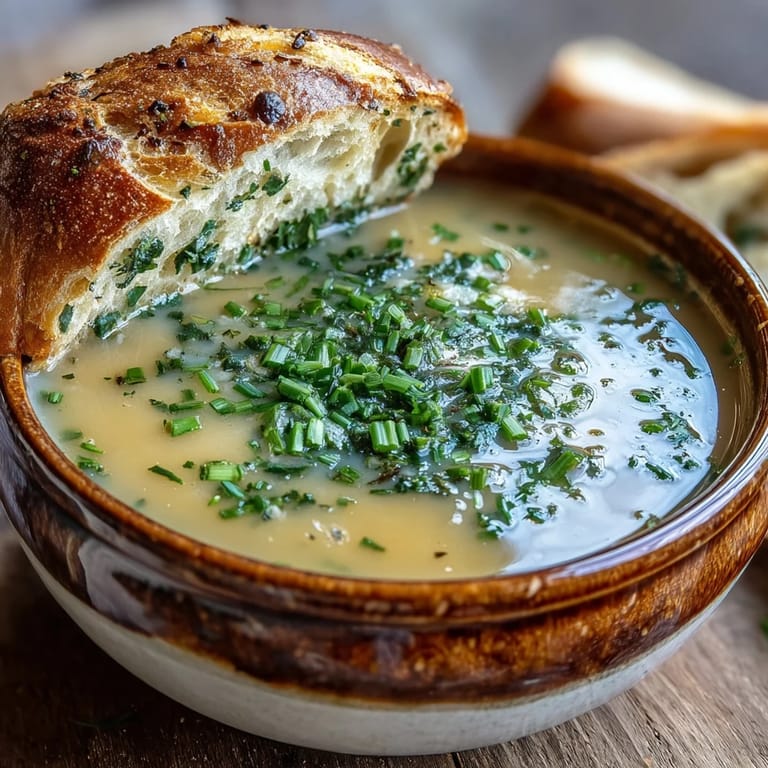
- 2 tbsp fresh chives or parsley, finely chopped: This final sprinkle gives visual life and a fresh finish to each bowl.
- Crusty bread, for serving (optional): Truly optional but highly recommended—this soup deserves something to soak in it.
Tired of Takeout? 🥡
Get 10 meals you can make faster than delivery arrives. Seriously.
One email. No spam. Unsubscribe anytime.
Instructions
- Roast your garlic until it's golden and sweet:
- Preheat your oven to 400°F and slice the tops off your garlic heads to expose the cloves. Drizzle with 1 tablespoon of olive oil, wrap tightly in foil, and roast for 35 to 40 minutes—your kitchen will smell incredible and the garlic will be soft enough to squeeze like butter. This step is non-negotiable; it's what separates this soup from anything you could make with fresh garlic.
- Build your flavor base with vegetables:
- While garlic roasts, heat the remaining olive oil and butter in a large pot over medium heat. Add your chopped onion, celery, and carrot, stirring occasionally for 5 to 7 minutes until everything softens and the onion turns translucent—you're not going for color here, just gentle tenderness.
- Combine everything and let it simmer:
- Squeeze those roasted garlic cloves from their papery skins directly into the pot, then add your diced potatoes, thyme, parsley, bay leaf, oregano, salt, and pepper. Stir until everything is coated and fragrant, then pour in your vegetable broth and bring to a gentle boil. Reduce the heat and let it simmer for about 20 minutes until the potatoes are completely tender when pierced with a fork.
- Blend until velvety and smooth:
- Remove the bay leaf carefully, then use an immersion blender right in the pot, moving it around until the soup is completely smooth and creamy—if you prefer a chunkier texture, blend less. If using a regular blender, work in careful batches and never fill it more than halfway, or you'll have a hot soup explosion on your hands (learned that one the fun way).
- Taste, adjust, and serve with warmth:
- Give it a final taste and add more salt, pepper, or a splash of water if it feels too thick. Ladle into bowls, crown each with a sprinkle of fresh chives or parsley, and serve immediately with crusty bread alongside for dunking.
 Save
Save My neighbor brought over a bag of garlic from her garden last fall, and I made this soup as a thank you. She came by the next week specifically to ask if I'd make it again—that's the moment I understood this wasn't just a recipe, it was something that made people feel seen. Now whenever someone's going through a rough stretch or just needs something gentle and genuine, this pot goes on my stove.
Making This Soup Your Own
The beauty of this recipe is that it's forgiving enough to work with what you have while being flexible enough to shift its personality. I've made it in summer with fresh dill instead of oregano, and in winter when I added a splash of cream and some crispy sage leaves on top. The core—roasted garlic, potatoes, herbs, and broth—stays constant, but everything else is yours to play with based on your mood or what's in your garden.
Timing and Make-Ahead Magic
This soup actually improves a day or two after you make it, which is rare and wonderful. The flavors settle and deepen, so I often roast the garlic and make the soup in the afternoon, then warm it gently before dinner the next day. If you're planning ahead, you can roast the garlic up to three days in advance and keep it in the fridge; just add it to your soup whenever you're ready to proceed with the rest of the recipe.
Variations and Serving Ideas
This soup plays beautifully with different presentations depending on how you're feeling. Some nights I serve it exactly as written, and other times I swirl in a little sour cream or drizzle of truffle oil for something more dramatic. It's equally at home as an elegant first course at a dinner party or as a simple, soothing lunch when you're alone and want something that feels like a hug.
- For a vegan version, skip the butter or swap it for a splash of good olive oil and you won't miss it one bit.
- A handful of white beans stirred in at the end turns this into something more substantial and protein-forward if you want a heartier meal.
- Crispy garlic chips scattered on top add texture and remind you exactly what made this soup special in the first place.
 Save
Save This soup lives in that perfect space between simple and sophisticated, the kind of dish that reminds you why cooking for people matters. Make it once and you'll understand why roasted garlic deserves all the attention.
Common Questions
- → How long should I roast the garlic?
Roast the garlic heads at 400°F (200°C) for 35–40 minutes until the cloves are soft and golden. The cloves should squeeze easily from their skins when ready.
- → Can I make this soup ahead of time?
Absolutely. This soup actually tastes better the next day as flavors have time to meld. Store in an airtight container in the refrigerator for up to 4 days. Reheat gently over medium-low heat, adding a splash of broth if needed.
- → How can I make this soup vegan?
Simply omit the butter or replace it with your preferred plant-based butter or olive oil. The soup maintains its rich, velvety texture without dairy.
- → What can I serve with this roasted garlic soup?
Crusty bread is perfect for dipping. The soup also pairs beautifully with a crisp Sauvignon Blanc, a simple green salad with vinaigrette, or toasted garlic bread for extra flavor.
- → Can I freeze this soup?
Yes, freeze in airtight containers for up to 3 months. Thaw overnight in the refrigerator and reheat gently. The texture may change slightly, but whisking while reheating helps restore creaminess.
- → How can I make this soup richer?
Stir in a splash of heavy cream or coconut milk during the final minutes of heating. You can also add an extra tablespoon of butter or a drizzle of olive oil just before serving.