 Save
Save The first time I made paella, I nearly burned down my kitchen—not literally, but close. My abuela had handed me her treasured recipe notes on a crinkled piece of paper, and I was determined to recreate that golden, aromatic masterpiece I remembered from family dinners. What I didn't anticipate was how the saffron would perfume my entire apartment within minutes of hitting the hot stock, or how the sizzle of chorizo would make my neighbors curious enough to knock on the door. That chaotic evening taught me something magical: paella isn't just dinner, it's an event that fills the space around it with warmth.
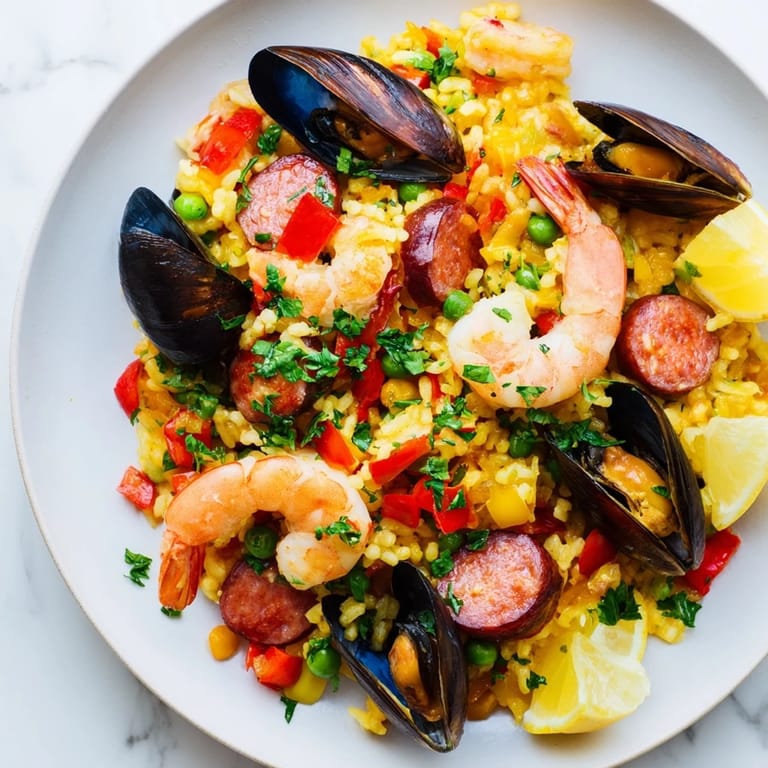
I still remember standing at the stove at sunset, my best friend leaning against the counter with a glass of Albariño, when that perfect moment hit—the moment the aroma shifted from cooking smells to something unmistakably finished. The rice had turned this honeyed golden color, the mussels had popped open, and there was this faint crackling sound from the bottom of the pan that meant the socarrat (the prized crispy layer) was forming. We both held our breath waiting for it to rest those final five minutes, and when we lifted the foil, the steam rose up like the dish was introducing itself.
Ingredients
- Chorizo sausage (200g / 7 oz): The smokiness is non-negotiable here—it flavors the entire pan, so buy good quality Spanish chorizo if you can find it.
- Chicken thighs (250g / 9 oz): Thighs stay juicy where breast meat dries out; cut them small so they cook evenly and fast.
- Large shrimp (250g / 9 oz): Buy them frozen if fresh isn't available; they'll thaw perfectly in the hot rice.
- Mussels (250g / 9 oz): Get them the same day you cook if possible, and discard any that don't open—that's a safety thing.
- Short-grain paella or Arborio rice (400g / 2 cups): This is the heart of the dish; the short grains absorb stock while keeping their shape, unlike long-grain varieties.
- Saffron threads (1/2 tsp): This spice is expensive, but 1/2 teaspoon actually goes a long way in this recipe.
- Chicken or seafood stock (1L / 4 cups), heated: Warm stock is crucial—cold stock will shock the rice and mess with cooking time.
- Olive oil (2 tbsp): Use extra virgin for the flavor, but make sure your pan is heavy enough to handle the heat.
- Onion (1 medium), finely chopped: This is your flavor base, so don't skip dicing it small.
- Bell peppers (1 red, 1 yellow): The colors matter here—they cook down into the rice and add sweetness and visual drama.
- Tomatoes (2 medium), diced: Fresh tomatoes add acidity that balances the richness of the seafood and sausage.
- Frozen peas (150g / 1 cup): They'll cook in the residual heat and stay bright, so add them near the very end.
- Garlic (3 cloves), minced: Add this after the onions soften or it'll burn and turn bitter.
- Smoked paprika (1 tsp): The Hungarian kind works, but Spanish pimentón is the real deal if you can find it.
- Bay leaf (1): It flavors the stock as everything simmers; remember to fish it out at the end.
- Fresh parsley, chopped, and lemon wedges: These finish the dish with brightness and a little acidity that cuts through the richness.
Tired of Takeout? 🥡
Get 10 meals you can make faster than delivery arrives. Seriously.
One email. No spam. Unsubscribe anytime.
Instructions
- Wake up the saffron:
- Steep the threads in 3 tablespoons of hot stock in a small bowl and let them sit. You'll watch the water turn this deep golden color, and that's when you know the saffron is doing its job.
- Brown the proteins:
- Heat the olive oil in your paella pan over medium heat and add the chorizo and chicken. Let them sit undisturbed for a moment so they get brown and caramelized, then stir and cook for another 3–4 minutes. You want color on the meat, not gray pieces.
- Build the flavor base:
- Once you've removed the meat, add the onion and peppers to the same pan—they'll pick up all those browned bits stuck to the bottom. Sauté for 4–5 minutes until they soften and turn translucent at the edges. Then add the garlic and tomatoes and cook for just 2 minutes more so the garlic releases its flavor without burning.
- Toast the rice:
- Stir in the rice and paprika, coating every grain in the oil and vegetables. You want to see a slight change in the rice's texture—this toasting step helps it stay firm instead of turning mushy. Let it cook for about 2 minutes, stirring gently.
- Return the meat and add the liquid:
- Put the chorizo and chicken back in, pour in all that golden saffron-infused stock and the remaining hot stock, add the bay leaf, salt, and pepper. Give it one gentle stir to make sure the rice is submerged and sitting evenly in the pan.
- The long simmer:
- Bring everything to a boil, then lower the heat to low and leave it completely alone for 15 minutes. Don't stir, don't peek, don't move the pan around—this is when the rice absorbs the stock and the bottom starts forming that crispy, caramelized layer (the socarrat). You might hear a gentle crackling sound after a few minutes, which is exactly right.
- Nestle in the seafood:
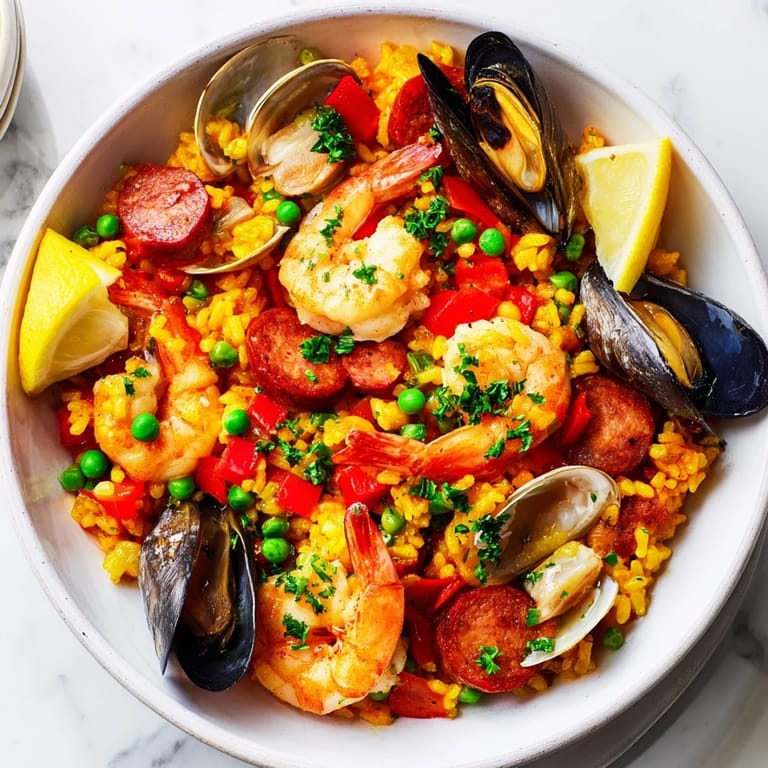
- After 15 minutes, arrange the shrimp, mussels, and calamari across the top of the rice, pushing them down slightly so they're surrounded by heat. Scatter the peas over everything, then cover the pan loosely with foil. Cook for another 10–12 minutes, just until the shrimp turns pink, the mussels open, and the calamari becomes tender.
- Rest and finish:
- Remove the pan from heat, keep it covered, and let it sit for 5 minutes. This lets the rice relax and allows any remaining cooking to happen gently. Discard any mussels that didn't open, then scatter the fresh parsley over the top and serve with lemon wedges alongside.
 Save
Save I'll never forget the moment my dad, who usually critiques everything I cook, took a bite and went silent—not upset silent, but genuinely moved. He said it tasted like the paella his father made for him in Valencia, which was the highest compliment he could give. That's when I realized this dish isn't really about technique or ingredients, though those matter. It's about feeding people something that connects them to a memory, a place, a person.
The Pan Matters
A traditional paella pan (called a paellera) is shallow and wide, which is why the recipe works so well in one. The wide surface area means the rice spreads thin enough that the stock is absorbed evenly, and every grain gets a chance to touch the heat. If you don't have a paella pan, a large cast-iron skillet or even a wide, shallow stainless-steel pan works fine—just make sure the bottom is thick enough that the rice doesn't burn before the stock is absorbed. I've made this in a 14-inch skillet more times than I've used an actual paella pan, and it turns out beautifully every time.
Seafood Substitutions and Timing
The beauty of paella is that you can swap the seafood based on what's available and fresh. Clams cook at roughly the same pace as mussels, scallops need less time (add them in the last 5 minutes so they don't get rubbery), and firm white fish like halibut can be cubed and nestled in alongside the shrimp. Squid and octopus can be chewy if overcooked, so the calamari rings in this recipe are the forgiving choice. If you want to use something different, think about how long it takes to cook and add it accordingly—seafood that needs more time goes in first, delicate stuff goes in last.
Wine Pairing and Serving
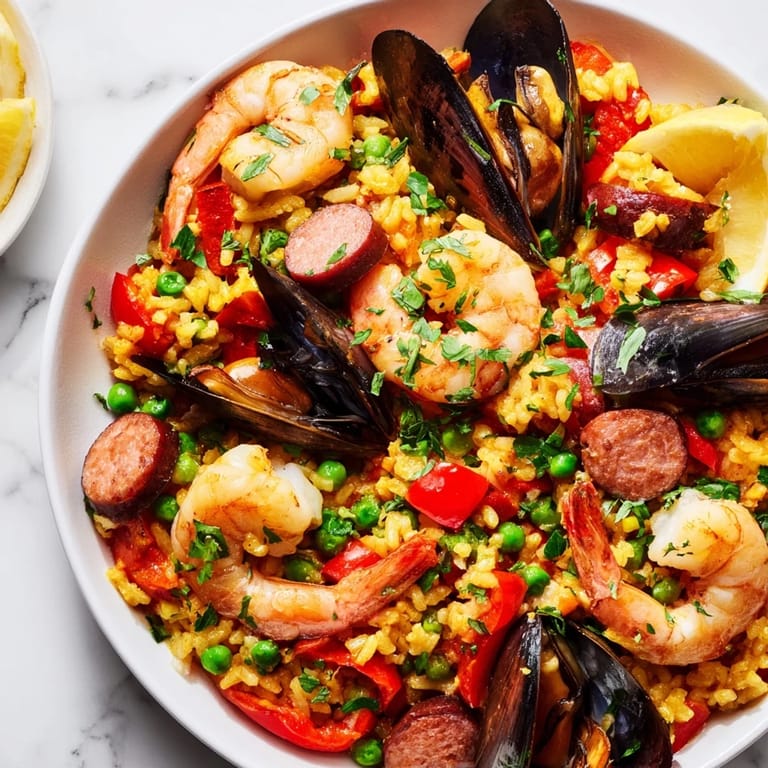
The acidity in a crisp Spanish white wine cuts right through the richness of the seafood and saffron, which is why Albariño or Verdejo are traditional choices. The minerality of these wines also echoes the briny flavor of the mussels and shrimp, making every bite feel connected. I've also had success with Grüner Veltliner or even a dry rosé if that's what you have on hand. The key is crisp and dry—avoid anything heavy or sweet, as it'll compete with the complex flavors of the paella instead of complementing them. Serve it at the table while everyone's gathered around the pan, and watch how quickly conversation turns to how good everything tastes.
- A squeeze of fresh lemon over your serving brightens the whole dish and adds a final layer of acidity.
- Let people serve themselves directly from the pan if you're among friends—it keeps the rice warm and feels more communal.
- Leftover paella can be refrigerated and reheated gently with a splash of stock, though it's honestly best eaten the day it's made.
 Save
Save Make this paella for people you care about, and I promise you'll end up with empty plates and happy memories. It's one of those rare dishes that feels both special and doable, impressive and honest.
Common Questions
- → What type of rice works best for this paella?
Short-grain paella rice or Arborio rice are ideal, as they absorb flavors while retaining a firm texture.
- → How do I ensure the seafood is perfectly cooked?
Add seafood toward the end of cooking and cover loosely to allow gentle steaming, preventing overcooking.
- → Can chorizo be substituted?
Smoked sausage or another spicy cured meat can be used to maintain the smoky flavor profile.
- → What is the key to achieving authentic saffron flavor?
Steep saffron threads in warm stock before adding to the dish to fully release their aroma and color.
- → How can I adapt this dish for vegetarians?
Omit meats and seafood, then add vegetables like artichokes, green beans, or chickpeas for texture and flavor.