 Save
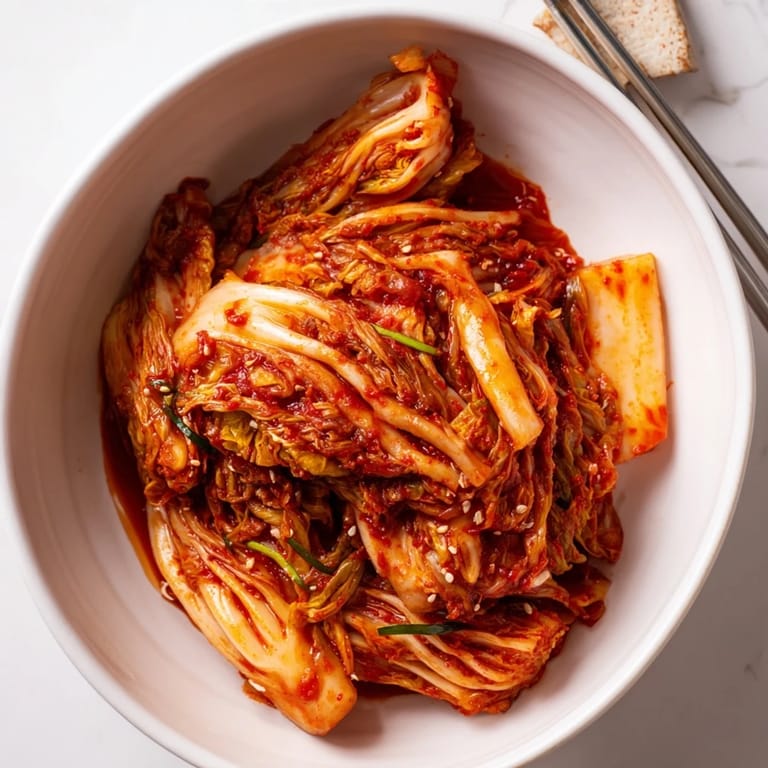
Save The first time I made kimchi, my entire kitchen smelled like garlic and fermented funk for a week. My roommate opened every window despite it being February, but I was hooked on that first tangy, crunchy bite. Now I can't imagine a fridge without at least one jar bubbling away on the bottom shelf.
Last winter, I made a massive batch for a Korean barbecue party. My friend Sarah took one hesitant bite, then proceeded to eat kimchi straight from the jar for the rest of the night. Now she texts me updates whenever she starts a new fermentation, like were in some kind of kimchi club.
Ingredients
- Large napa cabbage (about 1.2 kg): The foundation that becomes tender yet retains satisfying crunch after fermentation
- Coarse sea salt (80 g): Draws out moisture to create the perfect brine environment for beneficial bacteria
- Daikon radish (200 g): Adds sweetness and textural contrast that softens beautifully during fermentation
- Korean red chili flakes (gochugaru): Essential for authentic flavor and that signature vibrant red color
- Rice flour (2 tbsp): Creates a smooth paste base that helps flavors penetrate every leaf evenly
- Fresh garlic and ginger: The aromatic backbone that develops depth as fermentation progresses
- Fish sauce (3 tbsp): Provides umami richness, though soy sauce works perfectly for vegan versions
Tired of Takeout? 🥡
Get 10 meals you can make faster than delivery arrives. Seriously.
One email. No spam. Unsubscribe anytime.
Instructions
- Salt the cabbage:
- Cut the cabbage into quarters lengthwise, then chop into 2inch pieces. Dissolve the salt in cold water and submerge the cabbage, weighing it down with a plate. Let it soak for 2 hours, tossing every 30 minutes so everything brines evenly.
- Rinse and drain:
- Rinse the cabbage thoroughly under cold water 2 or 3 times until it no longer tastes overly salty. Drain it well in a colander while you prepare the spice paste.
- Make the rice paste:
- Whisk rice flour with water in a small saucepan over medium heat, stirring constantly until it thickens into a smooth porridge. Let it cool completely.
- Blend the spice paste:
- Combine the cooled rice paste with garlic, ginger, onion, fish sauce, and sugar in a blender. Blend until completely smooth, then stir in the gochugaru.
- Massage everything together:
- In a large bowl, toss the drained cabbage with daikon, carrots, and scallions. Add the spice paste and use your hands to massage it thoroughly into every layer until all vegetables are coated.
- Pack into jars:
- Press the kimchi tightly into clean jars, pressing down firmly to eliminate air pockets. Leave about an inch of headspace at the top.
- Start fermentation:
- Seal the jars and leave them at room temperature out of direct sunlight for 1 to 2 days, opening briefly daily to release builtup gas.
- Refrigerate and enjoy:
- Taste after 48 hours. When it reaches your desired tanginess, move it to the refrigerator where it will continue developing flavor slowly over weeks.
 Save
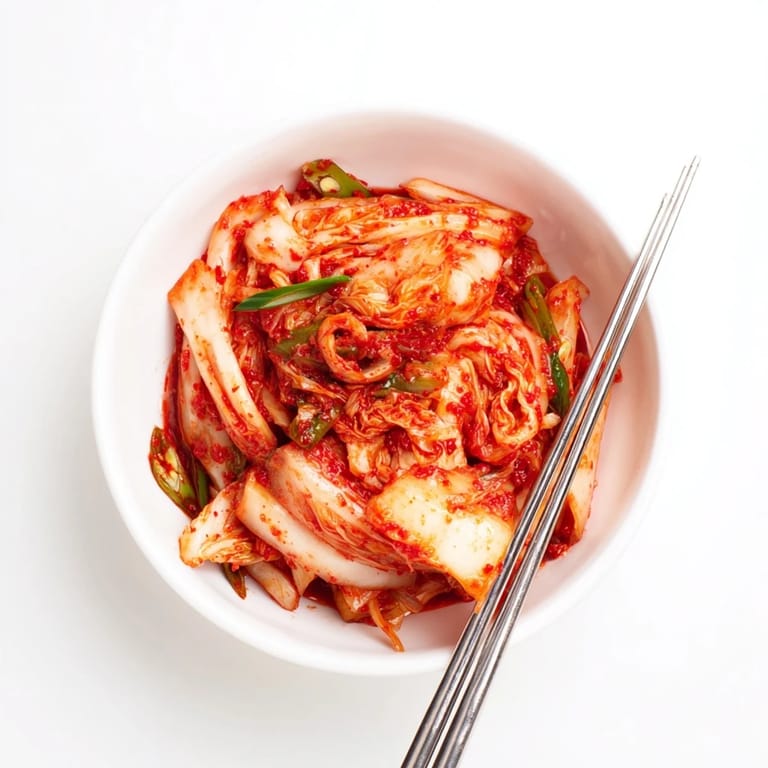
Save My grandmother always said you could tell a good cook by their kimchi jar. Something about how patience translates into food. Now I understand what she meant.
Understanding Fermentation
Fermentation feels magical because it is. You're creating the perfect environment for beneficial bacteria to transform raw vegetables into something more complex and alive. The first couple days at room temperature kickstart this process, then refrigeration slows it down while flavors continue developing. Don't be alarmed by gas buildup or slight fizziness those are signs of healthy fermentation.
Adjusting the Heat Level
I've learned that everyone's spice tolerance differs wildly. Start with 3 tablespoons of gochugaru if you're unsure, and remember that the heat will mellow slightly as kimchi ferments. You can always add more to your next batch. Some traditional recipes include grated apple or pear in the spice paste for natural sweetness that balances the heat beautifully.
Serving Ideas and Storage
Beyond eating it straight from the jar, kimchi elevates so many dishes. Try it fried with rice, stirred into soups, or even on tacos. The juice makes incredible marinades for meat or tofu. Properly fermented kimchi keeps for months in the refrigerator, continuing to develop deeper, more complex flavors. If it smells off or shows mold, something went wrong, but otherwise trust your nose.
- Use older, more fermented kimchi for cooking while enjoying fresher batches as a side dish
- The juice liquid is liquid gold, dont pour it down the drain
- Start eating your kimchi once it tastes pleasantly sour and tangy to your palate
 Save
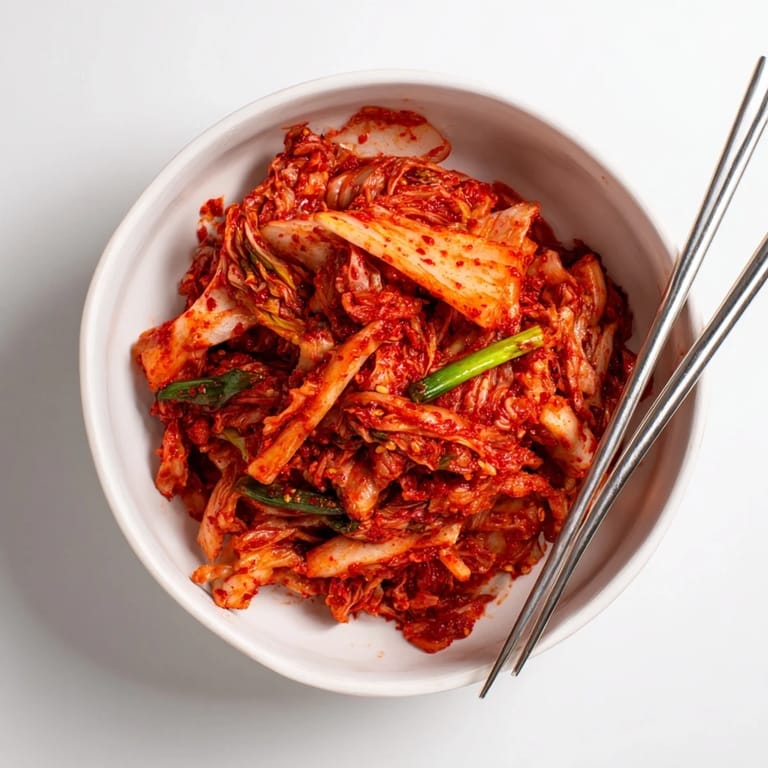
Save There's something profoundly satisfying about making your own kimchi. Every time you open that jar, you're tasting weeks of patience and care.
Common Questions
- → How long does kimchi fermentation take?
Initial fermentation requires 1-2 days at room temperature, burping jars daily to release gas. Afterward, refrigerate to slow fermentation while flavors continue developing over several weeks.
- → Can I make kimchi without fish sauce?
Yes, substitute fish sauce with soy sauce or vegan fish sauce alternatives. The umami flavor remains robust while accommodating plant-based diets.
- → Why rinse the salted cabbage multiple times?
Thorough rinsing removes excess salt that would overpower the final dish. This step ensures balanced seasoning while maintaining the vegetables' crisp texture.
- → What's the purpose of rice flour in the spice paste?
Rice flour creates a smooth base that helps spices adhere evenly to vegetables while providing subtle thickness to the paste, ensuring consistent coating throughout fermentation.
- → How do I know when kimchi is ready to refrigerate?
Taste after 48 hours of room-temperature fermentation. When the tanginess and sourness reach your preferred level, transfer to cold storage to slow the process.
- → Can I adjust the spice level?
Absolutely. Start with 3 tablespoons of gochugaru and increase gradually. For milder versions, reduce flakes or add grated apple or pear to the spice paste.