 Save
Save I'll never forget the dinner party where I decided to abandon the traditional cheese board and create something that would actually get people talking. My friends had been experimenting with spice, and I realized I wanted to build something bold—a platter that put heat front and center, not as an afterthought. That night, watching everyone gather around this vibrant arrangement of chili, cheese, and fresh vegetables, I understood that sometimes the best appetizers are the ones that spark conversation and bring people together through shared adventure.
What really solidified this recipe for me was a casual Saturday when I had friends dropping by unexpectedly. Instead of panicking about what to serve, I raided the fridge and created this platter in about twenty minutes. The relief on my face when everyone raved about it taught me something important: the most memorable entertaining moments often come from simple, thoughtfully arranged food that celebrates bold flavors rather than complicated techniques.
Ingredients
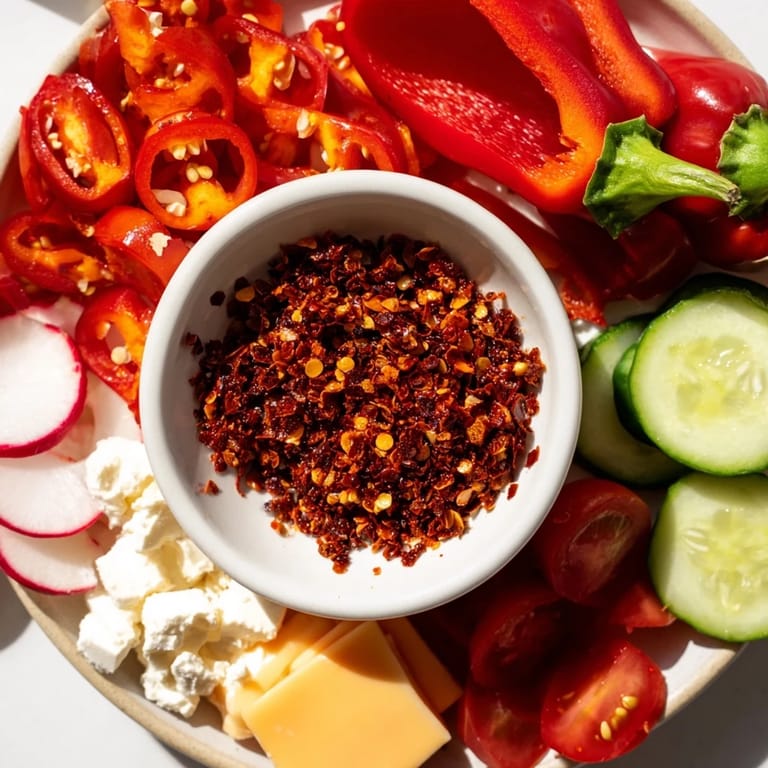
- Chili flakes (2 tbsp): This is your star player—the heart of the whole platter. I've learned that the quality matters more than quantity here, so invest in good flakes. Start mild if you're serving mixed crowds; you can always add more heat.
- Fresh red chili peppers (2, thinly sliced): The seeds carry most of the heat, so leave them in for bold flavor or remove them for a gentler kick. Slicing them thin means more surface area to appreciate their bright color and subtle sweetness beneath the heat.
- Fresh jalapeño (1, sliced): I add this mainly for the gorgeous green color it brings—it creates visual rhythm on the platter and adds a different type of heat that feels fresher than dried chili.
- Sharp cheddar cheese (100g, cubed): The tanginess cuts through the heat beautifully. Don't skip the quality here; aged cheddar has more personality than mild versions.
- Pepper jack cheese (100g, cubed): This one's quietly brilliant—it brings its own subtle heat that plays wonderfully with the central spicy core, creating layers of spice rather than one flat heat.
- Feta cheese (100g, crumbled): The bright, salty quality provides relief and contrast. Crumble it generously—those irregular pieces look more inviting than neat cubes.
- Spicy chorizo (80g, sliced): If you're including meat, this is the one that matters most. Its spiced, smoky character echoes the central chili core and ties the whole platter together.
- Soppressata (80g, sliced): A subtler cured meat that won't overpower. The peppery notes complement without stealing focus.
- Cherry tomatoes (1 cup, halved): Their sweetness and juiciness provide the most important relief from heat. I always use the prettiest ones I can find—they're doing heavy lifting here visually.
- Red bell pepper (1, sliced into strips): Sweet, crunchy, and that brilliant color. These strips become vehicles for dips and spicy accompaniments.
- Cucumber (1, sliced): The unsung hero of any spicy platter. Its cool, watery nature is genuinely soothing and its mild flavor resets your palate between bold bites.
- Radishes (1/2 cup, sliced): Peppery and crisp, they add textural interest and that pink-white beauty. They're also naturally peppery, so they echo the spice theme without overwhelming.
- Spicy hummus (1/2 cup): A creamy anchor that helps distribute heat more evenly across your bites. Make sure it's actually spicy—mild hummus gets lost here.
- Roasted red pepper spread (1/2 cup): Sweet and smoky, this is your gentle giant. It tames heat while adding richness that makes every bite feel indulgent.
- Pita chips (1 cup): The sturdy option for loading with toppings. Their slight char flavor complements the spice.
- Multigrain crackers (1 cup): More delicate than pita, these add refinement and work beautifully with the cheeses.
- Vegetable sticks (1 cup, carrots and celery): The refreshing, crunchy foundation that makes grazing feel healthy and keeps people coming back for more.
Tired of Takeout? 🥡
Get 10 meals you can make faster than delivery arrives. Seriously.
One email. No spam. Unsubscribe anytime.
Instructions
- Build your spice center:
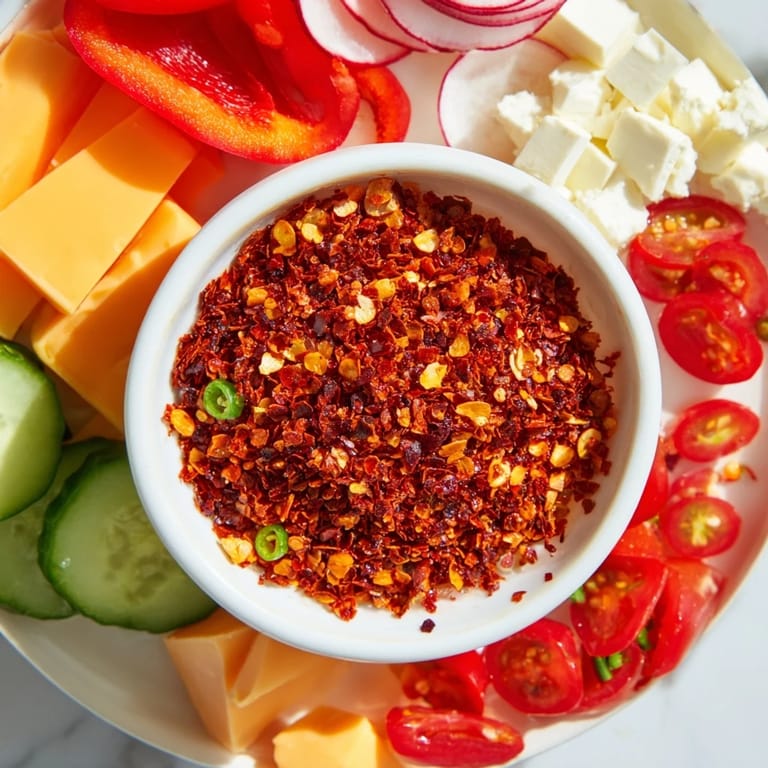
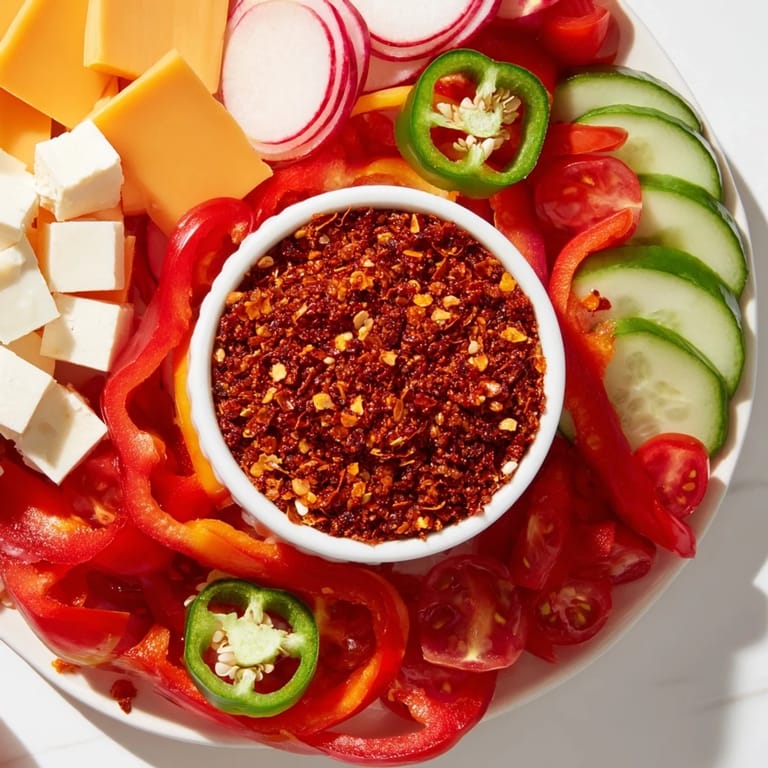
- Pour the chili flakes into a small bowl or create a beautiful mound directly on your platter. Arrange your sliced fresh chilis and jalapeño around it—this isn't just functional, it's theatrical. These bright reds and greens are the visual promise of what your guests are about to experience. Step back and look at it. This center should make people lean in with curiosity.
- Create radiating sections:
- Working outward from that central spicy core, start arranging your ingredients in organized sections. Think of spokes on a wheel. I place cheeses in one section, then fresh vegetables in another, then proteins, then crunchy elements. The pattern matters because it makes the platter feel intentional and guides people's eyes around the entire offering. Leave small gaps between sections—negative space makes the colors pop.
- Cluster your creamy elements:
- Place your spicy hummus and roasted red pepper spread in small bowls or as dollops on the platter itself. Position them strategically so they're accessible but not dominating. These are the cool-down stations, so place them where guests might naturally reach after trying the central heat.
- Balance color and texture:
- As you finish arranging, step back. You want variety in color—reds, greens, yellows, whites, oranges—and texture. Shiny cheese cubes next to matte crackers, smooth hummus next to spiky radish slices. Fill any gaps with vegetable sticks, creating a cohesive, abundant presentation.
- Serve with intention:
- Present it immediately while everything is fresh and vegetables haven't started to weep. Tell your guests they're welcome to load up pita chips with ingredients, dip vegetables in the spreads, or go straight for the spicy core if they're feeling brave. The beauty of this platter is that everyone creates their own perfect bite.
 Save
Save What stays with me most from making this platter repeatedly is how it's become my answer to 'what should we bring?' for any gathering where people gather to enjoy time together. There's something about this bold, colorful arrangement that says 'we're here to celebrate and be a little adventurous together.' It's food that starts stories.
The Art of Heat Layering
One of my favorite discoveries was that heat works differently depending on where it comes from. The immediate burn of fresh chili peppers hits fast and bright, while chili flakes build gradually, creating warmth that lingers. The pepper jack cheese brings a subtle spice that sneaks up on you. When your guests realize they can layer these different heat sources, they stop seeing this as a 'spicy platter' and start seeing it as a flavor adventure. The central core isn't trying to overwhelm—it's an invitation to play with temperature and intensity.
Making It Your Own
This platter is endlessly flexible, which is part of why I love it. For vegetarian guests, the absence of chorizo and soppressata doesn't diminish the experience—if anything, it highlights the fresh vegetables and creamy elements. For vegan friends, swapping in plant-based cheeses and spreads works beautifully. I've added roasted nuts, pickled vegetables, olives, and even grilled corn to this depending on what I had on hand. The formula stays the same: a spicy center, then circles of complementary flavors and textures.
Pairing and Timing
Crisp white wines, light beers, and even sparkling water become necessary companions to this platter. The coolness and slight carbonation provide relief between spicy bites, and the acidity cuts through the richness of cheese and cured meats. I learned to serve the drinks really cold—it's not fussy, it's strategic. This platter works as an opener to a meal, a party centerpiece, or even a light dinner when you arrange it generously.
- Have plenty of napkins available—people will get hands sticky and happy, and that's the whole point
- Set this out about 10 minutes before guests arrive, so everything settles into place but nothing has time to get warm or weep
- Keep the spreads and dips accessible but slightly separated from the fresh vegetables so nothing gets soggy
 Save
Save This platter has taught me that entertaining is really just about creating a moment where people feel welcomed and celebrated. Every time I set one out, someone discovers a new favorite combination, or a shy guest finds courage in the familiar comfort of cheese and crackers alongside something daring. That's the real magic here.
Common Questions
- → How can I adjust the spiciness of the platter?
Modify the heat by choosing milder or hotter chili flakes and peppers. Removing seeds lowers the heat, while adding pickled jalapeños or spicy olives can increase it.
- → What are good vegetarian or vegan alternatives?
For vegan options, replace cheeses with plant-based varieties and omit cured meats. You can also add more fresh veggies or spicy hummus for flavor.
- → How should the ingredients be arranged for best presentation?
Place the spicy chili core centrally, then arrange cheeses, meats, vegetables, dips, and crunchy items in radiating sections around it to create a vibrant, appealing pattern.
- → What sides complement this platter well?
Crunchy pita chips, multigrain crackers, and vegetable sticks like carrots and celery add texture and balance the spiciness and creaminess.
- → How long does it take to prepare?
Preparation typically takes around 25 minutes with no cooking required, making it a quick and easy option for gatherings.