 Save
Save My first baklava came from a tiny Istanbul bakery on a humid summer afternoon, where the pastry case seemed to glow under soft golden light. The owner's grandmother was rolling phyllo by hand, her wrinkled fingers moving with the kind of practiced ease that only decades can build. I stood there watching honey drip down the sides of freshly baked layers, completely mesmerized by how something so delicate could be so sturdy. That moment taught me baklava isn't just a dessert—it's an edible love letter, one buttered sheet at a time.
Years later, I made this for my neighbor who'd just moved in, and she sat on my kitchen stool eating one piece after another, not talking much, just humming. Her teenage son wandered in, tried one, and suddenly they were both there, sharing baklava and stories about the countries they'd lived in. That batch became the beginning of a real friendship, and now whenever I bake baklava, I think of them first.
Ingredients
- Walnuts, pistachios, and almonds: Use the freshest nuts you can find—stale nuts make the whole thing taste tired, so do yourself a favor and taste them before chopping.
- Granulated sugar: This sweetens the nut filling without overwhelming it; the honey syrup does the real sweetening work.
- Ground cinnamon: A generous teaspoon is your secret weapon for warmth and depth that keeps people from naming exactly what they're tasting.
- Phyllo dough: Thaw it overnight in the fridge, not on the counter—patience here prevents tears and frustration.
- Unsalted butter, melted: Each layer gets a light brush; you're building flavor and crispness, not making it greasy.
- Honey, water, sugar, lemon juice, and spices: This syrup is why baklava tastes like itself—the lemon keeps it from being cloying, and the cinnamon stick makes it memorable.
Tired of Takeout? 🥡
Get 10 meals you can make faster than delivery arrives. Seriously.
One email. No spam. Unsubscribe anytime.
Instructions
- Set your stage:
- Preheat to 350°F and butter that baking dish generously so nothing sticks. Unroll your phyllo, cover it with a damp towel, and keep it that way—phyllo dries out faster than you'd think.
- Build the base:
- Lay down one sheet, brush it with butter, and keep going until you've got about 8 layers working as your foundation. This is meditative work; let it be slow.
- Add the filling:
- Scatter a third of your nut mixture over those layers, then repeat the whole thing—more phyllo, more butter, more nuts, more phyllo. You're creating pockets of richness that will stay crispy on the outside.
- Top it off:
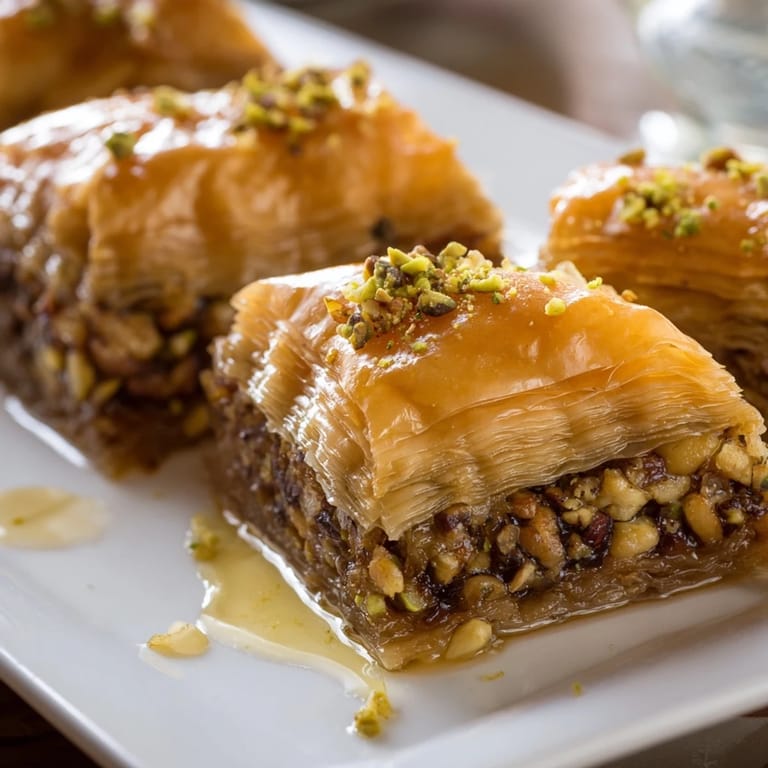
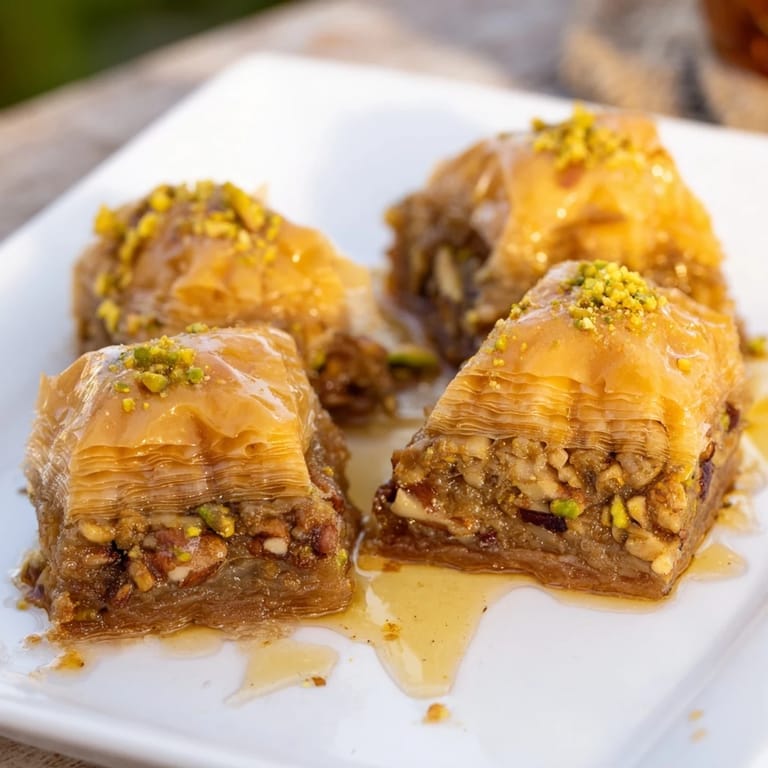
- Finish with 8 to 10 phyllo sheets, brushing each one, so the top gets gloriously golden and shattered.
- Score with intention:
- Use a sharp knife and cut diamonds or squares all the way through before baking—trying to cut baklava after it's baked invites crumbling and frustration.
- Bake until it sings:
- Forty-five minutes at 350°F until it's deep golden and your kitchen smells like cinnamon and butter colliding. You'll know it's ready when it looks almost too beautiful to eat.
- Make the syrup while it bakes:
- Combine honey, water, sugar, lemon juice, zest, and cinnamon stick in a saucepan, bring to a boil, then let it simmer gently for 10 minutes. Cool it slightly while the baklava finishes.
- Pour with courage:
- The moment baklava comes out of the oven, pour that warm syrup slowly and evenly over the hot pastry—this is when the magic happens and the layers really drink it in.
- Let it rest:
- Give it at least 4 hours to cool and soak before you cut into a piece, though honestly, overnight is when it reaches peak perfection.
 Save
Save There's a moment, right when that warm syrup hits the hot phyllo, where everything stops for just a second. The smell rises up—honey, cinnamon, butter, lemon—and you realize you've just created something that tastes like comfort and celebration at the same time. That's when you know you've done it right.
Why the Syrup Matters More Than You'd Think
I learned this the hard way when I made baklava with brown sugar syrup once, thinking it would taste sophisticated. It didn't. The whole thing tasted wrong in a way I couldn't fix. Then I went back to the real syrup—honey, water, a touch of regular sugar, lemon—and suddenly it tasted like baklava again. The syrup isn't an afterthought; it's the final voice in the conversation, the one that gets to say what this dessert really means.
The Cinnamon Question
Some people use only cinnamon in the filling, others add cardamom or clove, and both camps swear they're right. I've found that cinnamon alone lets the nuts shine, which is what should happen—the nuts are the stars here, and cinnamon is just the lighting. If you want to explore cardamom or rose water, go ahead, but taste as you go and remember that baklava is supposed to taste like itself, not like your last experiment.
Storage and Serving Wisdom
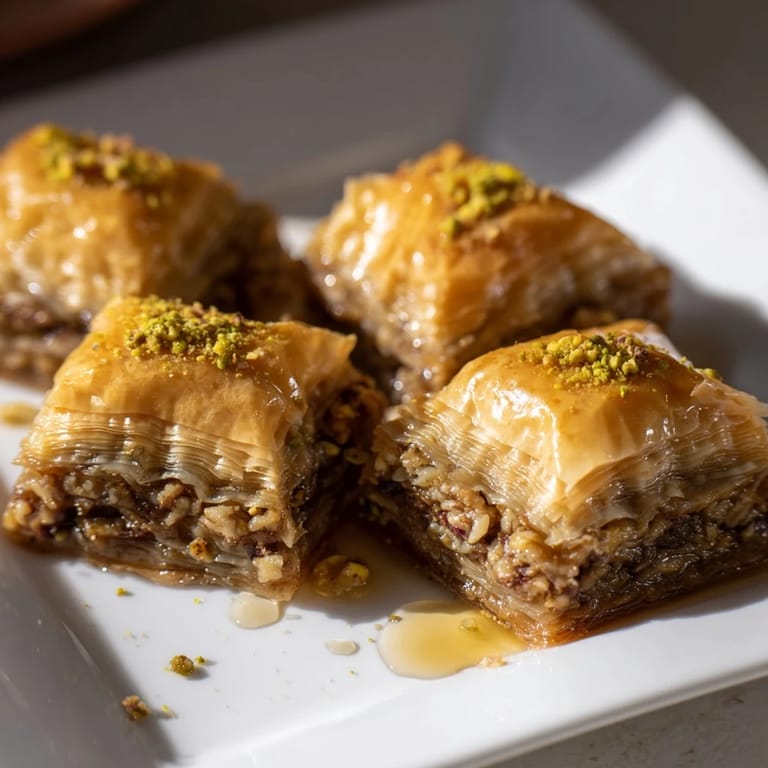
Baklava keeps at room temperature for about a week if you cover it loosely with foil or parchment—the syrup keeps it moist and the phyllo stays crisp somehow, which feels like kitchen magic. Serve it with strong Turkish coffee or black tea, never anything sweet, because baklava is enough sugar on its own. If you're feeling generous, dust the top with extra crushed pistachios right before serving for a whisper of extra nuttiness.
- Refrigerating baklava hardens it slightly; if you do refrigerate it, let it come back to room temperature before eating.
- Baklava actually tastes better the next day once the syrup has fully soaked through every layer.
- If you're giving it as a gift, layer it in a pretty box with parchment between pieces so it stays elegant.
 Save
Save Baklava asks you to slow down and layer kindness into every sheet, which is maybe why it tastes so good and why people remember it long after they've eaten the last piece. Make this for someone you love, or make it just for yourself—either way, you're doing something right.
Common Questions
- → What nuts are used in this baklava?
A mix of finely chopped walnuts, pistachios, and almonds provides a rich and crunchy filling.
- → How is the honey syrup prepared?
The syrup is made by boiling honey, sugar, water, lemon juice, lemon zest, and a cinnamon stick, then simmering to infuse flavor.
- → How should baklava be baked for the best texture?
Bake at 350°F (175°C) for about 45 minutes until the pastry is golden and crisp, ensuring a flaky finish.
- → Can the honey syrup be substituted or flavored differently?
Yes, some honey can be replaced with orange blossom water for a lighter, floral flavor without changing the texture.
- → How long should baklava rest before serving?
Allow the syrup to soak for at least 4 hours, preferably at room temperature, to soften and meld the flavors.
- → What tools are recommended for preparing this dish?
A 9x13 inch baking dish, pastry brush, sharp knife, mixing bowls, and saucepan are essential for layering and syrup preparation.