 Save
Save I discovered this platter by accident at a gallery opening, where someone had arranged pickles and jewel-toned eggs on black slate like edible art. The contrast stuck with me for weeks, and I found myself obsessing over how to recreate that visual drama at home. When I finally tried it, I realized the beauty wasn't just for show—the tangy pickles, creamy eggs, and bright fruit together created something genuinely craveable. Now it's become my secret weapon whenever I need to impress without spending hours in the kitchen.
My roommate walked in while I was arranging this on a black board and actually stopped mid-conversation to stare. That's when I knew it had shifted from just a recipe to something that brings people genuine joy, even before they taste it. She asked for the recipe that night, and now she makes it every time someone new moves to our city.
Ingredients
- Mini cucumbers: Their thin skin stays tender when pickled, and they fit perfectly on a board without overwhelming delicate bites.
- Rainbow carrots: Slicing them on the bias shows off their natural color gradients and makes them more visually striking.
- Radishes: They hold their crisp texture through pickling and add a subtle peppery kick that balances the sweetness.
- Red onion: Thin slices soften beautifully in the pickling liquid and add sharpness without overpowering.
- White vinegar and water: This balanced ratio creates a clean, bright brine that lets other flavors shine through.
- Sugar and salt: Together they form the backbone of flavor, but don't overpower the delicate vegetables.
- Mustard seeds and peppercorns: These aromatics add subtle complexity that keeps people guessing what's in there.
- Large eggs: The bigger they are, the more surface area the beet dye has to work with for deeper color.
- Cooked beet: One medium beet creates that stunning burgundy hue without making the brining liquid muddy.
- Apple cider vinegar: Its mild acidity and slight sweetness complement the earthiness of beets better than white vinegar would.
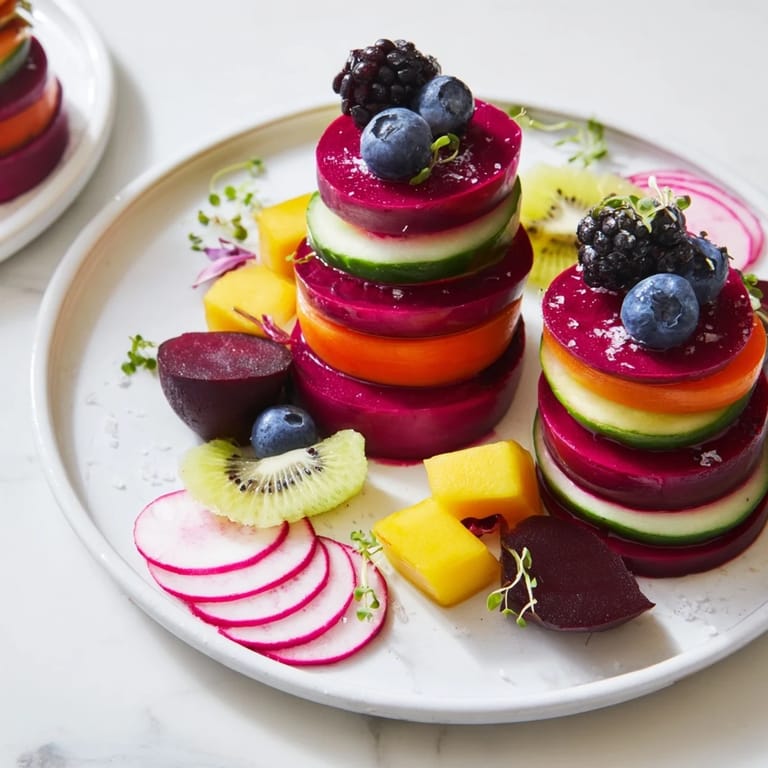
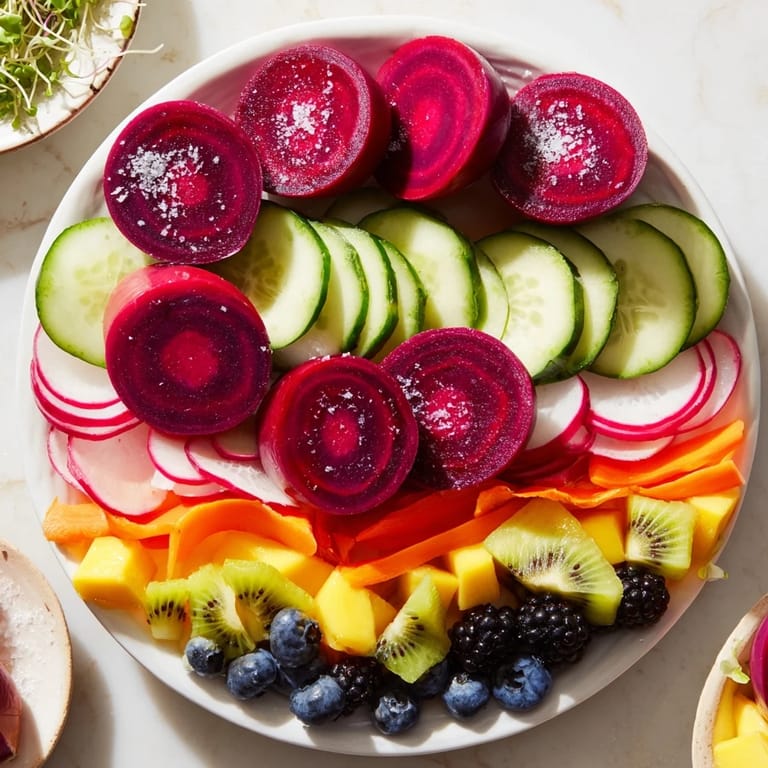
- Fresh blueberries, blackberries, and tropical fruits: Choose whatever looks brightest at the market—the variety of colors is what makes this sing visually.
- Microgreens or edible flowers: These add a professional finishing touch and a subtle herbaceous note.
- Flaky sea salt: The larger crystals catch light and add textural contrast to creamy eggs and tender pickles.
Tired of Takeout? 🥡
Get 10 meals you can make faster than delivery arrives. Seriously.
One email. No spam. Unsubscribe anytime.
Instructions
- Simmer your pickling base:
- Combine vinegar, water, sugar, salt, mustard seeds, and peppercorns in a saucepan and bring to a gentle simmer. Watch for tiny bubbles breaking the surface, and let it go for just a minute or two until you can smell the tang rising—that's when you know the sugar and salt have fully dissolved.
- Quick-pickle the vegetables:
- Pack your cucumbers, carrots, radishes, and red onion into a heatproof container, then pour that hot liquid over them. The vegetables will start softening immediately from the heat, but they'll stay crisp. Let them cool to room temperature, then refrigerate for at least 2 hours—overnight is even better if you want deeper flavor.
- Boil and ice the eggs:
- Bring eggs to a boil in cold water and cook for 8 to 9 minutes depending on size—you want a set yolk with a barely jammy center. Transfer them immediately to an ice bath to stop the cooking and make peeling easier.
- Create the beet dye:
- Combine sliced beet, apple cider vinegar, water, sugar, and salt in a jar, then gently add your cooled peeled eggs. The beet will start staining them immediately, creating veins and patterns that deepen over hours. Let this sit in the fridge for at least 2 hours, but I usually let mine go overnight for the most dramatic color.
- Arrange your platter:
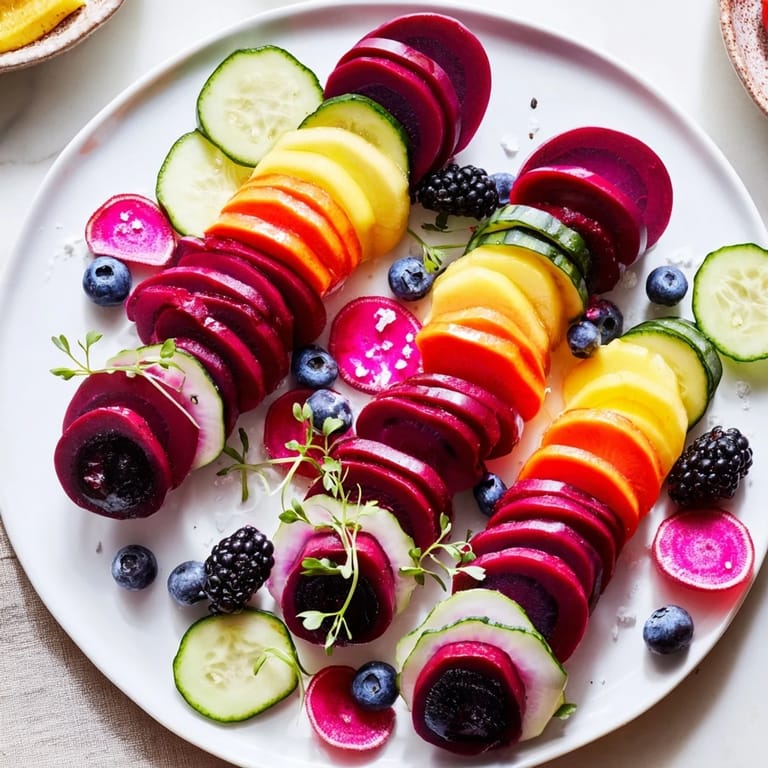
- On a large black board, scatter your pickled vegetables first to create color pockets, then halve or slice your beet-dyed eggs and arrange them among the vegetables. Add handfuls of fresh fruit to fill gaps—the contrast between the cool jewel tones and the creamy eggs is what makes people stop and look.
- Finish and chill:
- Top with delicate microgreens or edible flowers, sprinkle with flaky sea salt, and keep everything cold until serving. The chill keeps the fruit crisp and the eggs perfectly creamy.
 Save
Save I once brought this to a potluck where everyone had brought the same hummus and vegetable tray, and suddenly I understood why people talk about food as conversation. Someone picked up an egg, tasted it, and asked how I'd dyed it naturally, and within five minutes half the group was gathered around asking questions. That's when cooking stopped being about feeding people and became about sharing something small but genuinely thoughtful.
Why the Colors Matter
Color is doing the work here before anyone even tastes anything. The deep burgundy eggs against neon pickles against soft pastel fruits creates visual rhythm, and that anticipation makes the flavors land harder. I've learned that a beautiful plate primes your palate—your brain literally expects deliciousness before your taste buds even engage. This platter understands that simple truth.
Making It Your Own
The framework here is flexible enough to follow your market and mood. Purple cabbage creates a stunning blue brine, turmeric goes golden, and red wine vinegar leans deeper into burgundy. I've experimented with everything from fennel to Sichuan peppercorns in the pickling spice blend, and each shift changes the whole story. Trust your instincts and your pantry—this dish thrives on small personal choices.
Timing and Make-Ahead Strategy
The genius of this platter is that almost everything improves with time. Pickles taste better after a full day, eggs develop richer color overnight, and the whole thing actually gets easier the more days ahead you make it. I usually prep vegetables two days before, boil and dye eggs the day before, and arrange everything just before people arrive.
- Make the pickling brine up to a week ahead and store it covered in the fridge.
- Boil and dye eggs up to three days in advance for deepest color and easiest final assembly.
- Slice fresh fruit no more than 4 hours before serving to prevent browning.
 Save
Save This platter has become my answer to nearly every entertaining question because it handles the pressure of looking polished while staying genuinely easy to make. It's proof that the most impressive dishes sometimes come from accidents and borrowed ideas.
Common Questions
- → How long should the pickled vegetables marinate?
They should marinate for at least 2 hours, but overnight gives the best flavor infusion.
- → What gives the eggs their vibrant color?
Beet slices steeped in vinegar and water impart a rich, natural red hue to the eggs during marination.
- → Can I prepare the platter ahead of time?
Yes, it’s best to marinate the pickles and beet eggs overnight for optimal taste and color.
- → What garnish works best for this platter?
Microgreens or edible flowers add freshness and elegant visual contrast, enhanced with a sprinkle of flaky sea salt.
- → Is this suitable for gluten-free diets?
Yes, all ingredients used are naturally gluten-free; just verify any packaged items like vinegar for hidden gluten.