 Save
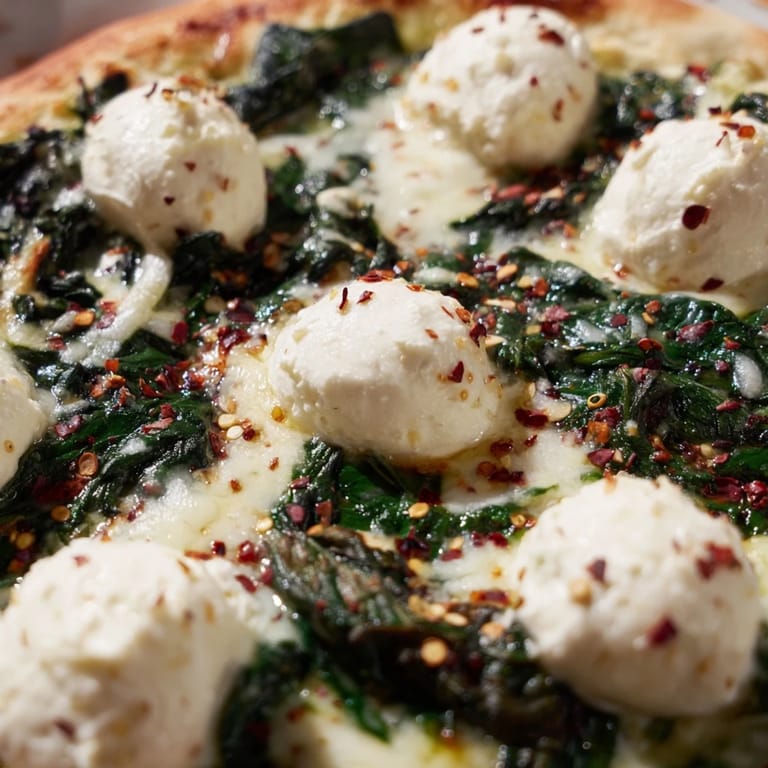
Save My apartment smelled like a pizzeria the first time I brushed garlic butter onto raw dough, and I knew I was onto something special. I'd been craving pizza but wanted something lighter than the usual tomato-and-pepperoni routine. A friend had mentioned ricotta as a base, and the idea stuck with me all week. When I finally tried it with wilted spinach and that fragrant butter, the combination was so simple it felt like cheating. It became my go-to whenever I wanted something that tasted indulgent but didn't leave me in a food coma.
I made this for a small dinner party once, and my friend who claimed she didn't like spinach ate three slices. She kept saying it was the garlic butter that did it, but I think it was the way the ricotta melted into little pockets of creaminess. Since then, I've served it to skeptical kids and picky eaters, and it always wins them over. There's something about the simplicity that makes people trust it. It doesn't try too hard, and that's exactly why it works.
Ingredients
- Thin pizza crust: Store-bought works perfectly here, especially if you grab one from the bakery section that's already at room temperature and ready to top.
- Unsalted butter: This is the base of your garlic spread, and using unsalted lets you control the seasoning without oversalting the whole pizza.
- Garlic cloves: Fresh garlic makes all the difference, mince it finely so it melts into the butter and doesn't burn in the oven.
- Fresh parsley: Optional but lovely, it adds a hint of color and a subtle herbaceous note that balances the richness.
- Ricotta cheese: Go for whole milk ricotta if you can, it spreads easier and tastes creamier than the low-fat versions.
- Fresh spinach: Baby spinach works great and wilts down quickly, just make sure to squeeze out any excess moisture after cooking.
- Olive oil: A good quality olive oil adds flavor to the spinach as it cooks and keeps it from sticking to the pan.
- Shredded mozzarella: This gives you that classic melty cheese pull, use low-moisture mozzarella to avoid a soggy crust.
- Grated Parmesan: A little goes a long way, it adds a sharp, nutty finish that complements the mild ricotta beautifully.
- Red pepper flakes: Just a pinch wakes up the whole pizza without making it spicy, but skip it if you prefer things mild.
Tired of Takeout? 🥡
Get 10 meals you can make faster than delivery arrives. Seriously.
One email. No spam. Unsubscribe anytime.
Instructions
- Heat your oven:
- Preheat to 475°F and slide in a pizza stone or baking sheet so it gets screaming hot. This step is crucial for a crispy bottom, don't skip the preheat time.
- Wilt the spinach:
- Warm olive oil in a skillet over medium heat, toss in the spinach with a pinch of salt, and stir until it just collapses, about two to three minutes. Transfer it to a plate and let it cool so it doesn't make your cheese watery.
- Make the garlic butter:
- Melt butter in a small pan over low heat, add the minced garlic, and let it sizzle gently for about a minute until it smells amazing. Stir in parsley if you're using it, then take it off the heat.
- Prep the crust:
- Lay your pizza crust on a sheet of parchment paper and brush the garlic butter all over the surface, right to the edges. This creates a flavorful barrier and helps the crust crisp up beautifully.
- Add the ricotta:
- Drop spoonfuls of ricotta across the crust, leaving a little border around the edge. Don't spread it smooth, those dollops will melt into creamy puddles as it bakes.
- Layer the spinach:
- Scatter the cooled spinach evenly over the ricotta, then grind some black pepper on top. The pepper adds a gentle heat that plays nicely with the garlic.
- Top with cheese:
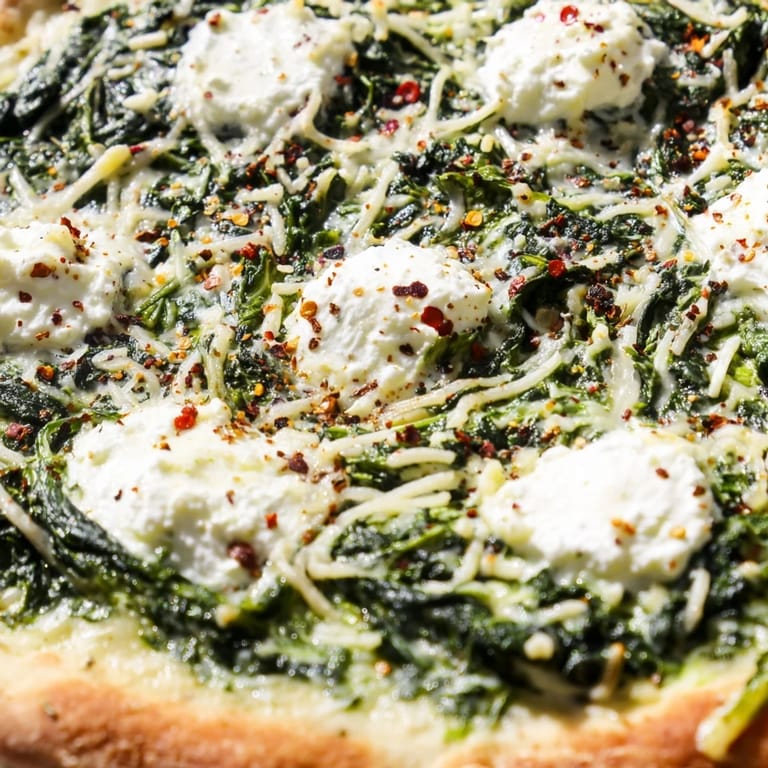
- Sprinkle the mozzarella and Parmesan over everything, then add a pinch of red pepper flakes if you like a little kick. The cheeses will meld together and get golden in the oven.
- Bake:
- Slide the pizza, parchment and all, onto the hot stone or sheet and bake for twelve to fifteen minutes. You'll know it's done when the crust is golden and the cheese is bubbling and lightly browned in spots.
- Cool and slice:
- Let the pizza rest for two minutes before cutting into it. This lets the cheese set just enough so your slices don't slide apart when you serve them.
 Save
Save One evening, I made this pizza on a whim after a long day, and my partner walked in just as I was pulling it from the oven. The smell alone made them stop in the doorway and smile, and we ended up eating it straight from the pan on the couch. It wasn't fancy, but it felt special because it was warm, fragrant, and made with care. That's the kind of meal this is, simple enough for a Tuesday but good enough to feel like a treat.
Customizing Your Pizza
This recipe is forgiving and loves a little improvisation. I've added thinly sliced red onion before baking, and the sharpness cuts through the richness beautifully. Sun-dried tomatoes work wonderfully too, their tangy sweetness pairs perfectly with the ricotta. If you want more protein, torn pieces of cooked chicken or crumbled sausage fit right in. Just keep the toppings light so the crust can still crisp up properly.
Choosing Your Crust
Store-bought thin crusts are a weeknight lifesaver, and I usually grab one from the bakery section that's fresh and pliable. If you have time, homemade dough adds a personal touch and fills your kitchen with that yeasty, baked smell. Whole-wheat crusts give a nuttier flavor and a bit more chew, while gluten-free options work just fine as long as you follow the package instructions for baking temperature. Whatever you choose, make sure it's not too thick or the toppings will overwhelm it.
Serving and Pairing
I like to serve this pizza with a simple arugula salad dressed in lemon and olive oil, the peppery greens balance the creamy cheese perfectly. A chilled glass of Pinot Grigio or Sauvignon Blanc makes it feel a little more special, but sparkling water with a squeeze of lemon works just as well. Leftovers reheat beautifully in a hot skillet, which crisps the bottom back up without drying out the toppings.
- Let the pizza cool for a minute or two before slicing so the cheese doesn't slide off.
- If you're feeding a crowd, double the recipe and bake two pizzas back to back.
- Store any leftovers in an airtight container in the fridge for up to two days.
 Save
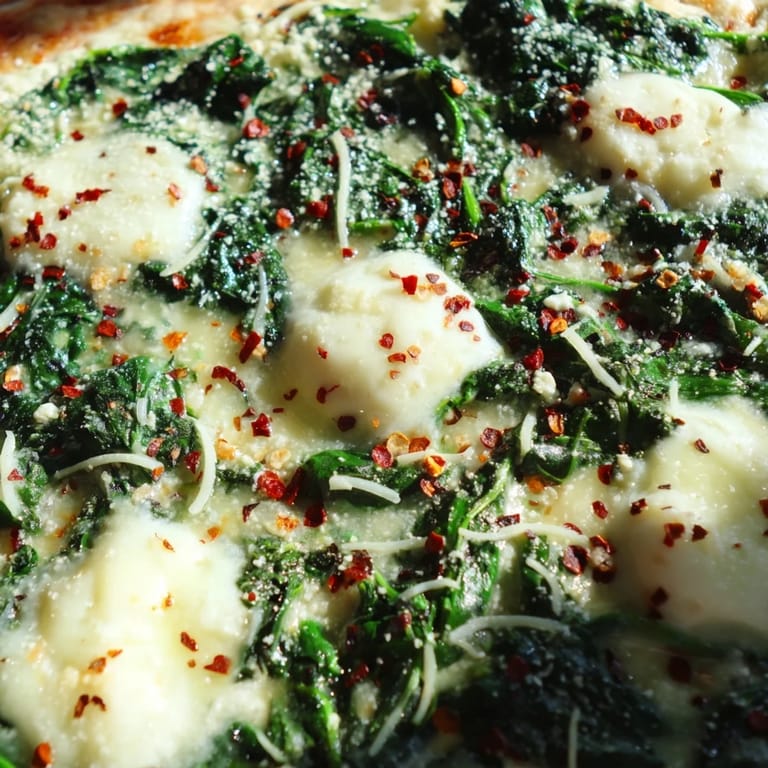
Save This pizza has become one of those recipes I make without thinking, the kind that feels like home no matter where I am. I hope it brings you the same easy comfort it's given me.
Common Questions
- → Can I use frozen spinach instead of fresh?
Yes, frozen spinach works well. Thaw it completely and squeeze out excess moisture before sautéing to prevent a watery pizza. You'll need approximately 1 cup of thawed spinach.
- → What's the best way to prevent a soggy crust?
Use a preheated pizza stone or baking sheet to crisp the bottom. Ensure your spinach is well-drained after cooking, and don't over-dollop the ricotta, which can release moisture during baking.
- → Can I make the dough from scratch?
Absolutely. Prepare your pizza dough in advance and let it rise according to your preferred method. You can also use store-bought frozen dough thawed to room temperature for convenience.
- → Is this suitable for a gluten-free diet?
Yes, simply substitute a gluten-free pizza crust. Many quality gluten-free crusts are available at grocery stores, or you can make your own if you prefer homemade options.
- → What wine pairs best with this pizza?
A crisp Pinot Grigio complements this dish beautifully. The wine's acidity cuts through the creamy ricotta and richness of the cheese, while its light body won't overwhelm the delicate spinach flavors.
- → How do I store leftovers?
Store cooled pizza in an airtight container in the refrigerator for up to three days. Reheat in a 375°F oven for 5-7 minutes until warmed through and the crust regains its crispness.