 Save
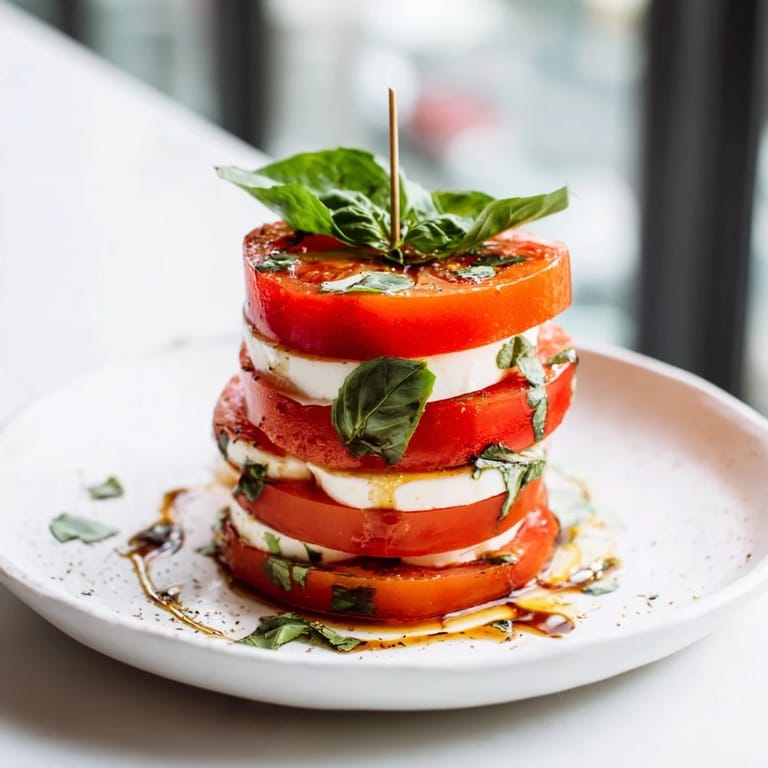
Save The first time I stacked tomato, mozzarella, and basil into something taller than it was wide, I was trying to impress someone at a dinner party and running out of appetizer ideas. I grabbed what was left in the crisper drawer—three gorgeous tomatoes from the farmer's market, a ball of fresh mozzarella, and a handful of basil my neighbor had dropped off. Something about building it vertically instead of laying it flat felt playful, almost architectural. When I inserted that first toothpick and the whole thing held together, I knew I'd stumbled onto something both simple and elegant.
I made these for my sister's book club last spring, and I watched everyone pause mid-conversation to admire them before eating. One person actually said, "It's too pretty to eat," which made me laugh because that's exactly when you know you've got something right. By the end of the night, the platter was completely bare and someone asked for the recipe, which is always the best compliment.
Ingredients
- Fresh ripe tomatoes (4 medium): Look for tomatoes that give slightly when you squeeze them gently; they'll slice cleanly and taste bright. If they're too firm, they'll be mealy.
- Fresh mozzarella cheese (250 g): The softer, fresher version makes all the difference here—it should be tender enough to cut cleanly but sturdy enough to hold the stack. Skip the rubbery pre-packaged stuff.
- Fresh basil leaves (1 small bunch): Tear them gently instead of cutting to release the oils without bruising them. They should smell fragrant when you handle them.
- Extra-virgin olive oil (2 tbsp): This is one of the three ingredients people taste most, so quality matters; use something you'd actually enjoy eating straight.
- Balsamic glaze (2 tbsp): The reduced, syrupy version works best here because it won't make the stack soggy like regular vinegar would.
- Sea salt and freshly ground black pepper: Season boldly at the end; these elements tie everything together and shouldn't whisper.
Tired of Takeout? 🥡
Get 10 meals you can make faster than delivery arrives. Seriously.
One email. No spam. Unsubscribe anytime.
Instructions
- Slice everything evenly:
- Use a sharp knife and aim for slices about 1 cm thick so the layers feel balanced and the whole thing holds its shape. I like to slice the tomatoes first, then the mozzarella—the cheese comes away cleaner if your knife is still cool and dry.
- Prepare the basil gently:
- Rinse the leaves and pat them completely dry with a clean towel; any lingering moisture will make them wilt once you stack. This small step makes a real difference in how fresh they taste after sitting on the platter.
- Build the stack mindfully:
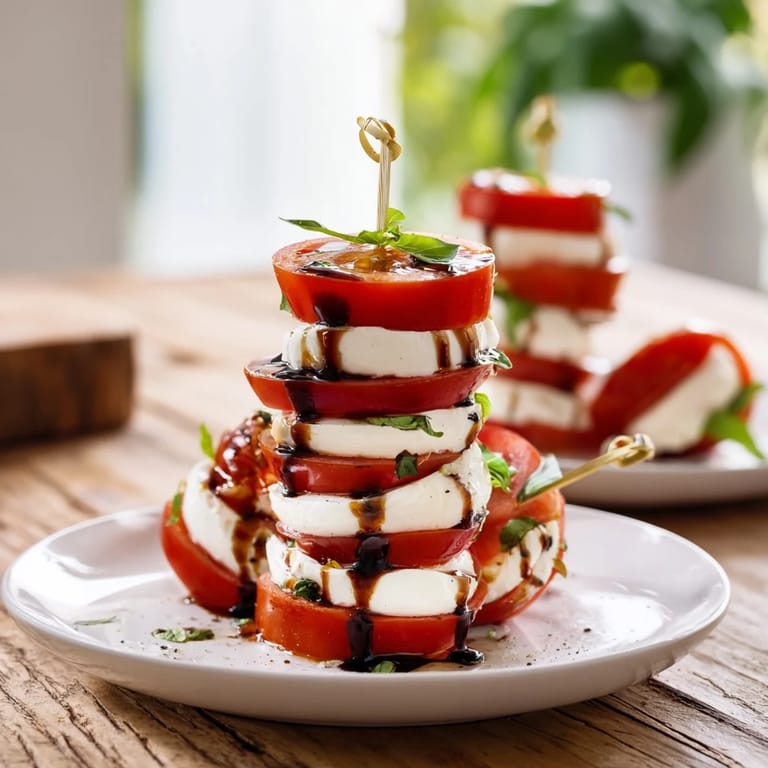
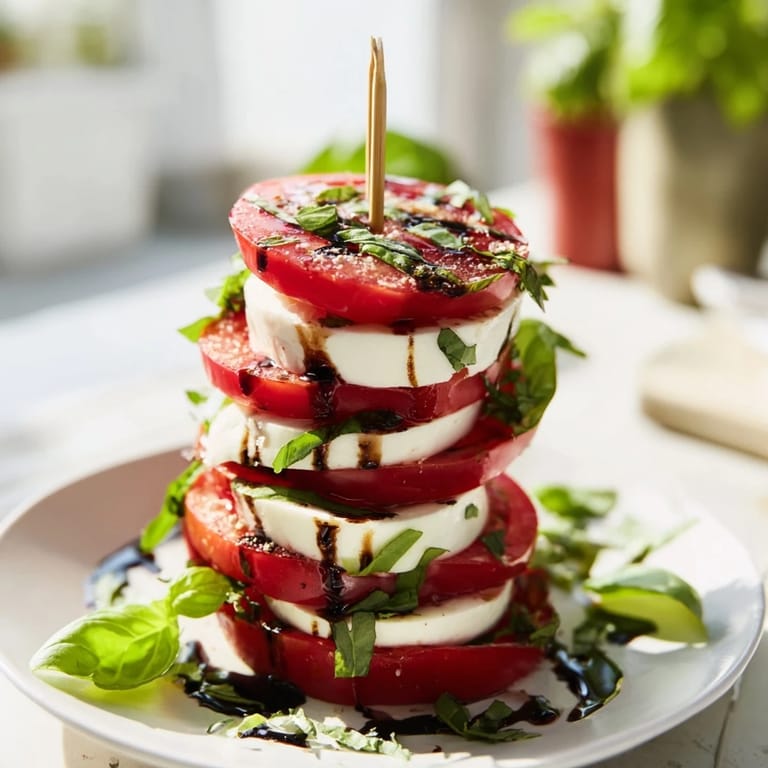
- Start with a tomato slice on your serving platter, then mozzarella, then a basil leaf; repeat until you've got three or four layers, finishing with basil on top so the green peeks out. Take your time here—this is the moment it all comes together visually.
- Secure with a skewer:
- Push a long toothpick or bamboo skewer straight down through the center of your stack so the layers stay put without looking obvious. You want people to notice the engineering only if they're really paying attention.
- Finish with oil and glaze:
- Drizzle the olive oil first in a thin spiral around and over the stack, then add the balsamic glaze in the same way. The order matters because the oil helps the vinegar distribute evenly without pooling.
- Season and serve:
- Sprinkle sea salt and fresh pepper over the top while the oils are still wet so they stick. Serve right away while everything is cool and the flavors are crisp.
 Save
Save There's something about food that doesn't require cooking that makes me feel creative instead of rushed. These pillars remind me that sometimes the best dishes are just beautiful arrangements of things that already taste good together.
When to Make This
This is the appetizer you make when you want something that looks restaurant-quality but doesn't require you to sweat in the kitchen beforehand. It's perfect for warm weather, when tomatoes are at their peak and you actually want to taste them. I've made it for casual weeknight entertaining and fancy occasions alike, and it works for both because it's simply elegant.
Playing with Variations
Once you understand how these stack, you can play. I've used heirloom tomatoes for a rainbow effect, added a whisper of oregano or a tiny bit of red pepper flakes for depth. Some friends layer in thin slices of prosciutto between the mozzarella, which turns it into more of a main moment. The formula is flexible as long as you respect the core idea of layering flavors that work together.
Pairing and Serving
A crisp white wine like Pinot Grigio is the obvious choice, but honestly these are refreshing enough to stand alone or with sparkling water on a hot day. I've also found they're wonderful as part of a larger spread because they don't demand attention while still looking intentional and thoughtful.
- Make them no more than thirty minutes before serving so the mozzarella stays creamy and the basil doesn't start to darken.
- If you're feeding a crowd, assemble the stacks ahead without the oil and glaze, then finish them right before people arrive.
- These don't travel well, so save them for meals where you can plate and serve right away.
 Save
Save This is the kind of recipe that reminds me why I cook in the first place. It's simple, beautiful, and tastes exactly like what it is.
Common Questions
- → What type of tomatoes work best for these stacks?
Medium ripe tomatoes with firm flesh are ideal, as they hold their shape well when sliced and stacked.
- → Can I substitute mozzarella in this preparation?
Fresh mozzarella is recommended for its creamy texture, but burrata can be used for a richer flavor.
- → How should I assemble the stacks for best stability?
Layer tomato, mozzarella, and basil slices evenly and secure with a long toothpick or bamboo skewer vertically through the center.
- → Is it necessary to use balsamic glaze?
Balsamic glaze adds a sweet tang and visual appeal, but a light drizzle of aged balsamic vinegar can be used as an alternative.
- → How long can these stacks be prepared ahead?
To maintain freshness, assemble just before serving; tomatoes and basil can wilt if left too long.
- → Are there suggested wine pairings for this dish?
Light Italian white wines like Pinot Grigio complement the fresh, vibrant flavors perfectly.