 Save
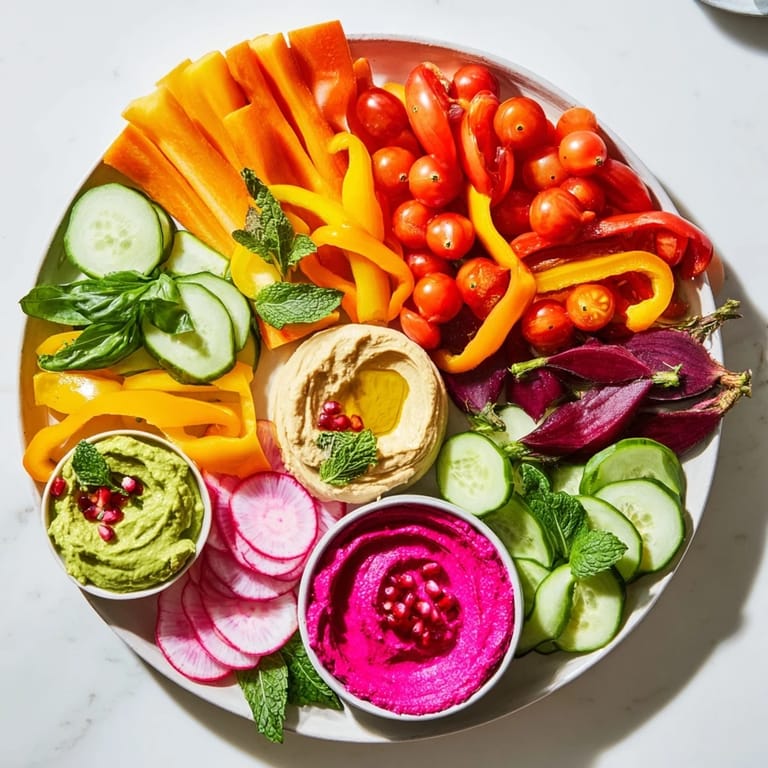
Save I'll never forget the first time I arranged a colorful vegetable platter for a potluck dinner with friends from different corners of the world. As everyone gathered around the table, their eyes lit up at the abundance of vibrant colors and fresh textures. That moment taught me that food doesn't need to be complicated to bring people together—sometimes the most meaningful meals are the ones where everyone can find something they love, exactly as it is. This Global Gardener Platter became my go-to celebration of simplicity, color, and the joy of eating straight from the earth.
I remember setting this platter down at my sister's birthday brunch, nervous that it might seem too simple. But watching everyone graze throughout the afternoon, creating their own combinations and discovering new flavor pairings, I realized that sometimes the best recipes are the ones that empower people to be their own chefs. The platter sat nearly empty three hours later, not because people felt obligated to eat, but because they genuinely couldn't stop.
Ingredients
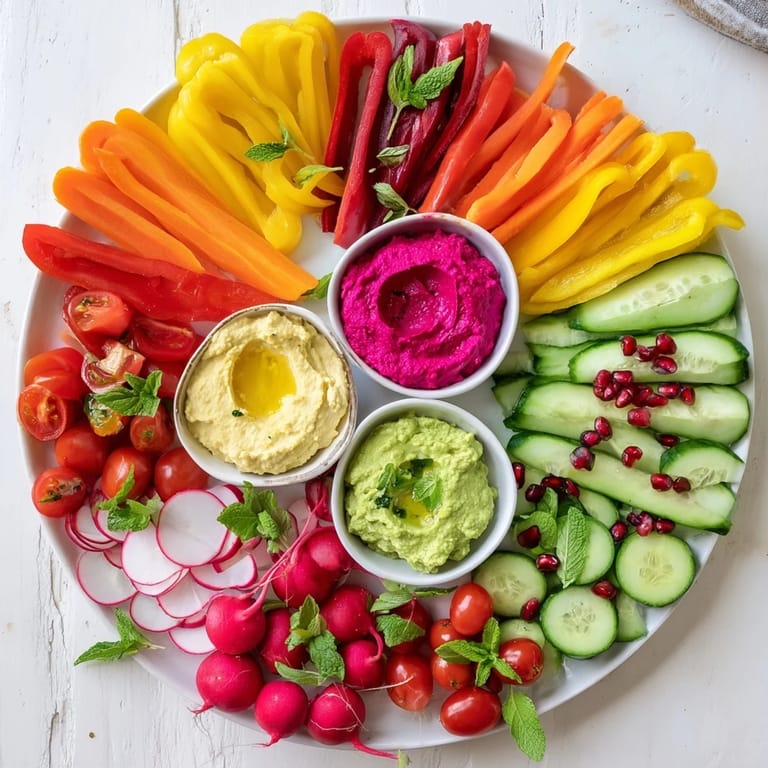
- Rainbow carrots: These beauties aren't just pretty—the deeper colors mean more beta-carotene and antioxidants. I learned to slice them on a slight angle to catch the light and make them feel almost like edible gemstones on the platter.
- Baby cucumbers: Their thin skin means no peeling needed, and they stay crisp longer than regular cukes. The secret? Leave them whole if they're small enough to pop in one bite.
- Cherry tomatoes in assorted colors: Red, orange, yellow—each has a different flavor story. The smaller varieties burst with concentrated sweetness that makes people pause and savor.
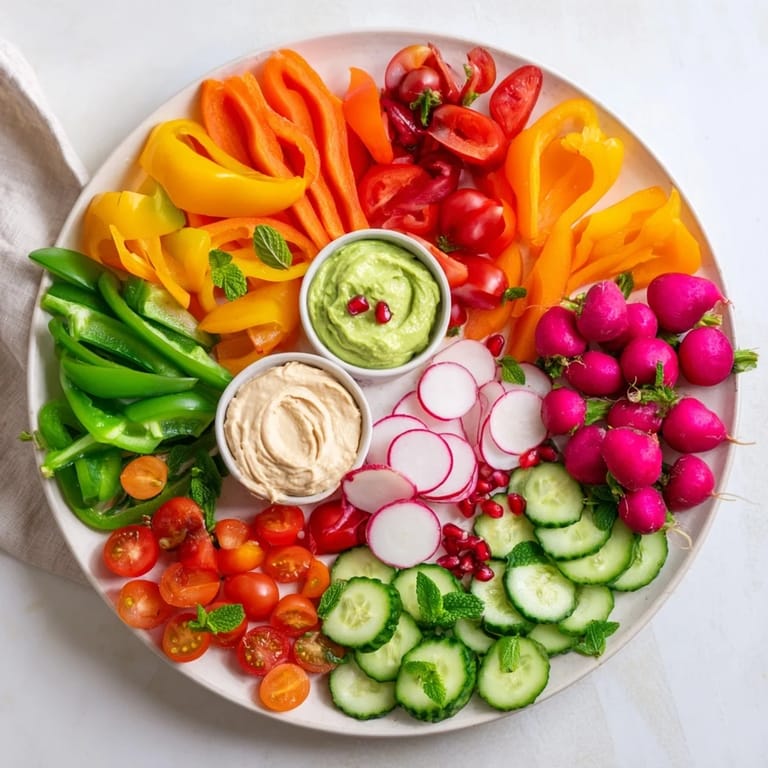
- Radishes, thinly sliced: These peppery rounds surprised me the first time I added them to a platter. They add a spicy snap that wakes up your palate between bites of creamy dips.
- Baby bell peppers, sliced: Sweet and crunchy, they're the bridge between vegetables and candy. Keep them whole if you want people to dip them like spoons.
- Snap peas: These are nature's perfect vehicles for hummus. Their natural sweetness and satisfying crunch make them disappear first.
- Seedless grapes in mixed colors: Red, green, and black grapes create visual rhythm and offer a palate-cleansing sweetness between savory vegetables.
- Fresh strawberries, halved: The tartness cuts through creamy dips beautifully, and their shape invites you to dip them like you're at a fondue party.
- Pineapple chunks: A touch of tropical brightness that makes this feel like an adventure. The enzymes in pineapple also help digestion, though honestly, the real magic is how it transforms the flavor landscape.
- Kiwi, peeled and sliced: Vibrant green color and bright tartness. Peel these just before serving so they stay luminous—they oxidize if exposed to air too long.
- Classic hummus: The creamy anchor that everyone knows and loves. It's forgiving, delicious, and vegan without pretending to be anything but itself.
- Beetroot hummus: A gorgeous magenta that tells people this platter takes inspiration from around the world. Beets bring earthiness and natural sweetness that regular hummus can't match.
- Guacamole: Creamy, rich, and deeply satisfying. Fresh lime juice prevents browning, and I always leave the avocado pit in the bowl to help preserve color until serving.
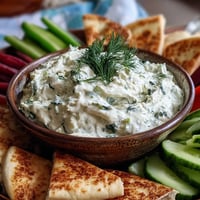
- Cashew tzatziki: This is the dip that converts people. Soaked and blended cashews create a richness that rivals dairy, with garlic and dill whispering Mediterranean promises.
- Pomegranate seeds: Jewel-like bursts of tart sweetness that add texture and make the platter feel celebratory. They catch light like nothing else on the board.
- Fresh herbs and edible flowers: These aren't garnish—they're flavor ambassadors. Mint cools, basil sweetens, parsley grounds everything. Edible flowers transform the platter from appetizer to art.
- Gluten-free crackers or pita chips: The vehicles for dipping and the textural contrast that makes every bite interesting. Toast them lightly before serving if you want extra crunch.
Tired of Takeout? 🥡
Get 10 meals you can make faster than delivery arrives. Seriously.
One email. No spam. Unsubscribe anytime.
Instructions
- Prepare with intention:
- Wash and thoroughly dry all vegetables and fruits—this step matters more than it sounds. Wet vegetables won't hold dips as well, and they'll wilt faster. Pat everything dry with a clean kitchen towel, treating each piece like you're preparing it for a portrait session.
- Choose your stage:
- Find a large platter or board that feels spacious. You're not trying to cram everything on—you're creating a landscape. I use a wooden board or white ceramic platter, depending on what colors I want to enhance. The surface you choose becomes part of the composition.
- Position the dips:
- Arrange small bowls of dips at different points on your platter—imagine them as anchor points around which everything else will orbit. This creates natural gathering spots and prevents people from reaching across the entire board. Leave space around each bowl so there's always a clear landing pad for vegetables.
- Build with color:
- This is where the magic happens. Start by grouping vegetables and fruits by color, creating distinct sections. Place all the reds together, then oranges, then yellows, then greens. Alternate textures as you go—a crunchy snap pea next to a soft strawberry creates rhythm. Think about the landscape you're building, with the dips as focal points where colors converge.
- Fill the negative space:
- Once your main sections are arranged, look at the empty spaces. Fill them with pomegranate seeds scattered like edible jewels, fresh herb leaves tucked between vegetables, and edible flowers positioned where they'll catch the eye. Arrange crackers in clusters, creating pathways that guide the eye around the board. This step transforms a good platter into a memorable one.
- Timing and presentation:
- Serve immediately if you've just finished arranging, when everything is crisp and colors are brightest. If you need to prepare ahead, cover loosely with plastic wrap and refrigerate. Just before serving, do a final fluff—rearrange any pieces that have shifted and add fresh herbs on top as a wake-up call to the platter's beauty.
 Save
Save There was one moment, at my grandmother's 80th birthday party, when I watched her pick up a snap pea, dip it in the guacamole, and close her eyes like she'd just tasted something profound. She looked at me and said, 'This is what life should taste like.' I realized then that this platter wasn't just about feeding people—it was about honoring the simple perfection that grows from the earth and the joy of gathering around something beautiful.
The Art of Strategic Arrangement
Every time I build one of these platters, I think about balance and flow. The platter is a map of flavors and textures, and people naturally follow paths created by color progression. When you arrange red next to orange next to yellow, you're not just making it pretty—you're guiding people through a tasting experience. The progression from sweet fruits to savory vegetables to creamy dips creates a rhythm that feels natural, like your palate is being guided by an invisible hand. I've learned that the most successful platters are the ones where every section feels distinct enough to be its own discovery, but cohesive enough to feel like a single, intentional creation.
Dips as the Soul of the Platter
What I've discovered is that the vegetables are the canvas, but the dips are the soul. Each one tells a different story and opens different doors of flavor. The classic hummus is comfort and tradition. The beetroot hummus is earthy sophistication. The guacamole is richness and indulgence. The cashew tzatziki is unexpected elegance. When you taste each vegetable with each dip, you're not eating one platter—you're eating four different platters stacked on top of each other. The magic happens at the moment someone discovers a pairing they never expected: strawberry with hummus, pineapple with tzatziki, radish with guacamole. That moment of surprise is where food becomes memory.
Seasonal Improvisation and Personal Expression
What started as a formula has become a conversation with the seasons. In summer, I add heirloom tomatoes and fresh berries. In fall, I bring in roasted chickpeas and dried cranberries for texture contrast. In winter, I lean into root vegetables and add pomegranate seeds for brightness. Each season teaches me something new about color, flavor, and abundance. Some additions I've discovered along the way that completely transformed the experience: roasted chickpeas add a savory crunch that makes people reach back for more, marinated olives introduce briny sophistication, and a light drizzle of olive oil with sea salt on the vegetables elevates the entire thing from casual to intentional.
- Always taste your dips before serving and adjust seasonings—hummus benefits from extra lemon, guacamole from fresh cilantro, tzatziki from more dill.
- Keep backup ingredients in your kitchen so you can pivot based on what looks freshest at the market—flexibility is the secret to platters that feel authentic.
- Remember that the most beautiful platters often look chaotic up close but stunning from a distance, so step back frequently as you arrange.
 Save
Save This platter has taught me that feeding people doesn't require complexity—it requires intention and color and abundance. Every time you create one, you're saying to your guests, 'I see you, I celebrate you, and here's a whole world of flavors to explore together.'